Socio Today
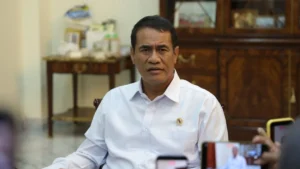
Jakarta, VIVA – Indonesia’s Minister of Finance, Purbaya Yudhi Sadewa, has provided a firm assurance that the outstanding debt obligations for the Jakarta-Bandung High-Speed Rail (KCJB), popularly known as Whoosh, will not impose a significant burden on the State Budget (APBN). Speaking from the Ministry of Finance in Jakarta on Thursday, July 23, 2026, Minister Purbaya reiterated the government’s commitment to minimize the use of direct APBN funds in settling the project’s financial liabilities. This declaration aims to alleviate public concerns regarding the fiscal implications of the ambitious infrastructure project, which has seen several cost adjustments and shifts in financing strategy since its inception.
The Minister emphasized that while the government would indeed play a role in managing the Whoosh debt, the operational mechanism would be designed to significantly reduce direct APBN exposure. "Although the Whoosh project is ultimately connected to the government’s financial responsibility, we are committed to minimizing the APBN funds used to pay for Whoosh, even if it is managed by us," Purbaya stated, underscoring a strategic approach to debt management that seeks alternative funding avenues. Despite this clear directive, Minister Purbaya remained circumspect regarding the specific financing mechanisms and the precise sources of funds that would be tapped to settle the debt of PT Kereta Cepat Indonesia China (KCIC), the joint venture responsible for the project. He hinted at the utilization of various instruments outside the direct purview of the APBN, notably mentioning the role of Special Mission Vehicles (SMVs).
The Genesis and Evolution of Whoosh
The Jakarta-Bandung High-Speed Rail project, initially conceived as a pivotal infrastructure development to enhance connectivity and economic activity between Indonesia’s bustling capital and its third-largest city, Bandung, has a complex history. The idea first gained traction in the early 2010s, driven by the need to alleviate severe traffic congestion on the existing toll roads and to provide a modern, efficient mode of transport. The proposed 142.3-kilometer line was envisioned to cut travel time between Jakarta and Bandung from approximately three hours by car to a mere 30-45 minutes.
In 2015, the project became a subject of intense international competition between Japan and China. Japan, with its renowned Shinkansen technology, initially seemed to be the frontrunner, offering a comprehensive package including financing and technology transfer. However, China ultimately secured the bid by proposing a "business-to-business" (B2B) scheme, crucially promising that the project would not require government guarantees or direct APBN funding. This non-guarantee clause was a key factor in the Indonesian government’s decision, aiming to protect the state’s fiscal health from potential liabilities. The groundbreaking ceremony for the project took place in January 2016, marking the official commencement of construction. The joint venture, PT Kereta Cepat Indonesia China (KCIC), was established, comprising a consortium of Indonesian state-owned enterprises (through PT Pilar Sinergi BUMN Indonesia, or PSBI, led by PT Kereta Api Indonesia (Persero)) holding 60% ownership, and China Railway International Co. Ltd. holding the remaining 40%. The initial estimated cost for the project was around US$5.5 billion.
Navigating the Financial Labyrinth: Project Costs and Overruns
Despite the initial B2B commitment, the Whoosh project soon encountered significant financial challenges, leading to substantial cost overruns. Several factors contributed to these escalations. Land acquisition proved to be more complex and time-consuming than anticipated, often involving intricate negotiations and legal processes that delayed construction and incurred additional expenses. Design changes and unforeseen geological conditions along the mountainous route to Bandung also necessitated engineering adjustments and increased construction costs. Furthermore, the global COVID-19 pandemic, which began in early 2020, severely disrupted supply chains, delayed work schedules, and led to a surge in material and labor costs.
These challenges eventually pushed the project’s estimated cost from the initial US$5.5 billion to approximately US$7.2 billion, an increase of about US$1.7 billion. This significant jump necessitated a re-evaluation of the financing structure, moving away from the purely B2B model. The Indonesian government, through PT KAI (Persero), was compelled to inject equity and provide sovereign guarantees for portions of the debt, particularly from the China Development Bank (CDB). The primary source of external financing for the project came from a loan provided by the CDB, covering approximately 75% of the project’s revised cost. The terms of this loan, including interest rates and tenor, became critical points of discussion and negotiation. The shift in financing strategy meant that while direct APBN funds were still intended to be minimized, the state’s indirect exposure through guarantees and equity participation increased, raising concerns among fiscal watchdogs and the public. The Whoosh project officially commenced commercial operations in October 2023, marking a significant milestone, and has since seen growing ridership, though the financial sustainability remains a key focus for the government.
Minister Purbaya’s Commitment: Shielding the APBN

Minister Purbaya Yudhi Sadewa’s recent statement is a direct response to the ongoing fiscal scrutiny surrounding the Whoosh project. His assurance that the debt will not burden the APBN signifies a strong commitment from the Ministry of Finance to maintain fiscal discipline and protect the national budget from unforeseen liabilities. This commitment is crucial for Indonesia’s macroeconomic stability and its standing with international investors and credit rating agencies. A direct injection of billions of dollars from the APBN to service the Whoosh debt could potentially strain public finances, diverting funds from other critical sectors such as education, healthcare, or social welfare programs. It could also widen the budget deficit, impacting the government’s ability to finance other development initiatives.
The Minister’s emphasis on minimizing APBN usage implies a multi-pronged strategy. This could include rigorous cost control measures within KCIC, optimizing operational revenues from ticket sales and ancillary services, and exploring innovative financing instruments that do not directly draw from the central government’s coffers. The government’s objective is not just to repay the debt but to do so in a manner that ensures the long-term financial viability of the Whoosh project itself, without creating an unsustainable precedent for future large-scale infrastructure developments. This approach reflects a broader policy stance to encourage self-sustaining infrastructure projects, where project revenues and dedicated financial vehicles play a more prominent role in debt servicing.
Leveraging Special Mission Vehicles (SMVs): A Strategic Approach
A key component of Minister Purbaya’s strategy to manage the Whoosh debt without burdening the APBN is the utilization of Special Mission Vehicles (SMVs). He explicitly stated, "Enggak, kan saya punya banyak SMV (Special Mission Vehicle)," indicating that these entities will play a significant role. SMVs are state-owned enterprises or government-backed entities established with a specific mandate to execute particular financial or developmental objectives that often require specialized expertise and a degree of operational flexibility not typically found within traditional government ministries.
In Indonesia, several SMVs already operate successfully, such as PT Sarana Multi Infrastruktur (SMI) and PT Penjaminan Infrastruktur Indonesia (PII). PT SMI, for instance, focuses on financing infrastructure projects, providing various financial products and services, including loans, project development, and advisory services. PT PII, on the other hand, specializes in providing government guarantees for infrastructure projects, mitigating risks for investors.
For the Whoosh debt, an SMV could potentially serve several functions:
- Refinancing: An SMV could raise funds from domestic or international capital markets through bond issuance or syndicated loans, using its own balance sheet and creditworthiness, potentially with government backing or guarantees structured differently than a direct APBN appropriation. These funds could then be used to refinance existing high-interest debt or to manage payment schedules.
- Asset Securitization: An SMV could potentially securitize future revenue streams from the Whoosh project (e.g., ticket sales, commercial leases at stations) to raise capital. This involves packaging these future revenues into marketable securities that are sold to investors, providing immediate liquidity.
- Project Management and Oversight: An SMV could be tasked with a more direct role in overseeing KCIC’s financial management, ensuring operational efficiency, and maximizing revenue generation to enhance the project’s self-sufficiency in debt servicing.
- Equity Participation/Restructuring: In cases where additional equity is needed, an SMV could be the vehicle for such injections, rather than directly from the central government’s APBN, providing a layer of separation and potentially better governance structures.
The advantage of using SMVs lies in their ability to operate with greater agility and commercial orientation compared to government departments. They can access diverse funding sources, structure complex financial deals, and manage assets more effectively. By channeling funds through an SMV, the government aims to keep the Whoosh debt off the central government’s direct balance sheet, thereby safeguarding the APBN and maintaining fiscal space for other priorities. This approach also signals a move towards a more sophisticated and indirect method of state support for strategic infrastructure, aligning with international best practices in public-private partnerships.
The Role of Panda Bonds: Fiscal Priorities First
Another financing instrument that has been discussed in the context of Indonesian infrastructure financing is the Panda Bond. Panda Bonds are Yuan-denominated bonds issued by non-Chinese entities in the People’s Republic of China’s onshore market. They offer an alternative source of funding, tapping into China’s vast capital market and potentially providing diversification for Indonesia’s debt portfolio.
When questioned about the possibility of utilizing Panda Bonds to finance the Whoosh debt, Minister Purbaya clarified that this instrument is currently prioritized for a different, more immediate fiscal need: closing the APBN deficit. "This (Panda Bond) is to cover our deficit. In the future, whether we will use it for Whoosh, we will see," he explained. This statement highlights the government’s current fiscal strategy, which places a premium on maintaining a healthy budget balance and ensuring macroeconomic stability. Indonesia, like many nations, periodically issues bonds in various currencies (including domestic rupiah bonds, USD-denominated global bonds, and potentially others) to finance its budget deficit, manage debt maturities, and support public spending.

The decision to prioritize Panda Bonds for deficit financing reflects a strategic allocation of resources. Covering the APBN deficit is fundamental to maintaining investor confidence, managing inflation, and ensuring the government’s ability to fund its core operations and public services. While Panda Bonds could offer attractive terms and access to a large pool of capital, their immediate deployment for the Whoosh debt would depend on several factors, including the prevailing interest rate environment, currency exchange risks, and the overall state of the APBN. The Minister’s remarks suggest that while it is not an immediate solution for Whoosh, it remains a potential option for future consideration, contingent upon the evolving fiscal landscape and the specific financing needs of the project. This cautious approach underscores the government’s commitment to prudent fiscal management, ensuring that any debt incurred serves the most pressing national interests first.
Stakeholder Perspectives and Public Scrutiny
The financing of the Whoosh project has been a subject of continuous public debate and scrutiny since its inception. The initial promise of a purely B2B model, free from government guarantees, created high expectations that were later challenged by the project’s cost overruns. This has led to concerns among the public and civil society organizations about potential taxpayer money being used for a project that was initially presented as commercially viable without state intervention. The public expects transparency and accountability regarding how the debt will be managed and how the financial burden will ultimately be distributed.
Investors and international credit rating agencies also closely monitor Indonesia’s handling of such large-scale infrastructure debts. Their assessment of the country’s fiscal prudence, debt management capabilities, and commitment to financial stability can significantly impact Indonesia’s sovereign credit rating, which, in turn, affects the cost of borrowing for both the government and state-owned enterprises. A clear and credible strategy for managing the Whoosh debt without severely impacting the APBN is therefore vital for maintaining investor confidence.
PT KCIC, as the project operator, plays a crucial role in ensuring the financial sustainability of Whoosh. Their ability to attract ridership, optimize operational costs, and explore additional revenue streams (e.g., commercial development around stations) will be key to generating sufficient income to service a portion of the debt. The Ministry of Transportation also has an important regulatory role, particularly concerning fare structures and service quality, which directly impact the project’s revenue potential. Balancing affordability for passengers with the need to generate adequate revenue for debt servicing is a delicate act that requires careful policy calibration.
Broader Economic Implications and Fiscal Prudence
The way Indonesia manages the Whoosh debt will set a significant precedent for future large-scale infrastructure projects, especially those involving foreign investment and complex financing structures. It underscores the importance of robust project planning, realistic cost estimations, and transparent risk assessments from the outset. The government’s strategy of utilizing SMVs and minimizing direct APBN involvement signals a move towards more sophisticated project financing models that aim to compartmentalize financial risks and leverage specialized financial institutions.
This approach also highlights Indonesia’s broader commitment to fiscal prudence. In an era where many developing nations face challenges with escalating debt burdens, particularly from infrastructure projects, Indonesia’s efforts to shield its state budget are commendable. It demonstrates a dedication to maintaining macroeconomic stability, ensuring that economic growth is sustainable and not undermined by excessive public debt. The successful navigation of the Whoosh debt challenge will reinforce Indonesia’s reputation as a responsible and reliable investment destination, capable of delivering complex projects while upholding fiscal discipline.
Ultimately, Minister Purbaya Yudhi Sadewa’s assurances provide a framework for managing the Whoosh debt through strategic financial instruments and minimizing direct state budget exposure. While the specifics of the non-APBN mechanisms are yet to be fully disclosed, the emphasis on SMVs and a cautious approach to other funding sources like Panda Bonds reflects a measured and responsible strategy. As Whoosh continues to serve as a vital link between Jakarta and Bandung, the government remains focused on ensuring its long-term financial viability without compromising the nation’s fiscal health, underscoring a delicate balance between ambitious development goals and unwavering fiscal sustainability.