Socio Today
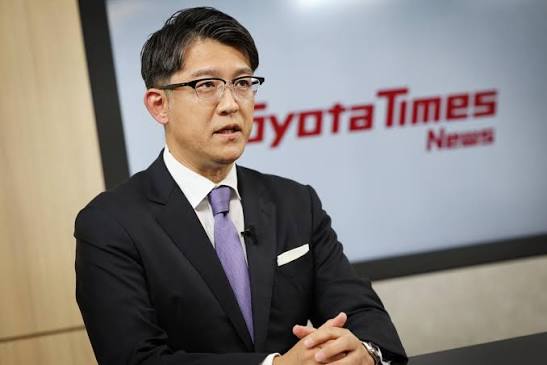
Former Toyota CEO Koji Sato, now at the helm of the Japan Automobile Manufacturers Association (JAMA), has issued a compelling call for greater standardization and collaboration among Japanese automakers, asserting that such unity is crucial for the industry’s survival against the rapidly expanding influence of Chinese manufacturers. Speaking in an interview with Automotive News, Sato emphasized that "the most important theme facing the Japanese automotive industry is to enhance ‘international competitiveness’." While he meticulously avoided direct references to any specific nation, the underlying message was unmistakably directed at the formidable challenge posed by China’s ascendant automotive sector, which has begun to reshape global market dynamics with unprecedented speed and scale.
The Shifting Global Automotive Landscape and the Chinese Ascendancy
The urgency of Sato’s message is underpinned by recent market shifts that have sent ripples through established automotive strongholds. A significant milestone occurred in May of the previous year when, for the first time on record, Chinese automakers collectively outsold Japanese brands in the fiercely competitive European market, as reported by CarExpert.co.nz. This pivotal moment served as a stark indicator of China’s growing prowess and its aggressive penetration into mature markets traditionally dominated by Japanese, German, and American manufacturers. Beyond Europe, Chinese brands have been making substantial inroads across Asia and various burgeoning emerging markets worldwide. Their expansion into the United States, the world’s second-largest automotive market, remains largely constrained by exceptionally high tariffs, yet their global trajectory continues unabated, powered by a strategic focus on electric vehicles (EVs), advanced software integration, and highly competitive pricing strategies.
For decades, Japanese automakers have been synonymous with reliability, efficiency, and engineering excellence, establishing a formidable presence globally. Brands like Toyota, Honda, Nissan, Mazda, and Suzuki have cultivated loyal customer bases and maintained robust market shares across continents. However, the paradigm shift towards electrification and software-defined vehicles has introduced a new competitive arena where China has quickly emerged as a frontrunner. Supported by extensive government subsidies, a robust domestic supply chain for EV components, and a proactive industrial policy, Chinese manufacturers have rapidly innovated and scaled their EV production, often at a lower cost point than their international counterparts. This has allowed them to offer compelling value propositions, particularly in segments like compact EVs and increasingly, in premium electric vehicles that boast cutting-edge infotainment systems and autonomous driving capabilities.
Koji Sato’s Strategic Vision: Efficiency Through Collaboration
Sato, who served as Toyota’s CEO for three years before transitioning to his current pivotal role, articulated a stark prognosis for the Japanese automotive industry: it "will not survive" unless companies "strategically create ‘areas of cooperation’ to improve efficiency" in the production of unseen parts and materials. This efficiency gain, he argued, would then free up crucial resources and capital for intensified investment in new, critical technologies. These include advanced driver-assistance systems (ADAS), next-generation fast-charging battery technologies, sophisticated software interfaces, and a wider array of innovative powertrain options.
The cornerstone of Sato’s proposed strategy is the standardization of core components. He cited the example of wiring harnesses, a seemingly mundane but critically complex component, where Japanese suppliers currently produce an astonishing 70,000 variants. This extreme fragmentation, Sato explained, severely impedes automation, drives up costs, and complicates supply chain management. By standardizing essential components such as wiring harnesses, specific types of steel, and resin specifications, Sato-san projects a potential tenfold increase in productivity. Furthermore, such standardization would significantly simplify recycling processes, aligning with global sustainability objectives and the emerging circular economy model.
The path to achieving these standards, however, is not instantaneous. Sato estimates that it could take one to two years to establish these standardized specifications across the industry. Even after their formalization, their practical application by automakers would only begin with the launch of subsequent generations of vehicles, implying a multi-year phased implementation.
Beyond component standardization, JAMA is actively exploring other critical areas for inter-industry collaboration. These include optimizing logistics networks to reduce costs and improve delivery times, securing stable access to essential raw materials amidst increasing global competition and supply chain vulnerabilities, and actively commercializing the circular recycling economy to minimize waste and maximize resource utilization. Furthermore, the association aims to enhance talent recruitment strategies to attract and retain skilled engineers and software developers, reconfigure Japan’s national infrastructure to robustly support the widespread adoption of autonomous vehicles, and streamline the country’s complex automotive tax system to foster innovation and growth.
Industry Endorsement and Existing Collaborative Frameworks
The call for standardization and collaboration, while championed by Sato and JAMA, has garnered significant support from other influential figures within the Japanese automotive sector. Ivan Espinosa, the CEO of Nissan, expressed his strong endorsement for the initiative, highlighting the "huge opportunity" for Japanese automakers to share critical commodities. Espinosa specifically advocated for the adoption of "common specifications for certain things," envisioning a future where "something like a JAMA standard that fits all of our requirements" would be established, allowing certified suppliers to be utilized freely across participating manufacturers. This sentiment underscores a growing consensus that collective action is no longer merely an option but a strategic imperative.
Koji Sato’s current role within Toyota is itself a testament to the company’s commitment to this broader industry vision. Although he stepped down as Toyota’s CEO earlier this year, succeeded by Kenta Kon, the automotive giant’s Chief Financial Officer, Sato remains on the board of directors. Crucially, he was appointed as the first-ever head of industry affairs, a newly created position specifically tasked with "advancing cross-industry collaboration to enhance the competitiveness of Japanese industry." Sato articulated this new mandate to Automotive News, explaining that his role is to bridge the gap between "industry and Toyota," asserting that Toyota is pursuing a growth path not solely for its own benefit, but for the entire Japanese automotive industry. He humbly added, "Rather than saying Toyota is somehow ‘special,’ it is more that JAMA has always been led by the company most appropriate to address the industry’s biggest challenges at a particular point in time," subtly acknowledging Toyota’s historical leadership and its current responsibility in guiding the industry through this transformative period.
Japanese automakers are no strangers to collaboration, albeit often through specific partnerships and cross-shareholdings. Toyota, for instance, fully owns Daihatsu and Lexus and holds minority stakes in Subaru, Mazda, and Suzuki. These financial ties often translate into collaborative efforts on specific vehicle models and the co-development of certain technologies. For example, Toyota and Subaru have a long-standing partnership on sports cars like the GR86 and BRZ, while collaborations with Mazda and Suzuki often involve shared platforms or powertrain technologies for regional markets.
Similarly, Nissan holds approximately a 27 percent stake in Mitsubishi Motors, a partnership that has seen shared platforms and technologies across various segments, particularly in SUVs and commercial vehicles. More recently, reports have emerged of advanced discussions between Nissan and Honda, two traditional rivals, regarding a potential wide-ranging cooperation agreement. This alliance could encompass shared development in critical areas such as components, software platforms, and potentially even joint vehicle production, signaling a significant shift in corporate strategy driven by the immense investment requirements for future mobility technologies.
The Renault-Nissan-Mitsubishi Alliance, a foundational pillar of global automotive cooperation for over two decades, has also seen an evolution in its structure. While Renault remains Nissan’s largest single shareholder, the partnership has transitioned from a centrally managed alliance to a more flexible, case-by-case collaboration. This strategic realignment allows for targeted cooperation on specific models and technologies while granting each brand greater autonomy. Examples of this flexible cooperation are evident in shared platforms for vehicles like the Nissan Micra and Renault 5 E-Tech, as well as the Dacia/Renault Duster and Nissan Tekton, demonstrating that collaboration can take diverse forms to achieve mutual benefits.
Broader Impact and Implications for the Global Automotive Sector
The implications of Koji Sato’s push for standardization and collaboration extend far beyond the borders of Japan, potentially reshaping the global automotive competitive landscape.
Economic Impact: A revitalized and more efficient Japanese automotive industry would be better positioned to safeguard its significant contribution to Japan’s GDP, maintain its export strength, and protect millions of jobs across its extensive supply chain. By reducing redundant development and manufacturing costs, companies could enhance profitability, allowing for greater investment in research and development and fostering sustainable growth.
Technological Advancement: By pooling resources and standardizing fundamental components, Japanese automakers can accelerate their adoption of cutting-edge technologies. This collective approach could lead to faster development cycles for advanced driver-assistance systems (ADAS), which are crucial for enhancing safety and paving the way for autonomous driving. Similarly, collaborative efforts in battery technology, particularly fast-charging and energy density improvements, would be vital for competing with Chinese and Western EV leaders. A unified approach to software interfaces could also create a more seamless and user-friendly experience across different Japanese brands, potentially creating a distinct competitive advantage.
Supply Chain Resilience and Cost Reduction: The standardization of components like wiring harnesses, steel, and resins would not only boost productivity but also enhance supply chain resilience. By reducing the sheer number of unique parts, manufacturers can consolidate procurement, leverage economies of scale, and reduce their vulnerability to disruptions. This simplification would lead to significant cost reductions in manufacturing, inventory management, and logistics, ultimately benefiting both producers and consumers.
Global Competitiveness: The collective strength derived from standardization and collaboration would strategically position Japan against the formidable challenge posed by China, as well as against established competitors in Europe and the United States. It would allow Japanese brands to offer more technologically advanced and cost-competitive vehicles, particularly in the rapidly growing EV segment, where Chinese manufacturers currently hold a significant lead in terms of production volume and affordability.
Sustainability and Circular Economy: Sato’s emphasis on easier recycling through component standardization aligns perfectly with global sustainability goals. A more standardized material composition would streamline end-of-life vehicle processing, allowing for more efficient recovery and reuse of valuable resources. This move towards a circular economy in automotive manufacturing would not only reduce environmental impact but also create new economic opportunities in recycling and material reprocessing.
Challenges and Hurdles: Despite the compelling rationale, the implementation of such a broad-ranging standardization and collaboration initiative faces inherent challenges. Overcoming deep-seated corporate rivalries and protecting individual brand identities, which are often built on unique engineering philosophies, will require significant leadership and compromise. Balancing the benefits of standardization with the need for product differentiation will be a delicate act. Furthermore, the practical complexities of aligning disparate engineering practices, intellectual property sharing, and regulatory compliance across multiple companies cannot be underestimated. The timeline for establishing standards and their subsequent integration into new vehicle generations also means that the immediate impact on market competitiveness might not be felt for several years.
In conclusion, Koji Sato’s bold vision for a more unified and collaborative Japanese automotive industry represents a pivotal strategic pivot. Faced with an existential threat from the rapidly advancing Chinese automotive sector, particularly in the critical EV and software domains, the industry is being urged to set aside traditional rivalries for the collective good. By focusing on efficiency gains through standardization, pooling resources for technological innovation, and enhancing supply chain resilience, Japanese automakers aim to reaffirm their global leadership and ensure their continued relevance in an automotive world undergoing its most profound transformation in a century. The success of this ambitious undertaking will not only determine the future trajectory of Japan’s automotive giants but also significantly influence the competitive dynamics of the global mobility landscape for decades to come.