Socio Today
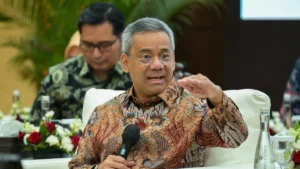
Jakarta, Indonesia — In an effort to maintain investor confidence and ensure fiscal transparency, Minister of Finance Suahasil Nazara has formally guaranteed that the government will disburse all valid claims for excess tax payments, commonly known as tax restitution, to business operators who comply with established regulatory frameworks. The assurance was delivered during the release of the State Budget (APBN KiTa) monthly report for September 2026, held at the Ministry of Finance headquarters in Jakarta.
The statement comes at a crucial juncture for the Indonesian economy, as businesses increasingly rely on timely tax refunds to maintain operational liquidity amid global economic uncertainties. During the press conference, Minister Suahasil emphasized that the government remains steadfast in honoring its financial commitments to taxpayers, provided that all statutory requirements have been meticulously fulfilled.
"If it is a legitimate right of the business operators, it will certainly be granted," Minister Suahasil stated firmly, addressing lingering concerns within the commercial sector regarding potential delays or bureaucratic hurdles in processing tax refunds.
Strict Adherence to Regulatory Frameworks and SOPs
The Directorate General of Taxes (DJP), operating under the Ministry of Finance, has been tasked with executing these restitution payments in strict accordance with prevailing tax laws and Standard Operating Procedures (SOPs). Directorate General of Taxes Bimo Wijayanto, who accompanied the Minister during the briefing, elaborated on the meticulous nature of the processing system.
According to Dirjen Bimo, tax restitutions currently requested by various corporations are undergoing a selective and measured verification process. This rigorous examination is an essential safeguard designed to prevent fraudulent claims while ensuring that public funds are distributed accurately.

"Examinations also have their own standards and SOPs. Naturally, the DJP is not in a position to violate these SOPs," Bimo explained. He further noted that the administration of restitution claims moving forward will strictly follow the strategic directives issued by Minister Suahasil Nazara, while carefully balancing corporate liquidity needs with broader national fiscal requirements.
Balancing Business Liquidity with Fiscal Sustainability
A critical element of the government’s current economic strategy involves synchronizing corporate tax policy with national development financing. While recognizing the urgent need for businesses to access their capital through prompt restitutions, the Ministry of Finance must simultaneously manage the national deficit to keep the APBN structure robust, healthy, resilient, and sustainable.
"We must also adjust to the funding needs of national development. Furthermore, we must manage the fiscal deficit so that the posture of the State Budget remains strong, healthy, resilient, and sustainable," Bimo added. This dual approach highlights the complex balancing act faced by fiscal authorities: stimulating private sector growth through tax facilitation while safeguarding macroeconomic stability against external shocks.
Minister Suahasil revealed that he has instructed the Director General of Taxes to enhance the administrative handling of restitutions. This includes establishing proactive communication channels with the business community regarding the status and management of their restitution files, thereby reducing friction and fostering a transparent taxpayer-tax authority relationship.
Understanding Tax Restitution in Indonesia
To provide comprehensive context on how tax restitution functions within the Indonesian taxation system, the Directorate General of Taxes outlines specific legal conditions under which a taxpayer is entitled to a refund.
The first condition arises when a payment is made for a tax liability that was, in legal terms, never actually due. This typically occurs when a taxpayer mistakenly remits a tax amount despite regulations dictating that the specific transaction or entity is exempt from such obligations.

The second, more common condition involves excess payments concerning Income Tax (Pajak Penghasilan or PPh), Value Added Tax (PPN), and/or Sales Tax on Luxury Goods (PPnBM). Under these provisions, corporations or individual taxpayers can formally submit a restitution claim when the total amount of tax paid during a fiscal period exceeds the actual tax liability calculated according to the law.
Broader Economic Implications and Related Fiscal Policies
The assurance regarding tax restitutions coincides with a series of sweeping regulatory updates implemented by the Indonesian tax authority in late 2026. Among the most notable is the impending enforcement of Article 22 Income Tax (PPh) collection on transactions conducted across digital marketplace platforms, scheduled to take effect on November 1, 2026.
The alignment of stringent digital economy taxation with a disciplined corporate restitution mechanism reflects a maturing fiscal ecosystem. As Indonesia continues to digitize its revenue collection and broaden its tax base, maintaining trust through predictable administrative processes—such as reliable tax refunds—becomes paramount.
For the business community, the minister’s guarantee serves as a welcome reassurance. Lengthy delays in tax refunds have historically posed cash flow challenges for capital-intensive industries, particularly manufacturing, export-oriented enterprises, and large-scale infrastructure developers. By committing to timely processing within established SOPs, the Ministry of Finance aims to sustain business enthusiasm and encourage higher levels of voluntary tax compliance.
Chronology and Chronological Context of the Announcement
- Mid-September 2026: Corporations raise concerns regarding the duration and scrutiny levels applied to pending tax restitution files.
- September 18, 2026 (Daytime): The Ministry of Finance finalizes the APBN KiTa data for September 2026, revealing steady revenue performance alongside ongoing administrative management of corporate refunds.
- September 18, 2026 (14:00 – 17:00 WIB): Directorate General of Taxes reviews internal SOPs regarding audit timelines and coordination with new ministerial leadership directives.
- September 18, 2026 (22:50 WIB): Minister of Finance Suahasil Nazara holds the official press conference at the Ministry of Finance office in Jakarta, explicitly guaranteeing that compliant businesses will receive their lawful tax restitution payments.
- Looking Forward (November 1, 2026): The expansion of PPh collection on marketplace transactions is set to commence, marking the next major milestone in Indonesia’s ongoing tax administration reform.
Ultimately, the Ministry of Finance’s firm stance underscores a cooperative approach between the state and the private sector. By pairing rigorous investigative standards with an absolute guarantee of payout for rightful claimants, the government seeks to foster a predictable, fair, and growth-oriented fiscal climate for the remainder of 2026 and beyond.