Socio Today
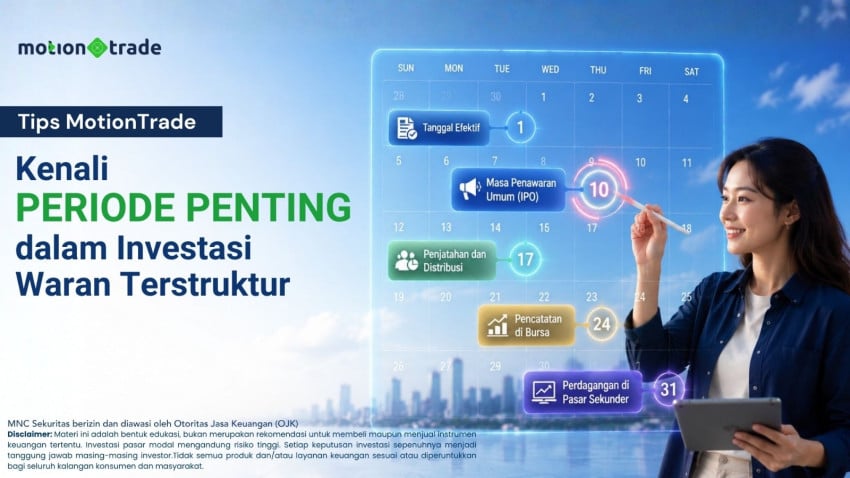
JAKARTA – Structured Warrants, a sophisticated derivative instrument, have emerged as a significant avenue for investors seeking diverse opportunities within the capital market. As financial literacy and market access expand in Indonesia, understanding the intricate timelines associated with these instruments becomes paramount for maximizing potential gains and mitigating inherent risks. MotionTrade, a leading platform for investment, has meticulously outlined the crucial periods investors must navigate when engaging with structured warrants, providing a foundational guide for both novice and experienced participants in this evolving segment of the financial landscape. This detailed understanding is not merely a recommendation but a necessity, empowering investors to make informed decisions regarding the opportune moments for acquisition, holding, and disposition of structured warrants, thereby optimizing their investment strategy.
Understanding Structured Warrants: A Deeper Dive
Structured warrants are financial derivatives issued by third-party financial institutions, typically investment banks, and are listed on stock exchanges. Unlike traditional warrants, which are often issued by the underlying company itself and are linked to corporate actions like rights issues, structured warrants are standalone instruments whose value is derived from an underlying asset – which could be a stock, an index, a commodity, or a currency. They essentially give the holder the right, but not the obligation, to buy (call warrant) or sell (put warrant) the underlying asset at a predetermined price (strike price) on or before a specified date (expiration date). In Indonesia, the market for structured warrants has seen considerable development, spurred by regulatory support and increasing investor appetite for more diverse and potentially leveraged investment tools. The primary appeal lies in their ability to offer exposure to the price movements of underlying assets with a relatively smaller capital outlay compared to directly purchasing the underlying asset, thereby offering leverage. However, this leverage also amplifies potential losses, underscoring the critical need for comprehensive investor education and a thorough grasp of their mechanics and associated timelines.
The introduction of structured warrants by the Indonesia Stock Exchange (IDX) and the Financial Services Authority (OJK) aims to deepen the capital market, providing more sophisticated instruments for hedging, speculation, and portfolio diversification. These instruments are typically cash-settled, meaning that upon exercise or expiration, investors receive or pay the difference between the underlying asset’s price and the strike price, rather than physically receiving or delivering the underlying asset. This cash settlement mechanism simplifies the transaction process and reduces the logistical complexities associated with physical delivery. The growth of structured warrants is also indicative of the broader trend towards a more mature and diversified financial ecosystem in Indonesia, aligning with global capital market developments where derivatives play a crucial role in risk management and price discovery.
The Critical Investment Timeline: Key Periods Explained
MotionTrade’s comprehensive guide highlights several distinct phases in the lifecycle of a structured warrant, each bearing significant implications for an investor’s strategy. Missing a critical date or misunderstanding its relevance can drastically alter investment outcomes.
1. The Effective Date: Commencement of the Offering
The Effective Date marks the official commencement of the structured warrant offering process. This pivotal date signifies that all regulatory approvals from authorities like the Financial Services Authority (OJK) have been secured, and the issuer is now legally authorized to proceed with the public offering. Information pertaining to the Effective Date is meticulously detailed within the prospectus, a comprehensive document that serves as the primary source of information for potential investors. The prospectus contains vital details such as the terms and conditions of the structured warrant, the underlying asset, strike price, expiration date, issuer details, risk factors, and the overall offering schedule. For an investor, the Effective Date is the initial green light, indicating that the structured warrant is officially entering the market and that the subsequent public offering period is imminent. It signifies the transition from regulatory review to active market participation, setting the stage for the instrument’s journey from issuance to potential trading on the secondary market. Investors are strongly advised to thoroughly review the prospectus released on or before this date, as it forms the basis of their investment decision, outlining both the opportunities and the inherent risks. This initial phase is crucial as it formalizes the offering, establishing the legal and operational framework under which the structured warrant will be introduced to the market. Without the Effective Date, the public offering cannot proceed, making it a foundational element in the structured warrant’s lifecycle.
2. The Public Offering Period (IPO): Initial Subscription Window
Following the Effective Date, the Public Offering Period, often colloquially referred to as the Initial Public Offering (IPO) phase for new listings, commences. During this window, prospective investors are afforded the opportunity to subscribe for structured warrants directly from the issuer or through appointed selling agents, typically brokerage firms. This period precedes the listing and trading of the structured warrants on the secondary market, offering investors a chance to acquire the instruments at the initial offering price. The duration of the Public Offering Period is generally concise, typically spanning between one to five business days, though this can vary depending on the specific series of the structured warrant and the issuer’s discretion, always within regulatory guidelines.
The subscription process during this phase often involves submitting an application through a brokerage account, specifying the desired quantity of warrants. Allotment mechanisms may vary, especially in cases of oversubscription, where demand exceeds the available supply. Understanding the allocation policy outlined in the prospectus is crucial. Participating in the Public Offering Period can be advantageous for investors who believe in the initial pricing and wish to secure their positions before potential price fluctuations occur once the warrants begin trading on the exchange. It also represents a crucial phase for the issuer to gauge market demand and ensure a smooth initial distribution of the structured warrants. For instance, if a structured warrant tied to a popular blue-chip stock is offered, high demand during this period could indicate strong market confidence, potentially influencing its performance once listed. Successful participation during this period can secure an investor’s entry at a potentially favorable initial valuation, circumventing the initial volatility often seen immediately after listing.
3. Listing Date and Secondary Market Trading: Active Price Discovery
The Listing Date marks the momentous occasion when the structured warrants are officially admitted for trading on the stock exchange, such as the Indonesia Stock Exchange (IDX). From this date forward, investors can buy and sell the structured warrants freely in the secondary market, just like regular stocks. This transition from a primary market offering to secondary market trading introduces dynamic price discovery, where the warrant’s value fluctuates based on market supply and demand, the performance of the underlying asset, implied volatility, time to expiration, interest rates, and other market factors.
The period of secondary market trading typically spans several months, sometimes even up to a year or more, depending on the structured warrant’s tenor. During this time, investors can enter or exit their positions, speculate on price movements, or use the warrants for hedging purposes. The liquidity of the structured warrant on the secondary market is a vital consideration. High trading volumes indicate greater ease in buying and selling, while low liquidity can lead to wider bid-ask spreads and difficulty in executing trades at desired prices. Market makers, often associated with the issuer, play a crucial role in providing liquidity by continuously offering bid and ask prices. Investors must monitor the underlying asset’s performance diligently, as its price movements are the primary driver of the structured warrant’s value. Economic news, company announcements, and broader market sentiment will all impact the underlying asset and, consequently, the warrant. The secondary market is where the true market value of the structured warrant is continually reassessed, making it a period of constant vigilance and strategic adjustment for investors.
4. Expiration Date and Exercise Period: The Final Chapter
The Expiration Date is arguably the most critical period for any structured warrant investor. This is the final date on which the structured warrant can be exercised or, in most cash-settled structured warrants, the date on which its value is determined for settlement. Before this date, there is often an "Exercise Period" or "Settlement Period" during which the final value is calculated. For European-style structured warrants, which are common in many markets, exercise can only occur on the expiration date itself. American-style warrants allow exercise at any time up to and including the expiration date, though structured warrants are predominantly European-style for simplicity and predictability.
As the Expiration Date approaches, the "time value" component of the warrant’s price diminishes rapidly, a phenomenon known as time decay or theta decay. If the structured warrant is "in-the-money" (meaning the underlying asset’s price is above the strike price for a call warrant, or below the strike price for a put warrant), it will have intrinsic value at expiration. If it is "out-of-the-money," it will expire worthless. Understanding this concept is vital, as holding an out-of-the-money warrant until expiration results in a total loss of the initial investment. Most structured warrants in Indonesia are cash-settled. On the Expiration Date, the issuer will calculate the difference between the underlying asset’s closing price (or an average price over a specific period) and the strike price. If the warrant is in-the-money, the investor will receive a cash payment equivalent to this intrinsic value. If it’s out-of-the-money, no payment is made, and the warrant simply ceases to exist. Therefore, investors must closely monitor their positions as the Expiration Date nears and decide whether to sell their warrants in the secondary market before expiration to capture remaining time value, or hold them to await cash settlement if they are in-the-money. This period demands active decision-making, as inaction can lead to significant financial consequences.
5. Settlement Date: Finalizing Transactions
Following the Expiration Date and the determination of the final value, the Settlement Date is when the actual cash payments are made to investors holding in-the-money structured warrants. This typically occurs a few business days after the Expiration Date, allowing time for calculations, processing, and reconciliation. For investors who sold their warrants in the secondary market before expiration, settlement occurs according to standard market settlement cycles (e.g., T+2 or T+3, meaning trade date plus two or three business days). For those holding until expiration, the Settlement Date is when their brokerage accounts are credited with the cash value of their exercised or settled warrants. Understanding the Settlement Date is crucial for cash flow planning and ensuring that investors are aware of when they can expect to receive their funds. It marks the definitive conclusion of the structured warrant’s lifecycle for the investor, providing the tangible outcome of their investment decision. This final step ensures the financial obligations are met, completing the full cycle of the structured warrant from issuance to its ultimate redemption or expiration.
The Indonesian Market for Structured Warrants: Growth and Regulatory Environment
The Indonesian capital market has witnessed a burgeoning interest in structured warrants, particularly in recent years. The Indonesia Stock Exchange (IDX) has actively promoted these instruments as part of its strategy to diversify investment products and enhance market liquidity and sophistication. Since their reintroduction or increased emphasis in recent years, the market has seen a steady increase in the number of structured warrants listed, covering a range of popular underlying stocks and indices. For instance, major brokerage firms, including MNC Sekuritas (MotionTrade’s parent company), have been active in issuing and facilitating the trading of these instruments. This growth is underpinned by a robust regulatory framework overseen by the Financial Services Authority (OJK), which ensures investor protection, market integrity, and transparency. Regulations govern everything from issuer eligibility and prospectus requirements to trading rules and settlement procedures.
Data from the IDX often shows increasing trading volumes and values for structured warrants, indicating growing investor participation. For example, in recent periods, daily trading values for structured warrants have occasionally reached significant figures, reflecting their growing acceptance. This growth is also fueled by technological advancements, with platforms like MotionTrade making it easier for retail investors to access and trade these complex instruments. The accessibility, combined with the potential for amplified returns, has made structured warrants an attractive option for a segment of investors looking beyond traditional equities. However, regulators and market participants consistently emphasize the importance of financial literacy programs to ensure investors fully comprehend the risks involved, particularly given the leveraged nature of these products. The collaboration between MNC Bank and MNC Sekuritas to boost financial literacy among Gen Z, as referenced in the original article, underscores this critical need for education as new, sophisticated instruments become more prevalent. This concerted effort highlights the commitment of key players to foster a well-informed investing public, mitigating potential pitfalls while encouraging market expansion.
Industry Perspectives and Investor Education
Leading financial institutions and regulatory bodies consistently advocate for robust investor education programs concerning structured warrants. MotionTrade, as a platform facilitating access to these instruments, plays a vital role in this educational endeavor. Inferred statements from key stakeholders, such as executives from MNC Sekuritas or representatives from the OJK, would likely underscore a dual objective: promoting market development while simultaneously safeguarding investor interests.
A representative from MNC Sekuritas might emphasize: "Our commitment extends beyond merely offering diverse investment products. We believe that empowering investors with comprehensive knowledge about instruments like structured warrants is fundamental. Understanding the precise timelines – from the effective date to expiration – is not just about compliance, but about strategic decision-making that can significantly impact returns and risk exposure. Our goal is to ensure investors are well-equipped to navigate the complexities of these products confidently, aligning with our broader mission to enhance financial literacy across all investor segments, including the tech-savvy Gen Z through initiatives with MNC Bank."
Similarly, a spokesperson from the Financial Services Authority (OJK) might articulate: "The OJK supports the introduction of innovative financial instruments that deepen our capital market. However, with greater innovation comes a greater responsibility for both issuers and investors. We continuously monitor market practices and ensure that adequate disclosures are made. More importantly, we urge investors to fully utilize educational resources, understand the prospectus, and grasp the nuances of each investment product, especially derivatives, before committing capital. Our regulatory framework is designed to create a safe and transparent environment, but informed investor choices remain the ultimate safeguard. The collaboration between financial institutions and educational bodies is crucial for building a resilient and knowledgeable investor base."
Market analysts frequently highlight that while structured warrants offer exciting opportunities for portfolio enhancement and strategic trading, they are not suitable for all investors. "Structured warrants introduce a layer of complexity that requires a more nuanced understanding than direct equity investments," noted a capital market analyst. "Their sensitivity to time decay, implied volatility, and the performance of the underlying asset means that timing and continuous monitoring are crucial. Investors who engage with structured warrants without fully appreciating these dynamics risk significant capital impairment. MotionTrade’s emphasis on timeframes is therefore a critical step in