Socio Today
The electric vehicle industry is experiencing a period of intense financial volatility, marked by aggressive price wars, slowing adoption rates in certain regions, and high capital expenditure requirements that have strained even well-established startups. Against this backdrop of broader industry consolidation, Hozon New Energy Automobile Company—the parent company of the prominent electric vehicle brand Neta Auto—has taken a significant step toward corporate revival. Following a series of creditor meetings and extensive financial restructuring efforts, the troubled automaker is poised to be acquired by Zhejiang Taiyi Shanglian Enterprise Management Partnership in a deal that injects substantial new capital into the firm and paves the way for a comprehensive operational overhaul.
According to preliminary reorganization drafts released following Hozon’s fourth virtual creditor meeting, Zhejiang Taiyi Shanglian Enterprise Management Partnership (Taiyi Shanglian) has committed to a massive investment of 3 billion yuan, equivalent to approximately $420 million or Rp7.9 trillion, to secure a controlling 70.6 percent stake in the bankrupt automotive enterprise. This strategic rescue package represents a lifeline for Neta Auto, a brand that gained initial traction in domestic and international markets with its affordable electric vehicle offerings before succumbing to severe liquidity pressures and mounting debt obligations.
Background Context and Corporate Restructuring
Taiyi Shanglian is a specialized management entity deliberately established earlier this year through a joint initiative by Zhejiang Shanzi Holdings Company and Zhejiang Shanzi Yuxu Technology Company. The formation of this consortium specifically to absorb and restructure Hozon highlights the calculated interest of industrial players in salvaging valuable manufacturing infrastructure, intellectual property, and market channels from distressed electric vehicle startups.
The structure of the 3 billion yuan rescue package has been meticulously allocated to address both legacy liabilities and future operational requirements. Specifically, 1.17 billion yuan (approximately Rp3.1 trillion) of the total restructuring fund has been designated for the settlement of legacy debts. This portion will be utilized to pay off creditors holding retained assets, cover administrative bankruptcy proceedings, and absorb various other restructuring-related expenses.
Meanwhile, the remaining 1.83 billion yuan (approximately Rp4.8 trillion) will be injected directly into Hozon as fresh working capital. This substantial capital injection is intended to finance the immediate restart of manufacturing operations, reactivate dormant sales channels, rebuild a resilient supply chain, and restore daily business functions alongside critical after-sales service networks.
Strategic Pivot: Focus on SUV Production and Asset Rationalization
As part of the reorganization blueprint, Hozon is implementing a rigorous asset rationalization strategy designed to eliminate operational inefficiencies and concentrate resources on high-demand vehicle segments. Production equipment associated with the Neta L and Neta X models has been officially categorized as core assets that will be preserved and integrated into the revised manufacturing blueprint.
Conversely, the production equipment dedicated to the Neta S sedan and the Neta GT sports car has been classified as non-core assets. These lines may be spun off, sold separately, or phased out to streamline the company’s manufacturing footprint. Consequently, the newly restructured Neta Auto will pivot sharply toward a concentrated focus on SUV development and production, aligning its product portfolio with prevailing consumer preferences in both domestic and international markets.
The Three-Phase Recovery Roadmap
The reorganization draft outlines a pragmatic, three-phase recovery roadmap designed to guide Hozon from insolvency back to commercial viability and eventual public markets.
The first phase centers on the immediate resumption of vehicle manufacturing, targeting an initial sales volume of 10,000 units during the first year of renewed operations. During this initial window, priority will be given to the production of the Neta X SUV. Simultaneously, the company will focus on reconstructing its broken supply chain and reactivating its after-sales service infrastructure. A critical mandate of this phase is honoring existing warranty claims and providing servicing support for the estimated 400,000 current Neta vehicle owners worldwide.
The second phase involves scaling up operational capacity significantly, with a projected annual production output target of 300,000 units. During this phase, Hozon plans to develop tailored vehicle models specifically engineered for emerging markets across Asia, Africa, Latin America, and other high-growth geographic regions where affordable electric mobility is gaining substantial regulatory and consumer traction.
The third and final phase of the roadmap focuses on advanced technological evolution and financial maturation. This stage encompasses the development of a new generation of smart electric vehicle models designed for the global market, a target annual production output value of 40 billion yuan (approximately Rp105.8 trillion), and preparatory steps for an initial public offering (IPO) to return the company to the public equity markets.
Implications and Operational Status in Indonesia
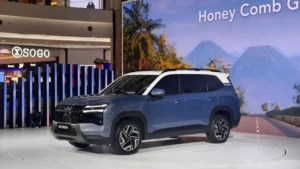
The restructuring of Hozon and its Neta brand carries direct and immediate implications for its international operations, particularly in Southeast Asian markets like Indonesia, where the brand established a commercial presence in recent years. In the Indonesian market, Neta previously imported and marketed models including the Neta V, Neta V-II, and Neta X. Among these, the Neta X is included in the list of models whose production equipment has been retained under the restructuring plan, while the future manufacturing status of the Neta V and V-II series remains unaddressed in the current corporate disclosures.
In January, local communications from Neta Indonesia via official social media channels indicated an expectation that Hozon would successfully finalize its corporate restructuring process by mid-2026. However, the operational disruption at the parent level has already triggered significant local adjustments. Notably, the management of Neta’s after-sales service network in Indonesia was previously transitioned to third-party automotive service providers Otoklix and Anma Mobil, while a number of official Neta dealerships across the country were temporarily or permanently closed as part of cost-containment measures.
Local manufacturing partnerships have also reflected the profound impact of Hozon’s financial difficulties. Jongkie D Sugiarto, Commissioner of Handal Indonesia Motor (HIM)—the local contract assembly partner responsible for producing Neta vehicles in Indonesia—confirmed that the assembly lines for Neta vehicles at their facilities had been halted for approximately six months prior to the latest announcements.
Jongkie, who also serves as the Chairman I of the Association of Indonesian Automotive Industries (Gaikindo), emphasized that ultimate decision-making authority regarding the continuation or cessation of local production rests entirely with the authorized brand holder. He noted, however, that Neta continues to maintain its official registration as an active member of Gaikindo, leaving open the possibility of a commercial comeback should the global restructuring proceed according to schedule.
Broader Industry Analysis and Outlook
The acquisition of Hozon by Taiyi Shanglian reflects a broader macroeconomic and industrial trend currently reshaping the global electric vehicle landscape. The rapid proliferation of EV startups over the past decade led to intense market saturation, forcing manufacturers into aggressive price competition that eroded profit margins. Companies that lacked deep-pocketed backers or sufficient liquidity reserves quickly found themselves vulnerable to sudden shifts in investor sentiment and rising supply chain costs.
By utilizing corporate restructuring mechanisms and private equity injections, distressed automotive assets are increasingly being rescued by industrial management firms seeking to capitalize on established manufacturing licenses and production facilities at a fraction of their original development cost. For Neta Auto, the infusion of 3 billion yuan provides the financial oxygen necessary to clear legacy debts and restart assembly lines. However, the brand’s ultimate long-term success will depend heavily on its ability to rebuild consumer trust, re-establish a reliable dealer and after-sales ecosystem in key international territories like Indonesia, and successfully execute its product pivot toward competitively priced smart SUVs in an increasingly crowded global marketplace.