Socio Today
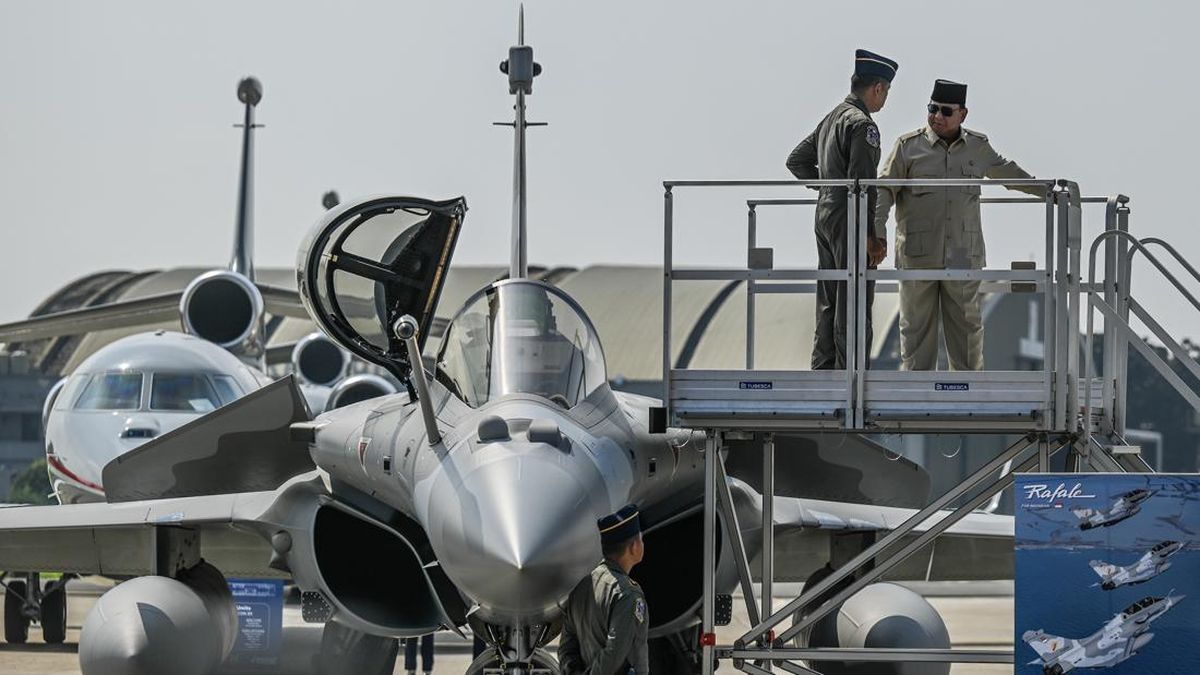
In a significant stride towards modernizing Indonesia’s defense capabilities, President Prabowo Subianto formally handed over a substantial array of advanced military aircraft and weaponry to the Commander of the Indonesian National Armed Forces (TNI), General Agus Subianto, at the Halim Perdanakusuma Air Force Base in Jakarta on Monday, May 18. This pivotal ceremony marked the induction of six state-of-the-art Dassault Rafale Multirole Combat Aircraft (MRCA), four sophisticated Dassault Falcon 8X transport aircraft, and one versatile Airbus A400M Atlas multi-role transport aircraft. The comprehensive package also included cutting-edge Thales GM403 Ground Control Intercept (GCI) radars and a formidable arsenal of modern munitions, notably the Smart Weapon Hammer and Meteor air-to-air missiles, underscoring Indonesia’s commitment to enhancing its strategic defense posture.
This handover event, presided over by President Subianto, a former military general himself, signals a clear prioritization of national security and military strength within his administration’s agenda. The newly acquired assets are poised to significantly augment the operational readiness, strategic reach, and deterrent capabilities of the Indonesian Air Force (TNI-AU), aligning with the nation’s ambitious Minimum Essential Force (MEF) targets. The acquisition of such advanced platforms from key European defense manufacturers like Dassault, Airbus, and Thales reflects Indonesia’s strategy of diversifying its defense partnerships and procuring high-technology systems to address evolving geopolitical dynamics and regional security challenges.
The Broader Context: Indonesia’s Defense Modernization Goals
Indonesia, an archipelago nation with vast maritime territories and a growing economic presence in Southeast Asia, faces complex security challenges ranging from territorial disputes in the South China Sea to safeguarding its extensive natural resources and combating transnational crime. Recognizing these multifaceted threats, the Indonesian government has embarked on an extensive defense modernization program aimed at transforming the TNI into a professional, modern, and capable force. The MEF program, initiated in 2010, outlines targets for equipment acquisition and force structure by specific phases, with a long-term vision of achieving strategic autonomy.
The current acquisitions represent a critical component of this overarching strategy. Older generation aircraft and radar systems are gradually being phased out or supplemented by more advanced platforms that offer superior performance, network-centric capabilities, and extended operational ranges. This not only enhances Indonesia’s ability to project power and defend its sovereignty but also improves its capacity for humanitarian assistance and disaster relief (HADR) operations, a crucial aspect for a country frequently affected by natural calamities. The decision to procure from France and other European partners also highlights Indonesia’s commitment to a balanced foreign policy, avoiding over-reliance on any single defense supplier.
Chronology of Key Acquisitions
The delivery of these sophisticated assets is the culmination of several strategic defense procurement agreements forged over recent years, signaling a deepening defense relationship between Indonesia and France, as well as other European partners.
The Dassault Rafale acquisition began with the signing of an order for six aircraft in February 2022, followed by a subsequent order for 18 more in August 2022, and a final tranche of 18 in January 2023, bringing the total order to 42 units. These aircraft are being delivered in tranches, with the six units handed over on May 18 representing the initial operational batch. The total contract value for the 42 Rafales, including associated armaments, training, and support, is estimated to be in the billions of US dollars, making it one of Indonesia’s largest defense procurements.
The Airbus A400M Atlas agreement saw Indonesia sign a contract for two aircraft in November 2021, with an option for four more. The aircraft delivered on May 18 is the first of these orders, signifying a major upgrade to TNI-AU’s strategic airlift capabilities. Deliveries are expected to continue in phases, integrating these powerful airlifters into the logistical backbone of the armed forces.
The Dassault Falcon 8X aircraft, primarily utilized for VIP transport or specialized missions, were part of a separate procurement, often discreetly managed given their sensitive roles. These four units are likely intended to replace older executive transport fleets, offering enhanced range, speed, and security for high-ranking officials and critical liaison duties.
The Thales GM403 Ground Control Intercept (GCI) radars are part of a broader air defense network modernization effort. The contract for these radars, which involves a strategic partnership between Thales and Indonesia’s state-owned defense electronics company PT Len Industri, was signed in April 2022. This collaboration emphasizes not only the acquisition of advanced technology but also a commitment to technology transfer and local industrial participation, crucial for long-term maintenance and indigenous defense capabilities.
In-Depth Look at the New Assets
The military hardware unveiled on Monday, May 18, represents a leap forward in the capabilities of the Indonesian Armed Forces. Each platform brings unique and critical advantages to the national defense architecture.
Dassault Rafale: A Game Changer for Air Superiority
The six Dassault Rafale multirole combat aircraft are arguably the most significant addition to the TNI-AU’s inventory. The Rafale is a twin-engine, canard-delta wing, highly agile fighter aircraft renowned for its "omnirole" capabilities, meaning it can simultaneously perform air superiority, interdiction, reconnaissance, ground support, anti-ship strike, and nuclear deterrence missions. This versatility allows the TNI-AU to deploy a single type of aircraft for a wide array of missions, simplifying logistics and training.
Key Specifications and Capabilities:
- Dimensions: Wingspan 10.90 meters, length 15.30 meters, height 5.30 meters.
- Weight: Empty weight approximately 10 tons, maximum take-off weight up to 24.5 tons, with an external load capacity of 9.5 tons.
- Performance: Maximum speed of Mach 1.8 (approximately 750 knots), service ceiling of 50,000 feet (15,240 meters). Powered by two Snecma M88 turbofan engines, each providing 7.5 tons of thrust. Capable of withstanding gravitational forces between -3.2 G and +9 G.
- Armament: Equipped with 14 hardpoints, the Rafale is cleared to operate a diverse range of weaponry. This includes the MICA air-to-air missile in both infrared (IR) and active radar-guided (EM) variants, providing robust beyond-visual-range (BVR) and within-visual-range (WVR) combat capabilities. For air-to-ground precision strikes, it carries the HAMMER (Highly Agile Modular Munition Extended Range) guided weapon, available in 250 kg and 1,000 kg variants, featuring INS/GPS guidance for exceptional accuracy. The Meteor beyond-visual-range air-to-air missile, also included in the handover, offers unparalleled engagement envelopes against aerial threats, making the Rafale a formidable opponent in air combat.
- Avionics: The Rafale boasts advanced avionics, including the RBE2 AA active electronically scanned array (AESA) radar, SPECTRA electronic warfare suite, and an integrated sensor fusion system, providing superior situational awareness and survivability in contested airspace.
The Rafale’s induction significantly elevates Indonesia’s air combat capabilities, allowing it to project air power more effectively across its vast airspace and maritime zones. Its advanced electronic warfare systems and sensor fusion capabilities provide a qualitative edge against potential adversaries, while its multi-role nature ensures operational flexibility.
Dassault Falcon 8X: Enhancing Strategic Mobility
Also manufactured by Dassault Aviation, the four Falcon 8X aircraft are long-range business jets. While not combat platforms, their role in military service is equally strategic, primarily serving as VIP transport for high-ranking military and government officials, critical liaison flights, or potentially for specialized intelligence, surveillance, and reconnaissance (ISR) missions depending on their configuration.
Key Specifications:
- Range: An impressive flight range of up to 11,945 kilometers (6,450 nautical miles), enabling non-stop flights across vast distances, such as from Beijing to New York or Singapore to London.
- Dimensions: Length 24.46 meters, wingspan 26.29 meters, and height 7.94 meters.
- Performance: Powered by three Pratt & Whitney Canada PW307D engines, allowing it to cruise at speeds up to Mach 0.90 and reach a maximum altitude of 51,000 feet.
The Falcon 8X offers speed, comfort, and security, ensuring that key personnel can be transported efficiently and safely, critical for command and control, diplomatic engagements, and emergency responses.
Airbus A400M Atlas: Strategic Airlift and Humanitarian Backbone
The Airbus A400M Atlas is a multi-role military transport aircraft powered by four turboprop engines. It is a strategic asset designed to combine the strategic lift capabilities of larger jet transports with the tactical flexibility of smaller tactical airlifters, capable of operating from short, unpaved airstrips inaccessible to most heavy cargo planes. The "MRTT" in its designation in the original article might allude to its multi-role capabilities, including potential for air-to-air refueling, though the A330 MRTT is the dedicated tanker. For the A400M, it’s more about its versatility in cargo and troop transport, paradropping, and potentially limited aerial refueling.
Key Specifications and Capabilities:
- Capacity: Maximum payload of 37 tons, with a cargo hold volume of 340 cubic meters and a cross-section of 4 x 4 meters.
- Performance: Maximum cruising speed of Mach 0.72 at an altitude of up to 40,000 feet.
- Versatility: The A400M’s cargo bay can be rapidly reconfigured for diverse missions, including:
- Transporting 54 troops along with nine pallets of equipment.
- Carrying ISO containers up to 40 feet long.
- Simultaneous deployment of paratroopers and cargo.
- Ablution as a vital platform for medical evacuation (MedEvac) missions.
- Capable of dropping up to 25 tons of cargo or deploying up to 116 paratroopers.
The A400M will significantly enhance Indonesia’s ability to rapidly deploy troops and heavy equipment across its vast archipelago and beyond. Its tactical flexibility also makes it invaluable for humanitarian aid and disaster relief operations, enabling swift delivery of aid to remote areas, a crucial capability for Indonesia.
Thales GM403 Ground Control Intercept Radar: Bolstering Air Defense
The Thales GM403 Ground Control Intercept (GCI) radar is a critical component for Indonesia’s integrated air defense system. Manufactured by Thales, a French multinational company, this state-of-the-art 3D long-range radar boasts an impressive detection range of up to 450 kilometers, capable of tracking objects from very high altitudes down to low-level threats.
Key Features:
- 3D Capability: Provides precise altitude, azimuth, and range information, crucial for effective air traffic control and intercept missions.
- Long-Range Detection: Its extensive reach allows for early warning and broad surveillance of Indonesia’s airspace, enabling longer reaction times against potential incursions.
- Versatility: Designed to detect a wide array of aerial targets, from fast jets to slower, smaller targets like drones.
- Mobility: As a ground-based radar, the GM403 is often designed for rapid deployment and redeployment, enhancing strategic flexibility.
- Collaboration: The acquisition highlights a successful collaboration between Indonesia and France, specifically involving PT Len Industri, an Indonesian state-owned company. This partnership facilitates knowledge transfer, local assembly, and long-term support, contributing to Indonesia’s indigenous defense industry capabilities.
These radars are essential for building a robust and layered air defense network, integrating with fighter aircraft like the Rafale to provide comprehensive air situational awareness and command and control capabilities.
Advanced Munitions: Precision and Reach
The handover also included advanced munitions, specifically the Smart Weapon Hammer and Meteor missiles.
- Smart Weapon Hammer: A highly precise air-to-ground munition developed by Safran Electronics & Defense. It converts unguided bombs into precision-guided weapons using a guidance kit that combines INS/GPS navigation with optional laser or imaging infrared seekers. This allows for all-weather, standoff precision strikes against a variety of targets, significantly increasing the effectiveness and reducing the collateral damage of air-to-ground missions.
- Meteor Missile: Developed by MBDA, the Meteor is a revolutionary beyond-visual-range air-to-air missile (BVRAAM). It uses a ramjet engine, providing sustained high speed and exceptional kinematic performance throughout its engagement envelope, giving it a significant "no-escape zone" advantage over conventional rocket-powered missiles. Its active radar seeker ensures high accuracy against agile targets. The Meteor, integrated with the Rafale, provides the TNI-AU with a cutting-edge capability to engage and neutralize aerial threats at very long ranges.
The acquisition of these advanced munitions ensures that Indonesia’s new fighter aircraft are equipped with the best possible tools to execute their missions effectively and decisively.
Statements and Strategic Vision
During the handover ceremony, President Prabowo Subianto emphasized the critical importance of a strong and modern military for safeguarding national interests and ensuring regional stability. He reiterated his administration’s unwavering commitment to the ongoing defense modernization program, highlighting the need for continuous investment in advanced technology and human resources to maintain a credible deterrent. "These new assets are not merely tools of war; they are instruments of peace and sovereignty," President Subianto stated, underscoring their role in protecting Indonesia’s territorial integrity and contributing to regional security. He also commended the strategic partnerships with international defense industries, particularly those that involve technology transfer and boost Indonesia’s domestic defense manufacturing capabilities.
General Agus Subianto, Commander of the TNI, expressed profound gratitude for the new equipment, affirming that it would significantly enhance the operational readiness and capabilities of the Indonesian Air Force. "The integration of these advanced platforms will allow our pilots and personnel to train and operate with world-class technology, ensuring that the TNI remains a formidable force capable of defending our nation against any threat," General Subianto remarked. He also stressed the importance of rigorous training and maintenance programs to fully leverage the potential of these sophisticated systems.
Implications for Regional Security and National Defense
The induction of these advanced military assets carries significant implications for both Indonesia’s national defense and the broader regional security landscape.
Enhanced Deterrence and Sovereignty: The Rafale fighters, with their omnirole capabilities and advanced weaponry like the Meteor missiles, provide Indonesia with a potent air superiority and strike capability. This significantly strengthens Indonesia’s ability to deter potential aggressors and enforce its sovereign rights, particularly in disputed maritime areas. The A400M Atlas enhances strategic airlift, allowing for rapid deployment of forces to any part of the archipelago, crucial for territorial defense and disaster response.
Regional Power Balance: While Indonesia consistently advocates for peace and stability, its military modernization efforts are closely watched by neighboring countries. The acquisition of such advanced platforms could subtly shift the regional military balance, encouraging other nations to review their own defense postures. However, Indonesia’s stated goal remains defensive, contributing to collective security through a strong, self-reliant force.
Interoperability and Partnerships: Diversifying defense procurement to include European suppliers like France strengthens Indonesia’s diplomatic and strategic ties with these nations. It also opens avenues for greater interoperability in multinational exercises and operations, fostering closer defense cooperation. The partnership with PT Len Industri on the radar systems is a model for future collaborations, promoting indigenous defense industry growth.
Humanitarian and Disaster Relief (HADR): The A400M Atlas is particularly valuable for HADR missions. Given Indonesia’s geographic vulnerability to natural disasters, its ability to rapidly transport heavy equipment, medical supplies, and personnel to affected areas is paramount. This dual-use capability reinforces Indonesia’s role as a responsible regional actor.
Challenges and Future Outlook
While the acquisition marks a major milestone, several challenges lie ahead. Integrating these complex systems into the existing TNI-AU framework requires extensive training for pilots, ground crews, and maintenance personnel. The sophisticated avionics and propulsion systems demand specialized expertise and significant logistical support. The long-term cost of ownership, including spare parts, maintenance, and upgrades, will also be substantial. Indonesia’s defense budget, while growing, will need to sustain these commitments.
Looking ahead, Indonesia is expected to continue its defense modernization drive, potentially pursuing further tranches of Rafale fighters, additional A400M aircraft, and other naval and land-based systems to achieve its complete MEF targets. The focus will likely remain on developing a balanced force capable of both conventional and asymmetric warfare, while also investing in cyber defense and space-based capabilities. The ongoing collaboration with international partners, coupled with a renewed emphasis on domestic defense production, will be crucial in shaping Indonesia’s military future.
The handover of these advanced military assets underscores Indonesia’s resolve to forge a robust, modern, and capable armed force. Under President Prabowo Subianto’s leadership, the nation is making significant investments to safeguard its sovereignty, protect its interests, and contribute effectively to regional peace and stability in an increasingly complex geopolitical environment.