Socio Today
Jakarta (ANTARA) – Her Majesty Queen Máxima of the Netherlands recently concluded a significant working visit to Indonesia, spanning from Monday, November 24, to Thursday, November 27, 2025. Her presence in the archipelago was not in her capacity as the Queen of the Netherlands, but rather as the United Nations Secretary-General’s Special Advocate (UNSGSA) for Inclusive Finance for Development. This distinct role underscores a global commitment to fostering financial health and accessibility for all, particularly in developing nations. Consequently, her four-day itinerary was packed with strategic meetings and activities directly focused on advancing financial inclusion and the broader financial well-being of communities across Indonesia. This visit marks her fifth engagement with Indonesia, a testament to the nation’s pivotal role in global financial inclusion efforts.
The UNSGSA Mandate: A Global Push for Financial Inclusion
Queen Máxima’s role as UNSGSA is critical in the global drive towards achieving the Sustainable Development Goals (SDGs), particularly those related to poverty eradication (SDG 1), gender equality (SDG 5), decent work and economic growth (SDG 8), and reducing inequalities (SDG 10). Appointed in 2009, her mandate involves raising awareness, advocating for policies, and facilitating partnerships to advance financial inclusion worldwide. Financial inclusion, in this context, refers to universal access to a wide range of affordable, useful, and responsible financial products and services, including payments, savings, credit, and insurance, provided by responsible and sustainable providers. For many individuals and micro, small, and medium-sized enterprises (MSMEs), access to such services can be a powerful tool for building resilience, managing risks, investing in education and health, and creating economic opportunities.
Indonesia, with its vast geography, diverse population, and burgeoning digital economy, presents both significant opportunities and challenges in achieving comprehensive financial inclusion. According to data from the Financial Services Authority (OJK), Indonesia has made considerable strides, with financial inclusion rates steadily increasing. However, disparities persist, particularly in remote areas, among women, and within the informal sector. The Indonesian government has set ambitious targets, aiming for a high percentage of its adult population to be financially included, recognizing that this is crucial for equitable economic growth and stability. Queen Máxima’s repeated visits highlight Indonesia’s commitment to these goals and its potential to serve as a model for other developing nations.
Prior to this latest visit, Queen Máxima had visited Indonesia three times in her UNSGSA capacity: in 2012, 2016, and 2018. Each of these earlier visits contributed to shaping Indonesia’s national strategy for financial inclusion, fostering dialogue between various stakeholders, and encouraging innovative approaches. Her 2020 visit was notable as she accompanied King Willem-Alexander during a state visit, showcasing the strong bilateral ties between the Netherlands and Indonesia, even as her personal focus remained on her UN advocacy. Born on May 17, 1971, Queen Máxima married King Willem-Alexander in 2002 in Amsterdam, Netherlands, before embarking on her impactful global advocacy work.
Chronology of a Strategic Engagement: Driving Financial Health Across Indonesia
The recent visit was meticulously planned to cover a spectrum of activities, from grassroots community engagement to high-level policy discussions, underscoring the multi-faceted approach required for robust financial inclusion.
Tuesday, November 25: Grassroots Engagement and SME Empowerment
Queen Máxima commenced her intensive three-day mission on Tuesday, November 25, by traveling to Central Java, a region vital for Indonesia’s manufacturing and creative industries. Her first stop was a garment factory in Sragen Regency. This visit aimed to understand the financial realities of industrial workers, many of whom are migrants or come from low-income households. Discussions likely revolved around access to digital payment systems, formal savings mechanisms, and affordable credit options for daily needs or emergencies. Promoting financial literacy among factory workers is crucial to help them manage wages effectively, save for the future, and avoid predatory lending practices. The UNSGSA often emphasizes the role of employers in facilitating financial wellness programs for their workforce, which can lead to increased productivity and reduced absenteeism.
Following her engagement in Sragen, Queen Máxima journeyed to the vibrant city of Solo, specifically visiting Kampung Batik Laweyan. This historic batik village is renowned for its traditional craft and entrepreneurial spirit. Her discussions here focused on the financial health of micro and small entrepreneurs within the creative economy. Many batik artisans and business owners, while skilled, often face challenges in accessing formal credit, managing cash flow, and expanding their market reach. The Queen’s engagement sought to explore how digital financial services, such as mobile banking and e-commerce platforms, could empower these businesses, enhance their resilience, and connect them to broader markets, both domestically and internationally.
Later that day in Solo, Queen Máxima participated in a Women’s World Banking event held at the majestic Pura Mangkunegaran. This event provided a critical platform for interaction with young people, university students, and entrepreneurs. The discussions centered on their experiences with various financial products and services. Women’s World Banking, a global non-profit, focuses on economic empowerment for women through financial inclusion, making this interaction particularly relevant. Topics likely included the challenges women face in accessing finance, the potential of fintech innovations to bridge gaps, and the importance of financial literacy education from an early age. The Queen engaged directly with participants, listening to their stories and insights, thereby gaining a deeper understanding of the practical impact of financial services on diverse segments of the population. Such dialogues are instrumental in identifying effective strategies and tailoring interventions that truly meet the needs of beneficiaries.
Wednesday, November 26: Policy Dialogue and Innovative Solutions
The second day of the visit, Wednesday, November 26, shifted focus towards policy dialogue, institutional collaboration, and innovative solutions to financial inclusion challenges. The morning began with a visit to the local United Nations office, where Queen Máxima participated in a roundtable discussion with various development organizations. This high-level dialogue aimed to coordinate efforts, share best practices, and identify synergies among different agencies working on poverty reduction, economic development, and financial inclusion in Indonesia. The discussion likely touched upon the implementation of UN-backed programs, the role of NGOs, and the importance of integrated approaches that combine financial services with other development interventions, such as health and education.
Subsequently, Queen Máxima visited the International Finance Corporation (IFC), a member of the World Bank Group. The discussions with IFC representatives focused on the development of loans and investments that contribute to economic growth and financial health. The IFC plays a vital role in fostering private sector development in emerging markets by providing financing, advisory services, and asset management. The meeting likely explored avenues for expanding access to finance for MSMEs, supporting green financing initiatives, and investing in infrastructure projects that have a significant social and economic impact, aligning with Indonesia’s sustainable development agenda. The emphasis was on how robust financial ecosystems can facilitate sustainable growth and build long-term economic resilience.
A highlight of Wednesday’s itinerary was Queen Máxima’s visit to the Gran Harmoni Cibitung subsidized housing complex in Bekasi Regency, West Java. This complex provides low-emission housing for low and middle-income communities, addressing a critical need for affordable housing. During her visit, she was warmly welcomed into a resident’s home, where she engaged in personal interactions with representatives of first-time homebuyers. This provided her with direct insight into the challenges and aspirations of families seeking stable housing. A particularly innovative aspect of this housing program, which garnered significant attention, was the "waste bank" initiative. The Queen observed a waste bank, where residents can pay housing installments by depositing sorted recyclable waste. This ingenious solution addresses both environmental concerns and financial access barriers, offering a flexible and sustainable payment method for families who might otherwise struggle with conventional mortgage payments. She also observed the process of signing sale and purchase agreements for dozens of prospective homeowners, symbolizing the tangible impact of such inclusive housing finance models. This initiative, often supported by institutions like Bank Tabungan Negara (BTN), demonstrates how financial innovation can be tailored to local contexts to achieve broader social and environmental benefits.
In the afternoon, Queen Máxima visited Deloitte Indonesia, where she engaged with employers to discuss their contributions to the financial health of their employees and clients. This interaction highlighted the crucial role of the private sector in promoting financial wellness. Companies can implement various programs, such as financial literacy workshops, access to affordable credit, and retirement planning schemes, to improve the financial stability of their workforce. The discussion likely explored how corporations can integrate financial health initiatives into their corporate social responsibility programs and overall business strategies, recognizing that a financially healthy workforce is more productive and engaged.
Thursday, November 27: High-Level Policy Dialogue and Presidential Meeting
The concluding day of Queen Máxima’s visit, Thursday, November 27, was dedicated to high-level policy discussions and a pivotal meeting with Indonesia’s President. She began by participating in a crucial agenda on financial literacy alongside key Indonesian financial authorities: the Financial Services Authority (OJK), Bank Indonesia (BI), and the Ministry of Finance (Kemenkeu) of the Republic of Indonesia. This session was designed to review Indonesia’s progress in financial literacy initiatives, identify remaining gaps, and strategize future programs to enhance public understanding of financial products and services. Discussions likely covered the expansion of digital financial literacy, consumer protection frameworks, and regulatory innovations to ensure a safe and inclusive financial ecosystem. The collaboration among these three entities is vital for a holistic approach to financial sector development and stability.
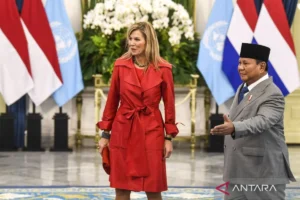
The culmination of her visit was a meeting with President Prabowo Subianto at the Merdeka Palace in Jakarta. This private audience, followed by a luncheon, provided Queen Máxima with the opportunity to convey her findings, impressions, and key recommendations derived from her extensive engagements across various sectors and regions. During the meeting, she likely shared insights on best practices observed, potential areas for further collaboration, and the importance of continued political commitment to advancing financial inclusion. President Prabowo, in turn, would have reiterated Indonesia’s dedication to economic empowerment for all citizens and expressed gratitude for the Queen’s invaluable advocacy and support. Such high-level dialogues are essential for translating on-the-ground observations into actionable policies and fostering international partnerships.
Broader Impact and Implications: A Catalyst for Further Progress
Queen Máxima’s fifth visit to Indonesia as UNSGSA serves as a powerful affirmation of the country’s progress in financial inclusion and a catalyst for future advancements. Her engagements, ranging from remote factories to presidential palaces, underscore the comprehensive approach required to tackle the complexities of financial exclusion.
The visit is expected to have several key implications:
- Reinforced Policy Momentum: The high-level discussions with OJK, BI, and Kemenkeu will likely reinforce Indonesia’s national financial inclusion strategy, potentially leading to the acceleration of existing programs and the development of new, innovative policies. The focus on digital financial services and financial literacy is particularly pertinent in Indonesia’s rapidly digitizing economy.
- Enhanced Partnerships: The interactions with the UN local office, IFC, and development organizations are expected to strengthen collaborative efforts, potentially attracting further international investment and technical assistance for financial inclusion initiatives in Indonesia.
- Spotlight on Innovation: The waste bank initiative at Gran Harmoni Cibitung, highlighted during her visit, could serve as a model for other regions or countries, inspiring creative solutions that integrate financial services with environmental sustainability and social impact. This also brings positive attention to local innovations in affordable housing finance.
- Empowerment of Vulnerable Groups: Her focus on factory workers, batik artisans, youth, and women directly addresses the needs of traditionally underserved segments. The visit could lead to more targeted programs aimed at these groups, improving their access to financial tools and resources.
- Global Advocacy and Learning: Indonesia’s experiences and innovations, particularly in digital finance and sustainable housing finance, will be shared on the global stage through Queen Máxima’s advocacy, offering valuable lessons for other developing economies facing similar challenges.
- Bilateral Relations: While her role was non-state, her presence implicitly strengthens the enduring bilateral relationship between the Netherlands and Indonesia, particularly in areas of economic cooperation and sustainable development.
In essence, Queen Máxima’s visit was more than a series of formal engagements; it was a strategic intervention designed to inspire, inform, and accelerate Indonesia’s journey towards a truly inclusive and resilient financial landscape. The insights gathered and the dialogues initiated during these four days are poised to have a lasting impact on millions of Indonesians, fostering greater financial health and contributing significantly to the nation’s broader developmental goals.
Baca juga: Ratu Maxima apresiasi inovasi BTN membayar cicilan KPR pakai sampah
Baca juga: Prabowo terima Ratu Maxima dari Kerajaan Belanda di Istana Merdeka
Baca juga: Ratu Maxima bahas soal kesehatan finansial saat kunjungan ke Solo
Pewarta: Melalusa Susthira Khalida
Editor: Alviansyah Pasaribu
Copyright © ANTARA 2025