Socio Today
The geopolitical landscape of the Middle East and Latin America has once again converged into a high-stakes arena of energy dominance, military intervention, and economic leverage. United States President Donald Trump has reignited global anxieties and market volatility following provocative remarks regarding Iran’s vast petroleum reserves. Speaking to reporters during a diplomatic visit to Ireland, Trump openly boasted that Washington could indefinitely sustain its military footprint in the Islamic Republic for the explicit purpose of seizing and controlling its oil resources, drawing a direct parallel to the controversial energy arrangements recently forced upon Venezuela.
The President’s statements underscore an aggressive, transactional foreign policy doctrine that links military engagement directly to resource acquisition and domestic economic relief. As crude oil prices react violently to ongoing blockades in the Strait of Hormuz and persistent hostilities, the international community watches with bated breath. The implications of Trump’s statements extend far beyond the immediate theater of conflict, threatening to rewrite the norms of international law, sovereign resource ownership, and global energy security.
Chronology of Escalation: From the Death of Khamenei to the Strait of Hormuz Crisis
To understand the weight of President Trump’s recent assertions, one must examine the rapid deterioration of relations between Washington and Teheran. The hostilities escalated dramatically on February 28, when a coordinated military campaign executed by United States and Israeli forces struck deep within Iranian territory. The operation resulted in the death of Iran’s Supreme Leader, Ayatollah Ali Khamenei, a monumental event that sent shockwaves through the Islamic world and fundamentally altered the political architecture of the Middle East.
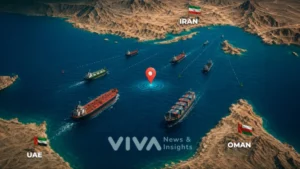
In swift retaliation, the Iranian military launched extensive missile and drone strikes targeting United States military installations and strategic assets stationed across neighboring countries. Furthermore, Teheran’s supreme national security entities ordered the total closure of the Strait of Hormuz—a narrow, vital chokepoint through which roughly a fifth of the world’s petroleum consumption passes. This strategic chokehold immediately crippled maritime trade, causing global energy markets to spiral and sending crude oil prices to unprecedented heights.
Although a temporary diplomatic respite was achieved through the tireless mediation efforts of Pakistan, the fragile peace dissolved almost as quickly as it was brokered. Both Washington and Teheran traded accusations of persistent ceasefire violations. President Trump formally declared that the peace agreement was dead, accusing the Iranian leadership of negotiating in bad faith while maintaining stringent military restrictions across the Persian Gulf.
The Venezuelan Blueprint: Replicating a Controversial Energy Model
President Trump’s strategy in Iran is not occurring in a vacuum; rather, it is modeled directly on his administration’s recent aggressive interventionism in South America. In January, the United States launched a targeted military operation that culminated in the dramatic abduction of Venezuelan President Nicolas Maduro. Since that operation, the political apparatus in Caracas has operated under immense, suffocating pressure from Washington.
This pressure materialized into a controversial pact announced in August. According to reports from The Hill and international news agencies, the Trump administration struck a deal allowing the United States to acquire 20 percent of its oil supply from North American Blue Energy Partners—a private entity functioning as Venezuela’s second-largest oil producer—at bare production costs. This discounted petroleum has been funneled directly into the United States Strategic Petroleum Reserve (SPR), which had been heavily depleted over prior years by both the Trump and Biden administrations to cushion American consumers from inflationary shocks triggered by the Iranian conflict and the ongoing war in Ukraine.
During his remarks in Ireland, Trump made it abundantly clear that a similar fate awaits Iran should Washington choose to prolong its military occupation. "On the edge of the day we will get out, unless we decide to stay and keep the oil as we did in Venezuela," Trump stated to reporters, adding that revenues generated from Venezuelan oil had already reimbursed the costs of military intervention "many times over."
Economic Realities and the Caracas Counter-Narrative
While Washington frames these resource-sharing agreements as strategic victories and reimbursement mechanisms, the local perspective presented by provisional Venezuelan authorities paints a somewhat more nuanced picture designed to placate domestic nationalist sentiment.
Delcy Rodriguez, serving as the provisional president of Venezuela, has publicly insisted that the South American nation retains its fundamental sovereignty despite the sweeping concessions made to Washington. According to statements cited by Al-Jazeera, Rodriguez characterized the arrangement as a historic 25-year pact involving 65 billion barrels of reserves. She argued that the framework would allow Venezuela to rehabilitate its dilapidated energy infrastructure, access vital foreign capital, and utilize advanced operational expertise while technically maintaining ownership over its natural endowments.
The projected agreement targets the development of 17 strategic oil fields with an initial production goal of 1.5 million barrels per day, alongside future expansions into eight additional blocks. Under the financial terms of the pact, Caracas is slated to receive $19 for every barrel produced and sold to the United States, translating to a potential gross revenue of up to $209 billion annually depending on market fluctuations.
Nevertheless, economic analysts remain deeply skeptical of such optimistic projections. Decades of severe international sanctions, chronic underinvestment, brain drain, and infrastructural decay have left Venezuela’s petroleum sector in a state of terminal disrepair. Whether foreign capital and American oversight can genuinely restore production capacities to pre-crisis levels remains a subject of intense debate among energy economists.
The Iranian Stance: Defiance and Denials
Unlike Caracas, which has been compelled to negotiate under the direct shadow of military intervention and regime decapitation, Teheran has projected unwavering defiance. President Trump’s recurrent claims that Iranian officials are frantically reaching out to Washington through backchannels to beg for peace talks have been met with absolute, vehement denials from Iranian state media and diplomatic representatives.
Teheran maintains that it will not capitulate to economic coercion or military intimidation. By maintaining its chokehold on the Strait of Hormuz, Iran continues to demonstrate its capacity to inflict severe pain on the global economy. Iranian military commanders have repeatedly warned that any attempts by the United States to establish a permanent presence or extract petroleum resources by force will be met with asymmetric warfare designed to drag the region into a protracted, unwinnable quagmire for foreign invaders.
Domestic Politics and the Timeline of Conflict
As the geopolitical crisis grinds forward, domestic political calculations inside the United States are increasingly driving the White House’s rhetoric. President Trump has repeatedly expressed his firm expectation that the military conflict with Iran will conclude either before or immediately following the critical United States midterm elections scheduled for November.
Trump has sought to pacify domestic voters—who are increasingly anxious about soaring inflation, cost-of-living crises, and the prospect of endless foreign wars—by promising that retail gasoline prices will "plummet drastically" the moment hostilities cease. By dangling the prospect of a swift victory and cheap, foreign-subsidized oil mirroring the Venezuelan model, the administration attempts to reframe a volatile military intervention as an economically beneficial endeavor for the American electorate.
However, political scientists and military experts caution that predicting the trajectory of asymmetric warfare in the Middle East is inherently perilous. Unlike conventional conflicts, an insurgency or protracted regional defense mounted by Iran and its powerful regional proxies cannot easily be neatly scheduled around an American electoral calendar.
Implications for Global Energy Security and International Law
The implications of President Trump’s stated desire to seize and control Iranian petroleum assets extend far beyond the immediate combatants, threatening to upend foundational principles of international law. For decades, the post-World War II global order has theoretically rested upon the inviolability of national sovereignty and the prohibition of territorial acquisition or resource appropriation by military force.
By explicitly comparing the potential occupation of Iranian oil fields to the ongoing resource extraction in Venezuela, the Trump administration appears to be signaling a normalization of neo-imperialist resource acquisition. Such a precedent could encourage other global and regional powers to use military might to secure vital commodities, precipitating a dangerous new era of resource nationalism and global instability.
Furthermore, global energy markets remain highly sensitive to these developments. The militarization of energy supply chains, the prolonged disruption of the Strait of Hormuz, and the weaponization of petroleum reserves create permanent structural inflation. While short-term tactical arrangements—such as the absorption of Venezuelan crude into the United States Strategic Petroleum Reserve—may offer temporary relief to American drivers, the systemic instability injected into the global market by the war with Iran guarantees long-term price volatility.
As the international community navigates this turbulent era, the dichotomy between Washington’s aggressive resource diplomacy and the fierce resistance of nations like Iran highlights an increasingly fractured world order. Whether President Trump’s ambitious vision of replicating the Venezuelan petroleum model in the heart of the Middle East will materialize, or whether it will shatter against the fierce realities of Iranian resistance, remains one of the defining questions of contemporary geopolitics.