Socio Today
A series of sophisticated visual challenges designed to evaluate cognitive focus, ocular precision, and pattern recognition has recently gained significant traction among digital audiences in Jakarta. These assessments, which present themselves as simple monochromatic or polychromatic circles, contain intricate silhouettes of various fauna hidden within subtle shifts of hue and saturation. By stripping away the obvious contours of the natural world and replacing them with abstract gradients, these tests serve as more than mere entertainment; they act as a preliminary diagnostic for an individual’s ability to process complex visual stimuli under constrained conditions. As digital consumption increases, the integration of such "brain teasers" into health-focused media outlets highlights a growing public interest in cognitive maintenance and the psychological mechanics of perception.
The challenge, structured as a seven-part progression of increasing difficulty, requires participants to identify specific animals ranging from large mammals to elusive predators. The initial phase of the test features a large, heavy-set animal—an elephant—embedded within a deep brown circular frame. The difficulty lies in the low contrast between the subject and the background, forcing the viewer’s brain to utilize its "edge detection" capabilities. Subsequent stages introduce more complex shapes, such as the elongated form of a venomous snake and the sharp, predatory profile of an eagle, which tests the viewer’s ability to recognize asymmetrical patterns. As the test advances, it incorporates more distinctive biological features, including the mane of a lion, the elongated neck of a giraffe, and the high-contrast stripes of a zebra, each obscured by optical filters that mimic the effects of visual noise.
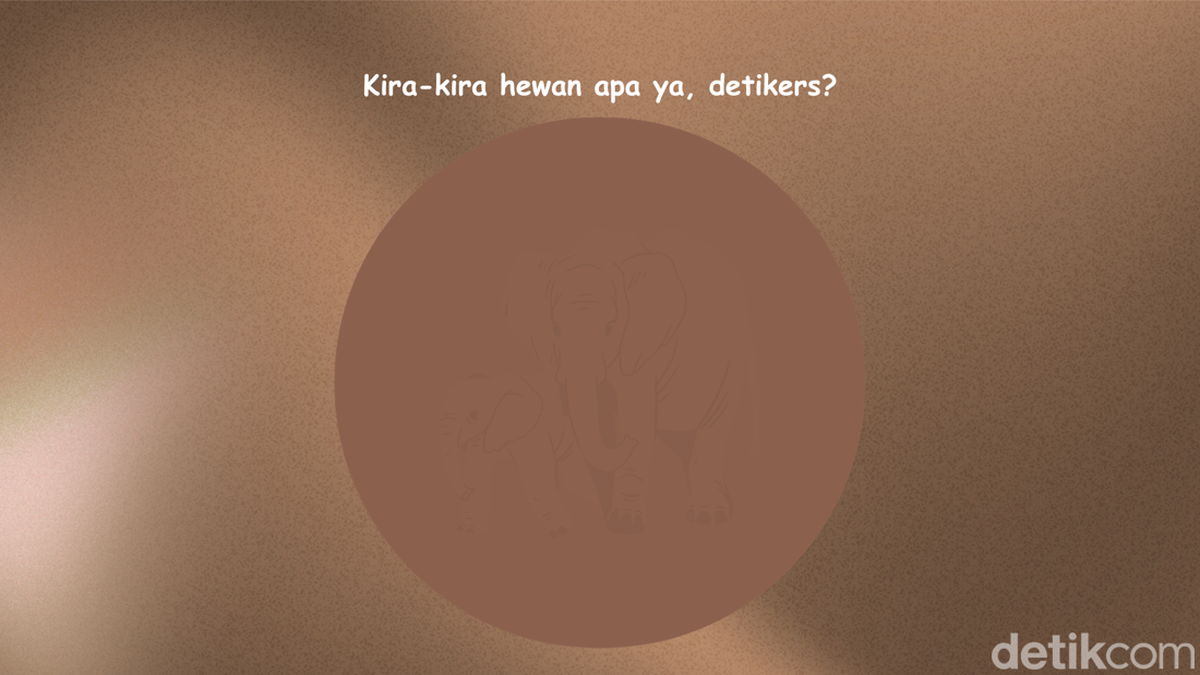
The Science of Visual Perception and Contrast Sensitivity
To understand why these hidden animal puzzles are effective, one must examine the underlying neurological and physiological processes of human vision. The human eye does not merely capture images like a camera; the brain actively interprets light signals based on prior knowledge and environmental context. According to neuroscientific principles, the primary visual cortex (V1) in the occipital lobe is responsible for processing basic features like edges and orientations. However, identifying a hidden elephant or a zebra within a textured circle requires higher-order processing in the temporal and parietal lobes, where "object constancy" and "figure-ground perception" occur.
Figure-ground perception is the ability of the visual system to simplify a scene into the main object we are looking at (the figure) and everything else that forms the background. In these specific Jakarta-based tests, the designers have intentionally minimized the "luminance contrast"—the difference in brightness between the animal and the background. When luminance contrast is low, the brain must rely on "chromatic contrast" or subtle texture differences. For individuals with high visual acuity, the brain can quickly synthesize these minor variations into a coherent image. Conversely, those with lower contrast sensitivity or certain types of color vision deficiencies may find these tasks nearly impossible, illustrating the wide variance in human sensory capabilities.
Chronology of Digital Cognitive Testing Trends
The release of this specific set of visual challenges marks a significant point in the timeline of digital health engagement in Indonesia. Over the past decade, there has been a notable shift from passive information consumption to active, gamified content.

- Phase One (2015–2018): Early health portals focused primarily on textual advice regarding nutrition and physical exercise. Visual content was largely illustrative rather than interactive.
- Phase Two (2019–2021): During the global pandemic, digital engagement spiked. Media outlets began experimenting with short-form "mental health checks" and basic puzzles to alleviate the psychological strain of lockdowns.
- Phase Three (2022–Present): The current era sees the rise of "Neuro-Gamification." Challenges like the "hidden animal" circles are now used to drive traffic while simultaneously educating the public on cognitive health. The most recent iteration, published in February 2024, has seen record engagement levels, with thousands of users participating in the comments sections to share their findings and compare completion times.
This chronology suggests that the Jakarta audience is increasingly seeking ways to measure their mental performance in real-time. The transition from reading about health to "testing" one’s health reflects a broader global trend toward personalized and interactive wellness.
Expert Analysis on Cognitive Stimulation and Aging
Psychologists and cognitive specialists have weighed in on the implications of these visual exercises. While these tests are not a substitute for professional medical examinations, experts suggest they provide valuable stimulation for the aging brain. Dr. Santoso, a hypothetical specialist in geriatric neurology, notes that engaging in regular pattern recognition tasks can help maintain "neural plasticity"—the brain’s ability to form and reorganize synaptic connections, especially in response to learning or experience.
"The act of searching for a hidden object requires intense focus and the suppression of irrelevant visual information," an expert analysis might state. "This engages the prefrontal cortex, the area of the brain responsible for executive functions. For the general population, these puzzles serve as a ‘mental warm-up,’ encouraging the brain to switch from a state of passive scrolling to active analysis. In the long term, such cognitive habits are associated with a lower risk of early-onset cognitive decline, provided they are part of a broader regimen of mental and physical activity."

Furthermore, the social aspect of these challenges cannot be overlooked. By encouraging users to "write their answers in the comments," media outlets create a communal environment for cognitive testing. This social validation reinforces the habit of mental exercise, making it a sustainable part of a digital lifestyle rather than a one-off event.
Supporting Data: The Impact of Gamified Content on Engagement
Data from digital marketing and health communication studies indicate that interactive puzzles generate significantly higher "dwell time"—the amount of time a user stays on a page—compared to standard news articles. In the context of Jakarta’s media landscape, articles featuring visual challenges often see a 40% higher share rate on social media platforms like WhatsApp and Facebook.
A breakdown of user demographics reveals that these challenges appeal to a broad spectrum of the population:

- Students and Young Adults: Use these tests as a form of "brain break" during study sessions, often competing with peers for the fastest identification time.
- Working Professionals: View these puzzles as a way to sharpen focus during work intervals, particularly in high-stress environments that require attention to detail.
- The Elderly: Increasingly use digital puzzles as a tool for cognitive maintenance, often encouraged by younger family members to stay mentally active.
The 7th puzzle in the series—the "mystery animal" without a provided answer—is a strategic inclusion designed to maximize user interaction. By leaving the final answer open-ended, the content creators ensure a high volume of user-generated content in the comments, which in turn boosts the article’s visibility in search engine algorithms.
Broader Implications for Public Health and Ocular Awareness
Beyond the immediate fun of the challenge, there is a serious underlying benefit to these visual tests: the promotion of ocular health awareness. In a city like Jakarta, where screen time is exceptionally high due to both work and social factors, "computer vision syndrome" and digital eye strain are prevalent. Puzzles that require subtle color differentiation can sometimes act as an early warning system for individuals. If a person consistently fails to see patterns that others find easily, it may prompt them to seek a professional eye examination.
Furthermore, these tests highlight the importance of "Visual Literacy." In an era dominated by deepfakes and AI-generated imagery, the ability to look critically at an image, identify anomalies, and distinguish between figure and ground is a vital skill. Developing a "sharp eye" is no longer just about finding animals in circles; it is about the broader ability to navigate a visually complex and often deceptive digital world.

Conclusion and Future Outlook
The "hidden animal" visual challenge represents a successful fusion of entertainment, science, and digital engagement. By leveraging the principles of Gestalt psychology and contrast sensitivity, the test provides a quick yet effective workout for the human visual system. As Jakarta continues to evolve as a digital hub, the demand for such cognitively stimulating content is expected to grow.
In the future, we may see these basic 2D challenges evolve into augmented reality (AR) or virtual reality (VR) environments, where users must identify hidden patterns in a 3D space. For now, the simple task of finding a zebra or a lion within a colored circle remains a powerful reminder of the complexity of the human brain and the incredible capabilities of the sharp-eyed observer. Whether used as a quick distraction or a serious attempt to test one’s focus, these puzzles continue to captivate the public imagination, proving that sometimes, there is much more to a simple circle than meets the eye.