Socio Today
The strategic revision of Law Number 34 of 2014 concerning Hajj Financial Management is emerging as a critical juncture for reinforcing governance and ensuring the long-term sustainability of Hajj funds, particularly in light of the escalating complexities surrounding the annual pilgrimage. This pivotal legislative review is deemed essential to fortify the institutional framework responsible for safeguarding and optimizing the vast pool of funds entrusted by millions of prospective pilgrims across Indonesia.
Background and the Genesis of BPKH
Indonesia, home to the world’s largest Muslim population, manages the largest Hajj pilgrimage contingent annually. The logistical and financial undertaking of sending hundreds of thousands of its citizens to the holy land is immense, making the prudent management of Hajj funds paramount. The Badan Pengelola Keuangan Haji (BPKH) or Hajj Financial Management Agency, was established as an independent body in 2017, commencing operations in 2018, to professionalize the management of these funds. Its creation was a direct response to historical challenges in fund management, aiming to provide greater transparency, accountability, and optimal returns for pilgrims. Prior to BPKH, Hajj funds were primarily managed directly by the Ministry of Religious Affairs, a structure that often drew criticism for its lack of specialization in financial investment and perceived vulnerabilities. The 2014 law was a significant step towards institutionalizing a dedicated financial body, marking a shift towards a more professional and independent approach to managing what is essentially a public trust fund.
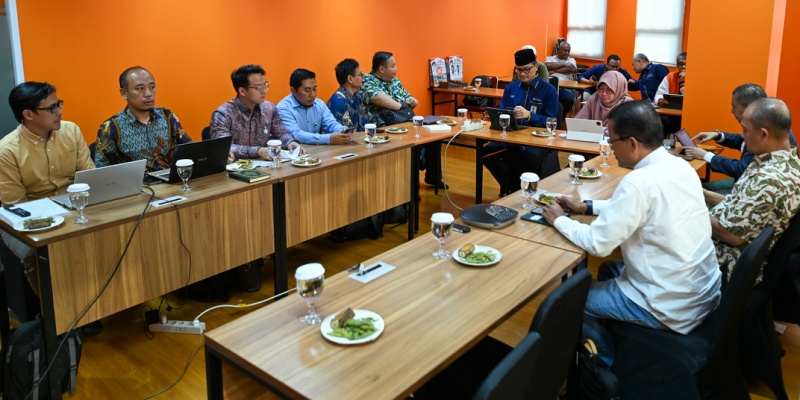
The establishment of BPKH brought with it considerable optimism, as articulated by Muhammad Kholid, Secretary General of the Prosperous Justice Party (PKS) Central Leadership Board. Speaking at a Focus Group Discussion (FGD) titled "Strengthening Hajj Financial Governance," organized by the Economic, Finance, and Industry (EKUIN) Division of the PKS DPP, Kholid underscored the initial high hopes for the agency. "BPKH was born with great optimism. We hoped that Hajj funds would be managed securely, provide good returns, and at the same time, keep Hajj costs affordable for the community," he stated, as quoted on Sunday, July 18, 2026. This sentiment reflects the dual mandate of BPKH: to grow the funds through sound investments and to use the "nilai manfaat" (investment returns) to subsidize Hajj costs, thereby easing the financial burden on pilgrims.
BPKH’s Track Record and Current Landscape
Since its inception, BPKH has striven to build public trust through rigorous adherence to governance principles. Fadlul Imansyah, Head of BPKH RI, affirmed the agency’s unwavering commitment to robust governance. He emphasized that public trust is a sacred responsibility that must be met with transparent and accountable management. "Alhamdulillah, BPKH has consistently received an Unqualified Opinion (WTP) from the Supreme Audit Agency (BPK) for seven consecutive years. This serves as proof that we continuously uphold the governance and accountability of Hajj financial management," Fadlul proudly stated. An Unqualified Opinion is the highest audit rating, indicating that the financial statements are presented fairly and accurately, in all material respects, in accordance with applicable financial reporting frameworks. This consistent achievement significantly bolsters BPKH’s credibility and underscores its commitment to fiscal integrity.
The scale of BPKH’s operations is substantial. Fadlul Imansyah detailed that the agency currently manages approximately Rp 184 trillion (approximately USD 11.5 billion, based on an assumed exchange rate of Rp 16,000/USD). This colossal fund is derived from initial deposits made by prospective pilgrims, who often register years, if not decades, in advance due to Indonesia’s exceptionally long Hajj waiting list, which can stretch over 20-40 years in some regions. With an annual quota of over 200,000 pilgrims, the continuous flow of new registrations and the compounding returns on existing funds contribute to this growing asset base. BPKH’s objective is to generate optimal "nilai manfaat" from these funds to support the operational costs of Hajj and to keep the direct pilgrimage fees manageable for pilgrims. For 2026, the agency targets a "nilai manfaat" of approximately Rp 12.3 trillion (approximately USD 768 million). This "nilai manfaat" plays a crucial role in bridging the gap between the actual cost of Hajj and the amount paid by pilgrims, thus ensuring affordability for a broader segment of Indonesian society. Without this subsidy, the Hajj cost would be significantly higher, potentially making it inaccessible for many.
The Legislative Imperative: Prioritizing Fund Security and Independence
The proposed revision of the Hajj Financial Management Law is not merely a technical adjustment but a strategic move to refine the legal framework that underpins BPKH’s operations. Anis Byarwati, a member of Commission XI of the House of Representatives (DPR RI) from the PKS Faction, stressed that the paramount concern in this legislative overhaul must remain the security of pilgrims’ funds. "The core of Hajj financial management is that the funds must be secure. Regardless of the amount of ‘nilai manfaat’ generated, the principle of prudence must never be abandoned," Anis asserted. This highlights a fundamental tension: the need to generate returns versus the imperative to protect the principal from undue risk. Given that these funds represent the life savings and spiritual aspirations of millions, a conservative, risk-averse investment strategy is generally preferred, even if it means potentially lower returns compared to more aggressive portfolios.
Consequently, Anis argued that the discussions surrounding the law’s revision must be directed towards further clarifying and strengthening BPKH’s independence as the sole body responsible for managing Hajj funds. "We need to ensure BPKH has a robust institutional foundation to professionally carry out its mandate of managing the umat’s (community’s) funds," she emphasized. Institutional independence is crucial to shield BPKH from political interference, ensure purely financial and ethical decision-making, and maintain its focus on the long-term sustainability of the Hajj fund. A clear delineation of roles and responsibilities between BPKH, the Ministry of Religious Affairs (which organizes the Hajj pilgrimage itself), and other government bodies is essential for effective governance.
Optimizing Investment Strategies: The Saudi Arabia Nexus
Beyond structural governance, the discussion also delved into optimizing investment strategies. Kuncoro Hadi, Head of the Sharia Economy Department of the PKS DPP, suggested that enhancing the "nilai manfaat" necessitates more optimal investment approaches, including an expansion of direct investments in Saudi Arabia. "The potential for investment in Saudi Arabia needs to be utilized more optimally because it has a direct connection to the Hajj pilgrimage ecosystem. This way, the benefits are also directly felt by the pilgrims," he explained.
Direct investment in Saudi Arabia could encompass various sectors directly related to Hajj and Umrah services, such as hospitality (hotels near the Grand Mosque in Mecca and Prophet’s Mosque in Medina), transportation infrastructure (bus fleets, railway projects), catering services, and even healthcare facilities for pilgrims. Such investments could yield dual benefits: financial returns for the Hajj fund and improved service quality or cost efficiencies for Indonesian pilgrims. For instance, owning or having a stake in hotels frequented by Indonesian pilgrims could potentially reduce accommodation costs or guarantee consistent quality. This strategy aligns with models adopted by other Hajj fund management bodies, such as Malaysia’s Tabung Haji, which has a track record of strategic investments in the Hajj ecosystem.

However, Kuncoro also acknowledged existing impediments in the investment decision-making mechanisms that warrant evaluation. "If the direct investment mechanism is still considered too complicated because it requires decisions from all members of the Executive Board and Supervisory Board, then the law revision can be a momentum to review relaxations to that mechanism, without reducing the principles of prudence and accountability," he concluded. This points to potential bureaucratic hurdles or overly stringent approval processes that might hinder timely and agile investment decisions. Finding a balance between robust oversight and efficient decision-making is a delicate task, especially when dealing with such substantial public funds. Any relaxation of procedures must be carefully calibrated to avoid compromising the fundamental principles of transparency, accountability, and prudence that are critical to maintaining public trust.
Broader Implications and the Path Forward
The proposed revision of the Hajj Financial Management Law carries significant implications not only for BPKH but for the broader ecosystem of Hajj pilgrimage in Indonesia. Stronger governance and optimized investment strategies could lead to several positive outcomes:
- Enhanced Pilgrim Trust: Clearer regulations and demonstrated accountability will further solidify the trust pilgrims place in BPKH to manage their sacred funds responsibly. This trust is invaluable for the continued success of the Hajj program.
- Increased Affordability: Higher "nilai manfaat" means a greater capacity to subsidize Hajj costs, potentially mitigating the impact of rising global travel and accommodation expenses. This is particularly crucial as Hajj costs, set by the Saudi government and influenced by global economic factors, have shown an upward trend.
- Improved Service Quality: Direct investments in Saudi Arabia, if strategically executed, could translate into better services, facilities, and overall experience for Indonesian pilgrims, ensuring their comfort and well-being during the pilgrimage.
- Economic Contributions: The substantial funds managed by BPKH, when invested domestically and internationally, contribute to economic growth and development, both within Indonesia and potentially in Saudi Arabia, fostering closer economic ties.
- Long-Term Sustainability: A robust legal framework will ensure the Hajj fund’s resilience against economic shocks, inflation, and currency fluctuations, safeguarding its ability to support future generations of pilgrims.
The revision process will undoubtedly involve extensive consultations with various stakeholders, including the Ministry of Religious Affairs (which oversees the overall Hajj pilgrimage), the Financial Services Authority (OJK) which regulates financial institutions, religious scholars (Ulama) who provide guidance on sharia compliance, and pilgrim associations representing the interests of the community. These discussions will need to address complex issues such as the precise scope of BPKH’s investment mandates, the balance between independence and government oversight, and the mechanisms for ensuring both financial returns and social impact.
The challenges of managing the Hajj pilgrimage are multifaceted, encompassing not just finance but also logistics, health, and spiritual guidance. Indonesia’s commitment to continuously improving its Hajj financial management through legislative reform underscores its dedication to serving its pilgrims with the utmost care and professionalism. The upcoming revision of Law Number 34 of 2014 is therefore more than just a legal amendment; it is a strategic endeavor to fortify a vital institution and ensure the enduring legacy of a sacred journey for millions.