Soaring Soybean Prices Cripple Tofu Production Nationwide, Prompting Central Java’s Subsidy Readiness Amidst Recurring Food Security Concerns

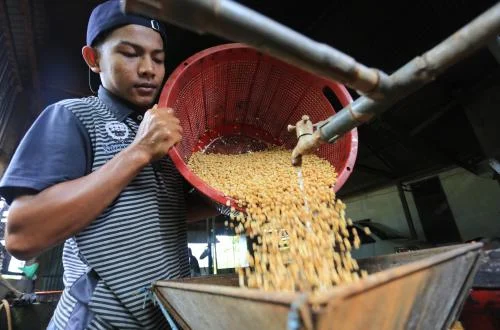
The Indonesian staple food industry, particularly the vital tahu (tofu) and tempeh sectors, continues to grapple with the persistent challenge of volatile soybean prices, a recurring issue that has significantly impacted producers and raised concerns about national food security. While a specific instance in October 2022 saw tahu producers in Desa Lapang, Johan Pahlawan, Aceh Barat, facing a drastic 50 percent production cut due to an immediate increase in soybean prices from Rp675,000 to Rp730,000 per 50 kg bag, the problem persists, leading the Central Java Provincial Government to declare its readiness for intervention. As recently as April 15, 2026, Dyah Lukisari, Head of the Food Security Agency (Dishanpan) of Central Java, confirmed that the provincial administration is prepared to disburse subsidies to alleviate the burden on local producers, though specific criteria must be met before such aid can be deployed. This ongoing struggle underscores Indonesia’s deep reliance on imported soybeans and the vulnerability of its crucial food supply chain to global market fluctuations and geopolitical shifts.
The Recurring Crisis: A National Challenge
The incident in Aceh Barat in late 2022 served as a stark reminder of the fragile economics underpinning Indonesia’s traditional food industry. At that time, a significant hike in soybean prices, approximately 8.1 percent within a month, forced many small and medium-sized enterprises (SMEs) to make difficult choices. Producers, facing dwindling profit margins and rising operational costs, resorted to reducing production volumes by half and, critically, shrinking the size of individual tahu pieces to mitigate the financial impact. This measure, while helping to absorb some of the increased raw material costs, directly affected consumer expectations and the overall value proposition of these everyday protein sources. The scenario highlighted the tightrope walk for these businesses, which operate on typically thin margins, leaving them highly susceptible to external shocks in input costs. The cultural significance of tahu and tempeh as affordable and accessible protein sources for millions of Indonesians means that price volatility in soybeans has far-reaching socio-economic implications, affecting not just producers but also household budgets and dietary habits across the archipelago.
Central Java’s Proactive Stance Amidst Ongoing Volatility (April 2026)
Fast forward to April 2026, and the issue of escalating soybean prices continues to plague the industry, prompting a more formalized response from regional governments. The Central Java Provincial Government, recognizing the sustained pressure on its local tahu and tempeh producers, has signaled its intent to provide targeted financial assistance. Dyah Lukisari, representing Dishanpan Central Java, articulated the province’s readiness to implement a subsidy program. However, she emphasized that while the need is evident, soybeans are not categorized as "strategic staple foods" under existing regulations, necessitating adherence to specific criteria for subsidy allocation. This distinction often limits immediate government intervention compared to commodities like rice or cooking oil, which typically receive more direct and immediate price stabilization measures.
Criteria for Intervention
According to Dyah Lukisari, the trigger for subsidy disbursement would be a substantial increase in soybean prices, specifically a rise of 20 percent above the established market reference price. This threshold aims to ensure that subsidies are deployed only when price spikes reach a critical level, indicating a severe market distortion or supply challenge that cannot be absorbed by producers. The provincial government’s cautious approach reflects the need for fiscal prudence and the desire to target interventions effectively. The mechanism for determining the "market reference price" typically involves surveying average prices across various markets over a defined period, providing a baseline against which current price movements are measured.
Targeted Support for SMEs
A critical aspect of Central Java’s proposed subsidy program is its focus on small and medium-sized enterprises (SMEs). Dyah Lukisari explicitly stated that if activated, the subsidies would not be directed towards large cooperatives or industrial-scale producers. Instead, the program would meticulously select small and medium-sized business operators who are most vulnerable to price fluctuations and whose survival is essential for local economies and food supply. This targeted approach aims to ensure that the aid reaches those who are genuinely struggling and who represent the backbone of the traditional food sector, preventing large entities from disproportionately benefiting from public funds. The selection process would likely involve verification of business size, production capacity, and demonstrated impact from the price increases, ensuring transparency and accountability in the distribution of assistance.
Understanding Indonesia’s Soybean Dependency
Indonesia’s recurring soybean price crises are intrinsically linked to its heavy reliance on imports. Despite being an agricultural nation, domestic soybean production has consistently fallen short of national demand for decades. Indonesia imports approximately 2.5 to 3 million tons of soybeans annually, primarily from major global producers such as the United States, Brazil, and Argentina. Domestic production, constrained by factors like limited suitable land, lower yields compared to imported varieties, and competition with more lucrative crops like palm oil, typically hovers around 600,000 to 900,000 tons per year. This significant supply-demand gap means that Indonesia’s food security, particularly for tahu and tempeh, is directly exposed to the vagaries of the international soybean market.
Global Market Dynamics
The global soybean market is highly sensitive to a multitude of factors. Weather patterns in major producing regions, such as droughts or excessive rainfall in the US Midwest or South America, can significantly impact harvests and, consequently, global supply. Geopolitical tensions, as highlighted by Dyah Lukisari, also play a crucial role. Trade disputes, export restrictions, and conflicts affecting shipping routes can disrupt supply chains, increase freight costs, and drive up prices. Furthermore, the robust demand from China, the world’s largest importer of soybeans (primarily for animal feed), exerts immense influence on global prices. Any shift in Chinese demand or domestic production can send ripples across the international market. The strength of the US dollar against the Indonesian Rupiah also exacerbates the problem, as a weaker Rupiah makes imported soybeans more expensive in local currency terms, even if international dollar prices remain stable. This complex interplay of agricultural, economic, and political factors makes the global soybean market inherently volatile, a reality that Indonesian producers must constantly contend with.
The Socio-Economic Fabric of Tofu and Tempeh
Tofu and tempeh are not merely food items in Indonesia; they are integral to the nation’s culinary identity and a fundamental component of the average Indonesian diet. They are celebrated for their affordability, versatility, and high protein content, making them crucial sources of nutrition, especially for lower-income households. The production of tahu and tempeh also supports a vast network of micro, small, and medium enterprises (MSMEs) across the archipelago. These businesses, often family-owned and passed down through generations, provide livelihoods for millions of people, from the producers themselves to the vendors, distributors, and ancillary service providers. The economic impact of price volatility on these MSMEs can be devastating, leading to business closures, job losses, and a decline in local economic activity. The cultural embeddedness and economic significance of these products mean that their continued affordability and availability are paramount for social stability and economic well-being.
Historical Precedents and Policy Responses
The 2022 and 2026 soybean price challenges are not isolated incidents but rather part of a recurring pattern in Indonesia. The country has faced similar crises in 2008, 2012, and 2021, each time prompting a scramble for solutions. Past government responses have included import duty waivers, direct subsidies, market operations to stabilize prices, and calls for increased domestic production. However, these measures have often been reactive and short-term, failing to address the fundamental structural issues. The government’s broader "Stabilisasi Pasokan dan Harga Pangan" (SPHP) program, aimed at stabilizing food supply and prices, typically focuses on key strategic commodities. While it can provide some relief, as Dyah Lukisari noted, it often falls short of resolving the deep-seated problems faced by smaller players in non-strategic sectors like soybean processing. The challenge lies in developing a comprehensive, long-term strategy that goes beyond stop-gap measures.
Beyond Subsidies: Towards Sustainable Solutions
While subsidies offer immediate relief, they are not a sustainable long-term solution to Indonesia’s soybean dependency. A multi-pronged approach is essential for building resilience in the tahu and tempeh industries.
Diversification and Domestic Production Enhancement
Increasing domestic soybean production is a critical, albeit challenging, long-term goal. This requires significant investment in agricultural research to develop high-yield, climate-resilient soybean varieties suitable for Indonesian conditions. Incentives for farmers, including guaranteed off-take prices, access to affordable credit, and technical assistance, are crucial to encourage cultivation. Furthermore, exploring alternative protein sources or diversifying the raw materials for traditional fermented foods could reduce reliance on a single commodity.
Supply Chain Optimization
Improving the efficiency and transparency of the soybean supply chain, from import to distribution, can help mitigate price volatility. This includes strengthening logistics infrastructure, reducing bureaucratic hurdles, and fostering fair trading practices to prevent price manipulation by middlemen. Establishing effective buffer stock mechanisms for soybeans could also provide a safety net during periods of global supply disruption.
Empowering Producers and Consumers
Beyond direct subsidies, empowering tahu and tempeh producers through training in business management, access to modern technology, and collective bargaining power can enhance their resilience. For consumers, promoting awareness of alternative protein sources and supporting local food systems can contribute to a more diversified and stable food environment. Education campaigns on home gardening or community-based food initiatives could also play a role in increasing food self-sufficiency at the household level.
The Broader Geopolitical and Economic Landscape
The persistent challenges underscore Indonesia’s intricate position within the global economy. As Dyah Lukisari pointed out, geopolitical factors are increasingly influencing commodity prices. Conflicts, trade protectionism, and shifts in international alliances can have tangible impacts on supply chains and pricing for essential goods, even those sourced from distant lands. For Indonesia, a nation with a large and growing population, ensuring a stable and affordable food supply requires not only robust domestic policies but also adept diplomatic engagement and strategic international partnerships. The fluctuating exchange rate of the Rupiah against major currencies, particularly the US dollar, also remains a significant variable. A weakening Rupiah directly translates to higher import costs, placing additional pressure on industries reliant on foreign raw materials. This economic reality necessitates careful fiscal management and policies aimed at maintaining macroeconomic stability.
Looking Ahead: A Call for Comprehensive Strategy
The ongoing struggle with soybean prices, exemplified by the production cuts in Aceh Barat in 2022 and the Central Java government’s subsidy preparations in 2026, highlights a systemic vulnerability in Indonesia’s food sector. While regional governments are stepping up with responsive measures, the long-term solution demands a concerted, national effort. This encompasses bolstering domestic agricultural capacity, diversifying food sources, optimizing supply chains, and developing robust risk mitigation strategies against global market volatility and geopolitical shocks. Only through a comprehensive and sustained strategic approach can Indonesia ensure the continued availability and affordability of staple foods like tahu and tempeh, safeguarding the livelihoods of millions of producers and the nutritional well-being of its vast population. The lessons from past and present crises must inform a future where food security is not merely a reactive measure but a proactive and resilient national priority.