President Trump Threatens Federal Reserve Chair Jerome Powell with Dismissal Amidst Criminal Investigation and Central Bank Independence Concerns

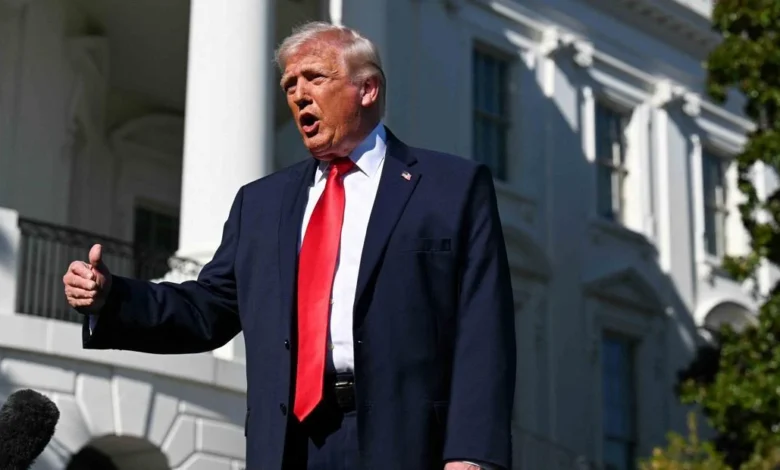
President Donald Trump has issued a stark ultimatum to Federal Reserve Chair Jerome Powell, threatening to terminate his tenure if Powell does not resign from the central bank’s Board of Governors when his term concludes in May 2026. The extraordinary threat, delivered on Thursday, April 16, 2026, casts a long shadow over the future of the nation’s monetary policy leadership and raises profound questions about the sanctity of the Federal Reserve’s independence. "If he doesn’t, then I’ll have to fire him," Trump declared when questioned about Powell’s potential continued presence at the Fed, a statement widely reported by major news outlets including CNN.
The President’s aggressive stance comes amidst a deepening criminal investigation and a subpoena from the U.S. Department of Justice (DoJ) targeting Powell. The probe centers on allegations that Powell misled Congress regarding the extensive $2.5 billion renovation of the Federal Reserve’s headquarters in Washington D.C. This issue has become a persistent focal point for the Trump administration, frequently cited as part of its broader, long-standing critique of Powell’s leadership and the central bank’s operational decisions. The confluence of a high-profile criminal inquiry and a direct presidential threat represents an unprecedented challenge to the autonomy of the Federal Reserve, a cornerstone of global financial stability.
A History of Acrimony: Trump’s Long-Standing Feud with the Fed Chair
The current tensions are not an isolated incident but rather the latest escalation in a tumultuous relationship between President Trump and Jerome Powell that dates back to Trump’s first term in office. Appointed by Trump in November 2017, Powell initially seemed poised to maintain the tradition of central bank independence. However, the relationship quickly soured as the Fed, under Powell’s leadership, pursued a course of gradual interest rate hikes in 2018, aimed at normalizing monetary policy following the 2008 financial crisis.
President Trump, a staunch advocate for lower interest rates to stimulate economic growth, publicly and repeatedly criticized Powell, labeling the Fed as the nation’s "biggest threat" and an "enemy" of the United States. He frequently lamented the Fed’s policies, arguing they were hindering economic expansion and undermining his administration’s efforts. These criticisms broke with decades of presidential tradition of respecting the Fed’s operational independence, sparking widespread concern among economists, policymakers, and market participants. The specter of a president attempting to dictate monetary policy or remove a Fed Chair became a recurring theme, though no such direct action was taken during Trump’s initial presidency. The current threat, therefore, revives and intensifies these historical anxieties, pushing them into an even more precarious legal and political territory.
The Renovation Controversy: Allegations of Misconduct and Escalating Scrutiny
At the heart of the immediate crisis is the multi-billion-dollar renovation project at the Federal Reserve’s iconic Eccles Building headquarters. The DoJ’s criminal investigation and subpoena reportedly stem from allegations that Powell either misrepresented the project’s scope and costs to congressional oversight committees or actively obstructed inquiries into the burgeoning budget. Initial reports suggest the renovation, a long-term undertaking, has seen its costs swell by nearly 80% from its original budget, a significant overrun that has attracted congressional ire and now, criminal scrutiny.
The specifics of the "lying to Congress" allegation remain under wraps due to the ongoing investigation, but sources indicate it may involve the deliberate withholding of information or the provision of misleading details regarding the project’s financial trajectory and timeline. The DoJ’s involvement signals a serious turn, moving beyond mere oversight into potential criminal misconduct.
Further escalating the situation, on Tuesday, April 14, two prosecutors from the District of Columbia’s U.S. Attorney’s Office, led by U.S. Attorney Jeanine Pirro, were reportedly denied entry when they made an unscheduled visit to the Fed’s headquarters to inspect the renovation progress. "Any construction project that experiences an almost 80% cost overrun from its initial budget warrants serious review," Pirro stated in a public announcement, underscoring the gravity of the allegations. In response, Robert Hur, an attorney representing the Federal Reserve, reportedly cautioned one of the prosecutors against future unannounced visits without the presence of the Fed’s legal counsel, highlighting the procedural friction and heightened tensions surrounding the investigation. This standoff at the Fed’s doorstep underscores the extraordinary level of distrust and animosity between the administration and the central bank.
The Succession Question and Congressional Gridlock
Against this backdrop, President Trump has actively championed former Federal Reserve Governor Kevin Warsh as a potential successor to Powell. In January 2026, Trump publicly endorsed Warsh, whose term as a Fed Governor concluded in 2011, indicating a clear preference for a new direction at the central bank. Warsh, known for his hawkish views on inflation and his prior experience on the Fed’s Board during the 2008 financial crisis, is widely perceived as someone who would align more closely with the administration’s economic philosophies, particularly regarding interest rates and regulatory policy.
However, the nomination process for a Federal Reserve Chair is subject to Senate confirmation, and the ongoing investigation into Powell has complicated matters significantly. Senator Thom Tillis (R-NC), a pivotal member of the Senate Banking Committee responsible for vetting Fed Chair nominees, has publicly stated that he would not cast a vote on any candidate until the investigation into Powell is fully resolved. This stance reflects a broader concern within Congress about the integrity of the institution and the need for due process, regardless of political leanings. The Trump administration, while pushing for Warsh, has concurrently reaffirmed its support for the DoJ investigation this week. This dual approach risks delaying Warsh’s nomination, potentially leading to a legal confrontation and inadvertently prolonging Powell’s tenure as Chair, should a replacement not be confirmed by May 2026.
The Cornerstone of Independence: Legal and Institutional Implications
The threat to fire a Federal Reserve Chair is not only politically volatile but also legally fraught, touching upon the very foundations of the central bank’s independence. The Federal Reserve Act specifies that members of the Board of Governors, including the Chair, "may be removed for cause by the President." This "for cause" clause is critical. Historically, it has been understood to mean removal for dereliction of duty, misconduct, or incapacity, not for policy disagreements or political expediency. No Federal Reserve Chair has ever been removed by a President.
Legal scholars and constitutional experts are divided on what exactly constitutes "cause" in this context and whether differing monetary policy views or even allegations of misconduct related to internal administrative matters would suffice. Many argue that removing a Fed Chair for anything less than severe, demonstrable criminal misconduct unrelated to policy would set a dangerous precedent, undermining the institutional safeguards designed to insulate monetary policy from short-term political pressures. Such an action could trigger a constitutional crisis, potentially leading to protracted legal battles and congressional impeachment proceedings against the President, depending on the circumstances. The ambiguity surrounding "for cause" could necessitate a Supreme Court review, further prolonging uncertainty.
The Federal Reserve’s independence is globally recognized as crucial for maintaining economic stability. It allows the central bank to make difficult, sometimes unpopular, decisions regarding interest rates, inflation, and financial regulation without succumbing to the electoral cycle’s demands. Undermining this independence could erode domestic and international confidence in the U.S. economy, leading to unpredictable market volatility and potentially jeopardizing the dollar’s status as the world’s primary reserve currency.
Market Reactions and Economic Ramifications
The financial markets typically react with extreme sensitivity to any perceived threats to the Federal Reserve’s autonomy. News of President Trump’s ultimatum and the ongoing investigation has already begun to ripple through global financial centers, contributing to an atmosphere of uncertainty. Analysts anticipate that prolonged instability regarding the Fed’s leadership could trigger significant market volatility, potentially affecting equity markets, bond yields, and currency valuations.
Investors crave predictability and stability, especially from institutions as pivotal as the central bank. A politically motivated change in Fed leadership, or even the perception of it, could lead to a reassessment of future monetary policy paths. If a new Chair is appointed who is perceived as more amenable to political pressure, there could be expectations of lower interest rates or a less stringent approach to inflation, potentially leading to inflationary pressures or a loss of confidence in the Fed’s commitment to its dual mandate of maximum employment and price stability. The uncertainty surrounding the Fed’s future direction could lead to capital flight, increased borrowing costs for the U.S. government, and a general dampening of economic activity.
Broader Political Landscape and the 2026 Horizon
The timing of Powell’s term expiration in May 2026 places this controversy squarely within a critical period for both the administration and the nation. President Trump’s actions can be viewed through the lens of his consistent desire to exert greater control over institutions he perceives as unresponsive to his agenda. The use of a criminal investigation as leverage to force a resignation or justify a dismissal highlights the potential weaponization of government agencies for political ends, a concern frequently voiced by civil liberties advocates and opposition parties.
This situation presents a significant test for the checks and balances within the U.S. government. Congress, the judiciary, and the Federal Reserve itself will likely play critical roles in determining the outcome. The prospect of a protracted legal and political battle over the Fed Chair’s position could consume significant political capital and distract from other pressing national issues.
As the May 2026 deadline approaches, the nation stands at a critical juncture regarding the future of its central bank. The unprecedented nature of President Trump’s threat, combined with the serious allegations surrounding the Fed’s headquarters renovation, has plunged the Federal Reserve into a crisis that challenges its institutional integrity and its long-cherished independence. The resolution of this standoff will have profound implications not only for U.S. monetary policy and economic stability but also for the global perception of American governance and its commitment to independent institutions.