Socio Today
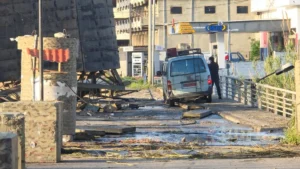
The southern Lebanese town of Ghazieh became the site of a devastating military escalation on Friday, as an Israeli airstrike claimed the lives of at least seven individuals and left 33 others wounded. The timing of the assault has drawn sharp international scrutiny, occurring just hours before a landmark ten-day ceasefire agreement, brokered by United States President Donald Trump, was scheduled to take effect between Israel and Lebanon. As emergency responders sift through the remains of residential structures, the tragedy highlights the extreme volatility of the border region and the fragile nature of diplomatic efforts intended to halt over a year of intensified hostilities.
Lebanese state media described the incident as a "massacre against civilians," reporting that the strike targeted a densely populated area within the town, located just south of Sidon. The Lebanese Ministry of Health confirmed the casualty figures, though officials cautioned that the numbers remain preliminary. Search and rescue operations are currently underway, with civil defense teams working against the clock to locate survivors beneath the concrete slabs of destroyed buildings. The Ministry noted that the severity of the injuries among the 33 hospitalized suggests the death toll may rise as medical teams struggle to stabilize those in critical condition.
The Diplomatic Breakthrough: A Ten-Day Window for Peace
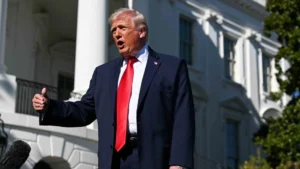
The violence in Ghazieh stands in stark contrast to the diplomatic momentum generated earlier in the day by United States President Donald Trump. Utilizing his social media platform, Truth Social, the President announced that a formal agreement had been reached between the warring parties to observe a cessation of hostilities. This agreement, described as a ten-day cooling-off period, was the result of direct negotiations involving high-level representatives from both nations.
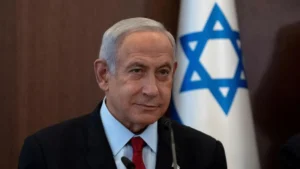
"I have just had very good conversations with the honorable President Joseph Aoun of Lebanon and Prime Minister Bibi Netanyahu of Israel," President Trump stated in his announcement. He further specified that the ceasefire was slated to officially commence at 5:00 PM Eastern Standard Time (EST). The President framed the agreement as a necessary first step toward a more permanent resolution, emphasizing that both leaders had committed to the timeframe as a means to "achieve peace between their countries."
The choice of Joseph Aoun, the Commander of the Lebanese Armed Forces, as a primary interlocutor reflects the complex political landscape in Lebanon. With the country’s presidency vacant and the government in a caretaker capacity, the military has often been viewed by the international community as the most stable institution capable of enforcing security arrangements. On the Israeli side, Prime Minister Benjamin Netanyahu faces intense domestic pressure to secure the northern border, where tens of thousands of Israeli citizens remain displaced due to ongoing rocket fire.
Chronology of the Escalation and the Agreement
The events leading up to the Ghazieh strike and the subsequent ceasefire announcement follow a rapid timeline of military intensity and back-channel diplomacy.
Wednesday, April 15, 2026: Reports emerge of intensified diplomatic cables between Washington, Beirut, and Jerusalem. US mediators propose a "short-term humanitarian pause" to allow for aid delivery and the assessment of border security protocols.
Thursday, April 16, 2026:
- Morning: Israeli Defense Forces (IDF) conduct several sorties over Southern Lebanon, citing the movement of "hostile infrastructure."
- Afternoon: President Trump holds separate telephonic summits with General Joseph Aoun and Prime Minister Netanyahu.
- Evening: The White House and Truth Social channels confirm the 10-day ceasefire agreement, scheduled for the following day at 5:00 PM EST.
Friday, April 17, 2026:
- Early Morning: Israeli aircraft strike targets in Ghazieh. The Lebanese Ministry of Health reports immediate civilian casualties.
- Mid-Morning: Lebanese state media outlets condemn the strike as an attempt to undermine the ceasefire before it begins.
- Afternoon: Rescue operations continue in Ghazieh as the 5:00 PM EST (midnight in Lebanon/Israel) deadline approaches.
Tactical Context and Regional Impact
The strike on Ghazieh is significant not only for its timing but also for its location. Ghazieh is situated approximately 40 kilometers north of the border with Israel, placing it outside the immediate "Blue Line" combat zone. In recent months, the IDF has expanded its target bank to include logistics hubs and urban centers further north, arguing that these areas are used to facilitate the movement of munitions. However, the high civilian toll in Friday’s strike has reignited accusations of disproportionate force.
For Lebanon, the strike exacerbates an already dire humanitarian situation. Since the escalation of border conflicts, the Lebanese healthcare system has been pushed to the brink of collapse. The 33 wounded in Ghazieh have been distributed among several hospitals in Sidon, many of which are already reporting shortages of essential medical supplies and fuel for generators.
In Israel, the announcement of a ceasefire was met with a mixture of relief and skepticism. While residents of northern Galilee hope for a return to their homes, political hardliners within Netanyahu’s coalition have expressed concern that a 10-day pause provides an opportunity for militant groups to regroup and rearm. The Israeli military has not issued a specific comment on the Ghazieh strike but maintained that its operations are conducted based on intelligence regarding imminent threats.
Supporting Data: The Human and Economic Toll
The conflict has exacted a heavy price on both nations over the past year. According to data compiled by regional monitoring groups and United Nations agencies:
- Displacement: Over 100,000 Lebanese civilians have been internally displaced from southern villages, while approximately 80,000 Israelis remain away from their homes in the north.
- Casualties: Prior to the Ghazieh strike, the death toll in Lebanon had exceeded 1,200, including combatants and civilians. Israel has reported dozens of fatalities, primarily among military personnel and civilians in border towns.
- Infrastructure: In Southern Lebanon, more than 15,000 housing units have been partially or completely destroyed. In Northern Israel, agricultural losses and damage to civilian property are estimated in the hundreds of millions of dollars.
The ten-day ceasefire is intended to provide a window for the United Nations Interim Force in Lebanon (UNIFIL) to increase its patrols and for humanitarian convoys to reach isolated populations. However, the success of such a window depends entirely on the adherence of non-state actors and the restraint of the IDF.
International Reactions and Analysis of the Ceasefire
The international community has reacted with cautious optimism to the Trump-brokered deal, though the Ghazieh strike has cast a long shadow over the news. A spokesperson for the United Nations Secretary-General welcomed the announcement but urged "maximum restraint" in the final hours leading up to the deadline.
"Every life lost in these final hours is a tragedy that underscores why this ceasefire must hold," the UN statement read. European leaders, including those from France—which has historical ties to Lebanon—expressed hope that the 10-day period could be extended into a more durable cessation of hostilities.
Political analysts suggest that the "10-day" duration is a calculated move by the Trump administration. By setting a short, defined window, the US creates a sense of urgency for both parties to negotiate the "Day After" scenarios. It serves as a test of trust. If the ceasefire holds for ten days without a single rocket or airstrike, it provides the political capital needed for Netanyahu and the Lebanese government to discuss more permanent border demarcations and the implementation of UN Resolution 1701.
However, the strike in Ghazieh serves as a grim reminder of the "last-minute escalation" phenomenon often seen in modern conflicts. Belligerents frequently increase the tempo of operations just before a ceasefire to secure tactical advantages or "set the stage" for the post-conflict landscape. For the families in Ghazieh, this tactical maneuvering has resulted in irreparable loss.
Implications for the Future
As the 5:00 PM EST deadline nears, the eyes of the world are on the Lebanese-Israeli border. The success of this 10-day ceasefire could redefine the regional security architecture. If successful, it would represent a significant diplomatic victory for President Trump, demonstrating his "direct deal-making" approach to foreign policy. It would also provide a much-needed reprieve for a Lebanese state currently grappling with an unprecedented economic crisis.
Conversely, if the violence continues despite the agreement, it may signal that the central authorities in either Jerusalem or Beirut lack the necessary control over the forces on the ground. For the Lebanese Armed Forces, the challenge will be ensuring that no rockets are launched from the south, while for the IDF, the challenge will be halting all aerial and artillery activity in the face of perceived threats.
The tragedy in Ghazieh will likely dominate the narrative of the first few days of the ceasefire. As the 33 wounded recover and the seven victims are laid to rest, the demand for accountability will grow. Whether this 10-day window leads to a lasting peace or merely serves as a brief interlude in a long-standing war remains to be seen. For now, the people of Southern Lebanon and Northern Israel wait in a state of anxious transition, hoping that the silence of the guns at 5:00 PM EST marks the beginning of the end of this bloody chapter.