China’s Dominance in Indonesia’s Electric Vehicle Market Raises Concerns and Offers Lessons for Local Industry Development

The Indonesian electric vehicle (EV) market, particularly the Battery Electric Vehicle (BEV) segment, is overwhelmingly dominated by China, positioning the East Asian nation as the primary actor in the country’s electrification trajectory. This stark reality was highlighted by Agus Purwadi, a senior researcher at the Center for Sustainable Transportation Systems at the Bandung Institute of Technology (ITB), during a presentation in Jakarta on Tuesday, April 14. Purwadi’s analysis, presented alongside visual data indicating a strong "red" presence—symbolizing Chinese products—underscored the significant reliance on Chinese-made EVs.
"When it comes to electrification in Indonesia, the landscape is dominated by products colored red," Purwadi stated, referencing a diagram that clearly illustrated the overwhelming proportion of Chinese contributions to the nation’s EV market. He elaborated that this "red" indicator signifies China’s deep involvement in the electrification industry, with the results showing a highly dominant share of electrified products originating from the People’s Republic. "So, it’s evident that the red color is linked to China. Thus, over 60 percent of our electrified products are mostly from China. Mostly. Above 60 percent," he confirmed.
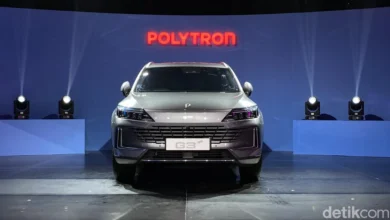
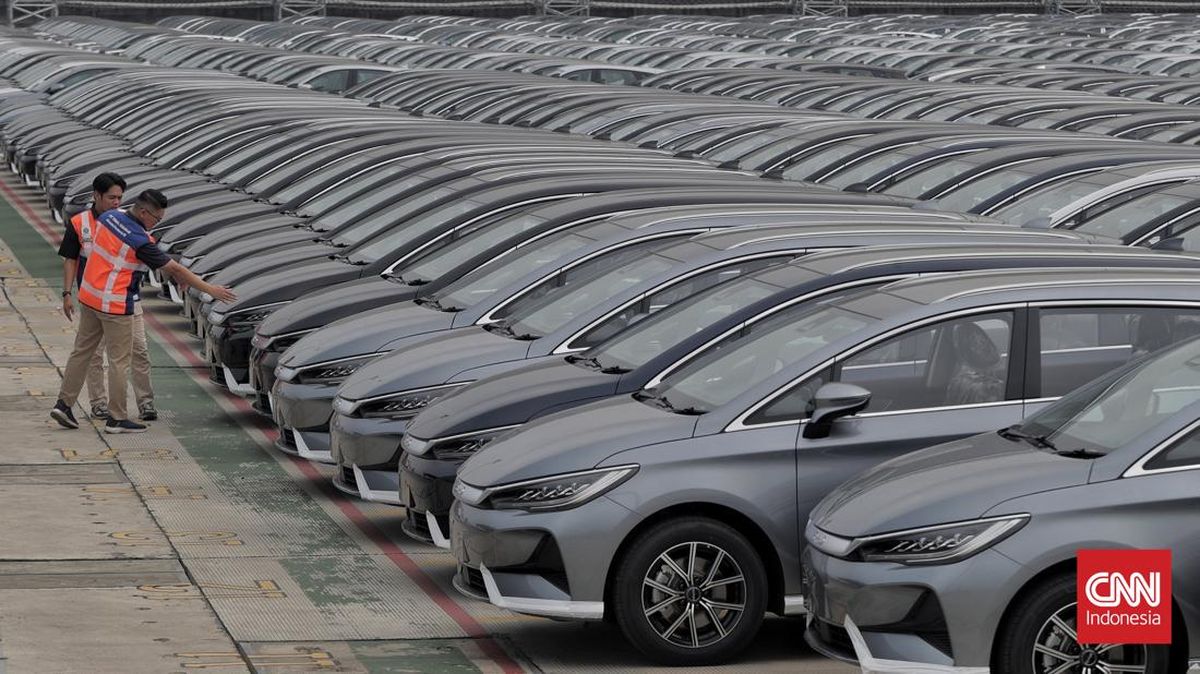
This assessment aligns with the observable trend of Chinese automotive brands rapidly entering the Indonesian market over the past few years. The number of Chinese car manufacturers establishing a presence in Indonesia has steadily increased, now reaching a significant 16 distinct brands. A key strategic focus for almost all these emerging brands has been the sale of electrified vehicles, with a particular emphasis on BEVs. This influx signals a strategic push by Chinese automakers to capture a substantial share of Indonesia’s burgeoning green mobility market.
The "Cannibalization" Effect: A Regional Concern
Purwadi’s observations are not isolated to Indonesia; the phenomenon of Chinese EV dominance and its subsequent impact on established automotive industries is a broader regional concern. Neighboring Thailand, for instance, has experienced similar conditions, with the situation described as having reached a critical point where many established brands have been "cannibalized."
Data from Thailand indicates that approximately 80 percent of the electric vehicles sold in the country are of Chinese origin. As of 2024, this dominance has led to the closure of several manufacturing plants operated by Japanese automakers in Thailand. Notable examples include facilities belonging to Subaru, Honda, and most recently, Suzuki.
"Thailand is already facing challenges within its automotive industry," Purwadi explained. "Many factories are beginning to shut down, leading to a decline in Thailand’s growth. Why? Because it is being cannibalized, even though it should be replaced by new products. They are adding brands, but these are cannibalizing or reducing the existing market share." This suggests a competitive dynamic where the rapid expansion of Chinese EV offerings is directly displacing or significantly impacting the sales and production of vehicles from more traditional automotive powerhouses.
Contrasting Success Stories: India and Vietnam’s Local Industrial Push
In contrast to countries experiencing the "cannibalization" effect, Purwadi pointed to India and Vietnam as two nations in the Asia-Pacific region that have successfully navigated the EV transition by fostering strong local industrial bases. These countries are characterized by significant "green" growth, which Purwadi attributes to their focus on local production.
"But look at two Asia-Pacific countries that have been relatively successful in this era: India and Vietnam. Their ‘green’ presence is substantial," he remarked, referencing the visual data again. "A large ‘green’ presence, as seen here, is related to local production. This includes domestic production, Chinese vehicles produced locally within these countries, or other forms of local production."
According to Purwadi, the presence of local manufacturing capabilities is the critical differentiator between these successful nations and those that primarily serve as mere markets for imported vehicles. "So, at the very least, there is a local base. For others, it’s practically just a market base. For these countries, there is a local industrial base beginning to emerge. Whether it’s a domestic brand, a Chinese brand produced locally, or other local production," he stated.
Purwadi attributes the success of India and Vietnam to well-measured and consistent government policies aimed at nurturing their domestic industries. "This, in turn, becomes a lesson for us. Why are India and Vietnam’s electrification efforts beginning to succeed in building internal capabilities? Because they have policies and implementation that are measured and effective. And indeed, even with these challenges, they can promote their own products," he asserted.
He cited India’s achievements as a prime example, noting its success despite having a relatively lower Gross Domestic Product (GDP) compared to Indonesia. Vietnam, too, has demonstrated significant progress through the development of local brands supported by global collaborations.
Within the Southeast Asian region, Purwadi believes Malaysia is in a slightly better position than Indonesia, although it too remains largely dominated by Chinese EV products. "Malaysia is also doing slightly better than Indonesia in terms of its market share. However, it is still dominated by China," he noted.
Future Outlook: China’s Enduring Dominance
Looking ahead, Purwadi referenced recent global projections that indicate China’s dominance in the electrification industry is likely to persist in the long term. These projections consistently place China as the leading player, followed by developed nations like those in Europe and the United States. Developing countries, including Indonesia, are expected to continue growing but are unlikely to rival China’s commanding position in the foreseeable future.
"It is predicted that China will continue to dominate until 2035," Purwadi concluded, emphasizing the long-term strategic implications of China’s current market leadership.
Implications for Indonesia
The findings presented by Agus Purwadi carry significant implications for Indonesia’s automotive industry and its broader economic development strategy. The overwhelming reliance on Chinese EVs raises questions about long-term industrial self-sufficiency, technological transfer, and the potential for a similar "cannibalization" effect as observed in Thailand.
Potential Economic Vulnerabilities: A heavy dependence on imported components and finished vehicles from a single dominant supplier can create economic vulnerabilities. Fluctuations in Chinese manufacturing, trade policies, or geopolitical shifts could disrupt Indonesia’s EV supply chain, impacting availability and potentially leading to price volatility.
Technological Transfer and Local Skill Development: While Chinese brands are bringing EVs to the Indonesian market, the extent of local manufacturing and assembly will be crucial for fostering domestic technological expertise and creating high-value jobs. If the majority of production remains concentrated in China, Indonesia risks becoming primarily a consumption market rather than a production hub.
Competition and Market Dynamics: The influx of numerous Chinese brands, often offering competitive pricing, intensifies competition within the Indonesian market. This can be beneficial for consumers through lower prices and wider choices. However, it also puts pressure on existing domestic automotive players and could hinder the growth of nascent local EV startups if they cannot compete on cost or scale.
Government Policy and Strategic Planning: The success of India and Vietnam underscores the critical role of proactive government policy. For Indonesia to strengthen its position, strategic interventions are likely needed. This could include incentives for local manufacturing, investments in battery technology and charging infrastructure, research and development support for local innovators, and the establishment of clear regulatory frameworks that encourage domestic value addition.
The Road Ahead: The current trajectory suggests that China will remain the dominant force in Indonesia’s EV market for the foreseeable future. However, the lessons learned from regional experiences and the proactive strategies adopted by countries like India and Vietnam offer a roadmap for Indonesia. A concerted effort involving government, industry, and research institutions will be essential to leverage the current EV wave for sustainable, long-term industrial development and to ensure that Indonesia benefits beyond simply being a consumer market. The focus must shift from merely adopting EVs to strategically building a robust, self-sustaining domestic EV ecosystem.
The analysis by ITB’s Agus Purwadi serves as a critical wake-up call, urging Indonesian policymakers and industry stakeholders to critically assess the current landscape and to implement forward-thinking strategies to foster local industrial capabilities in the rapidly evolving electric vehicle sector. The challenge is to harness the momentum of electrification for broader economic and technological advancement, rather than succumbing to external dominance.