Socio Today
Ratno Nuryadi, Head of the Nanotechnology and Materials Research Organization at the National Research and Innovation Agency (BRIN), underscored on Friday, April 17, 2026, the unequivocal link between the quality of national laboratories and the advancement of Indonesia’s industrial sector. Speaking at what observers are calling a pivotal gathering for the nation’s scientific and industrial future, Ratno articulated a vision where laboratories transcend their traditional roles to become the bedrock of a sophisticated, technology-driven manufacturing ecosystem. His remarks, widely disseminated following the event, served as a powerful call to action for stakeholders across government, academia, and industry to collectively elevate Indonesia’s research infrastructure.
The Foundational Role of Laboratories in High-Tech Manufacturing
"Laboratories are not merely testing rooms; they are the fundamental infrastructure for high-tech manufacturing," Ratno asserted, his statement resonating with the urgency of Indonesia’s ambitious economic development targets. This declaration moves beyond a simplistic view of laboratories as isolated facilities for scientific experimentation, repositioning them as critical components within the entire value chain of modern industry. In an era defined by rapid technological shifts and intense global competition, the capacity for innovation, quality assurance, and product development directly correlates with the robustness and sophistication of a nation’s laboratory network.
Modern laboratories, particularly those supporting advanced manufacturing, are multifaceted hubs. They encompass a spectrum of activities from basic and applied research to prototyping, quality control, standardization, and certification. For industries ranging from pharmaceuticals and biotechnology to advanced materials, electronics, and automotive, these facilities are indispensable. They enable companies to develop new products, optimize existing processes, ensure compliance with international standards, and troubleshoot manufacturing challenges. Without high-quality, well-equipped, and expertly staffed laboratories, industries risk being relegated to mere assembly operations or becoming perpetual consumers of foreign technology, unable to innovate or compete effectively on a global scale. Ratno’s emphasis highlights the need for Indonesia to cultivate world-class laboratory capabilities to underpin its aspirations for a knowledge-based economy.
Indonesia’s Ambition: Vision 2045 and Technology-Driven Growth
Indonesia is firmly set on a trajectory to become a developed, high-income nation by 2045, coinciding with its centenary of independence – a vision encapsulated as "Indonesia Emas 2045" (Golden Indonesia 2045). Central to this grand ambition is a profound transformation of the economy, shifting from a reliance on raw material exports to a diversified, high-value-added industrial landscape driven by technology and innovation. This requires a substantial leap in various sectors, including advanced manufacturing, digital economy, renewable energy, and bio-pharmaceuticals.
Achieving this vision necessitates not only significant investment in physical infrastructure but, crucially, a parallel investment in intellectual infrastructure, with laboratories at its core. Indonesia currently faces challenges typical of many emerging economies, including a relatively low expenditure on Research and Development (R&D) as a percentage of its Gross Domestic Product (GDP), which hovers around 0.2-0.3%. This figure pales in comparison to developed nations, where R&D spending often exceeds 2-3% of GDP. Such a disparity directly impacts the pace of indigenous innovation and the capacity for technological absorption and adaptation. Ratno Nuryadi’s remarks serve as a critical reminder that while macro-economic policies are vital, the micro-level capabilities—the scientific tools, methods, and expertise housed within laboratories—are the true engines of technological progress and economic diversification required to realize Indonesia Emas 2045.
The Catalyst Event: The Indonesia Lab & Tech Innovation Summit 2026
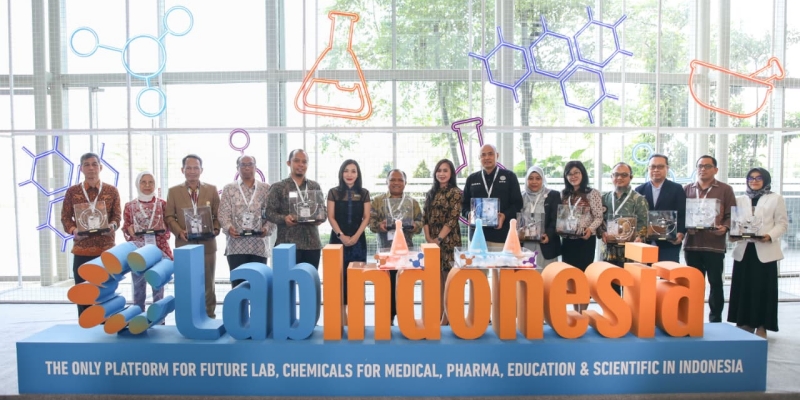
Ratno Nuryadi’s influential statements were delivered during the concluding sessions of the inaugural Indonesia Lab & Tech Innovation Summit 2026, an event designed to coalesce national efforts towards a more robust scientific and industrial ecosystem. The Summit, held from April 15-17, 2026, in Jakarta, brought together an unprecedented congregation of stakeholders: over 300 companies specializing in laboratory equipment, analytical instruments, and research services, alongside thousands of professionals, scientists, academics, policymakers, and industry leaders from across the archipelago and abroad. The sheer scale of participation underscored the growing recognition of the critical role of scientific infrastructure in national development.
"Events like this are paramount because industrial progress is inextricably linked to the quality of research, the sophistication of laboratory infrastructure, and equitable access to cutting-edge technology," Ratno emphasized. The Summit served as a crucial platform for showcasing the latest advancements in laboratory technology, fostering networking opportunities, and facilitating discussions on best practices in R&D management and innovation policy. It provided a tangible demonstration of what Ratno described as the "strong international appeal" of Indonesia’s scientific and industrial landscape, simultaneously highlighting the "immense opportunity" for the nation to accelerate its technology-based industrial development. The gathering was not merely an exhibition but a strategic forum aimed at stimulating intellectual exchange and forging actionable collaborations.
Bridging the Gap: Domestic Research and Downstreaming (Hilirisasi)
A candid assessment of Indonesia’s current technological landscape formed a significant part of Ratno Nuryadi’s address. "We must be honest; the majority of our technology still originates from abroad," he admitted, acknowledging a fundamental challenge that many developing nations face. This reliance on imported technology, while offering immediate access to advanced solutions, often comes at the cost of limited indigenous innovation capacity, intellectual property dependence, and vulnerability to external supply chain disruptions.
To counteract this, Ratno stressed the paramount importance of "strengthening domestic research and downstreaming (hilirisasi)." Hilirisasi, a key economic policy in Indonesia, refers to the industrial process of adding value to raw materials before export, transforming them into semi-finished or finished products. This strategy is vividly exemplified in sectors like nickel processing, where Indonesia aims to transition from exporting raw ore to producing battery components and even electric vehicles.
Laboratories play an indispensable role in this downstreaming process. They are essential for developing new processing technologies, ensuring the quality and consistency of value-added products, optimizing production efficiency, and creating new derivatives from existing resources. For instance, in the palm oil sector, laboratories are crucial for developing advanced biofuels, oleochemicals, and pharmaceutical-grade derivatives. In mining, they enable the development of more efficient and environmentally friendly extraction methods and the creation of higher-value metal alloys. By investing in and leveraging high-quality domestic laboratories, Indonesia can move beyond being merely a user of technology to becoming a creator and innovator, thereby securing a more robust and sustainable position in global value chains. This shift is vital for fostering economic resilience and sovereignty.
Fostering a Culture of Collaboration and Innovation
A central tenet of Ratno Nuryadi’s vision for national scientific advancement is the cultivation of robust collaborative ecosystems. He articulated the expectation that forums like the Indonesia Lab & Tech Innovation Summit would not only enhance human resource capacity but also catalyze the formation of synergistic partnerships between researchers, academics, industry players, and government entities. This "quadruple helix" model of innovation is widely recognized globally as a powerful engine for knowledge-based economic transformation.
In practice, such collaboration manifests through various mechanisms: joint research projects between universities and industrial R&D departments, industry-sponsored academic research, shared laboratory facilities, technology transfer initiatives, and the co-development of curricula to produce industry-ready graduates. For instance, BRIN, with its vast network of research centers, can act as a bridge, facilitating the application of fundamental scientific discoveries to practical industrial problems. Universities contribute cutting-edge theoretical knowledge and a continuous supply of skilled talent, while industry provides real-world challenges, market insights, and financial resources. The government, through agencies like BRIN and ministries such as the Ministry of Industry and the Ministry of Education, Culture, Research, and Technology, plays a crucial role in setting policy frameworks, providing funding, and creating an enabling environment for innovation to flourish. These partnerships are critical for accelerating the pace of innovation, ensuring that research outcomes are commercially viable, and addressing national priorities effectively.
Supporting Data and Global Context
Indonesia’s ambition to significantly upgrade its laboratory infrastructure and R&D capabilities is supported by global trends and economic data illustrating the profound impact of scientific investment. Countries with high R&D intensity consistently rank higher in global innovation indices and exhibit greater economic competitiveness. For example, nations like South Korea, Germany, and Israel, which invest significantly in R&D (often exceeding 4% of GDP), have developed highly sophisticated industries and robust innovation ecosystems.
While Indonesia has made strides in improving its Global Innovation Index (GII) ranking, moving from 88th in 2015 to 61st in 2023, there remains substantial room for improvement, particularly in areas related to R&D intensity, knowledge and technology outputs, and creative outputs. The World Bank and other international organizations consistently highlight that increased investment in R&D infrastructure, human capital development in STEM fields, and intellectual property protection are key drivers for sustainable economic growth in emerging economies. By committing to improving its laboratory quality and research output, Indonesia is not only enhancing its domestic capabilities but also signaling its readiness to integrate more deeply into the global scientific and technological landscape, attracting foreign direct investment (FDI) in high-tech sectors and fostering international research collaborations. The projected growth of the global laboratory equipment market, estimated to reach over $70 billion by 2028, further underscores the strategic importance of this sector.
Perspectives from Key Stakeholders
The sentiments expressed by Ratno Nuryadi at the Indonesia Lab & Tech Innovation Summit 2026 found broad resonance among other key stakeholders present. Dr. Siti Aminah, a prominent Professor of Chemical Engineering from the Bandung Institute of Technology (ITB), echoed the call for enhanced collaboration. "Our university laboratories are repositories of immense intellectual capital. We are eager to partner with industry to translate our fundamental research into tangible solutions that address industrial needs and national challenges," she stated, highlighting the potential for academic institutions to serve as powerful engines of innovation.
From the industrial sector, Mr. Budi Santoso, CEO of PT Innovatech Indonesia, a leading local high-tech manufacturing firm, emphasized the practical needs of businesses. "Access to state-of-the-art testing and validation facilities is critical for us to develop new products and compete with international players. We need reliable, accredited labs that can provide rapid and accurate results, helping us reduce time-to-market and ensure product quality," Santoso remarked, underscoring the demand-side perspective for advanced laboratory services. A representative from the Ministry of Industry, speaking on background, affirmed the government’s commitment: "We are actively developing policies and incentive programs to encourage private sector investment in R&D infrastructure and to facilitate technology transfer. BRIN’s efforts to standardize and upgrade national laboratories are perfectly aligned with our industrialization roadmap." These aligned perspectives underscore a shared understanding across the national ecosystem regarding the urgency and importance of strengthening Indonesia’s laboratory capabilities.
Strategic Implications for National Competitiveness
The concerted effort to enhance Indonesia’s laboratory infrastructure and foster indigenous research capabilities carries profound strategic implications for the nation’s long-term competitiveness. Firstly, it will facilitate the creation of high-skill jobs in research, engineering, and advanced manufacturing, contributing to a more educated and economically empowered workforce. Secondly, a robust R&D ecosystem will attract greater foreign direct investment, not just in production facilities, but in higher-value activities such as R&D centers and innovation hubs, integrating Indonesia more deeply into global innovation networks.
Moreover, by reducing reliance on imported technologies, Indonesia enhances its economic sovereignty and resilience against external shocks. It strengthens its intellectual property base, fosters local innovation champions, and enables the country to develop tailored solutions to its unique socio-economic and environmental challenges, from public health issues to sustainable resource management. Ultimately, the transformation of laboratories from mere testing sites to dynamic innovation hubs is not just about scientific progress; it is about building a more prosperous, resilient, and technologically advanced Indonesia, capable of realizing the ambitious vision of Indonesia Emas 2045 and securing its place as a leader in the 21st-century global economy. Sustained investment, collaborative governance, and a national commitment to scientific excellence are the catalysts required to translate this vision into tangible reality.