Socio Today
Umbul Senjoyo, a natural spring complex located in the village of Tegalwaton, Tengaran, in the Semarang Regency, remains one of Central Java’s most enduring landmarks, blending natural beauty with a profound historical and mythological tapestry. While geographically situated within the administrative boundaries of the Semarang Regency, its proximity to the city of Salatiga has historically linked the two, making it a primary destination for residents and travelers alike. As recently as June 2026, visitors continue to find solace in its crystal-clear waters, echoing a tradition of recreation and spiritual seeking that dates back over a millennium.
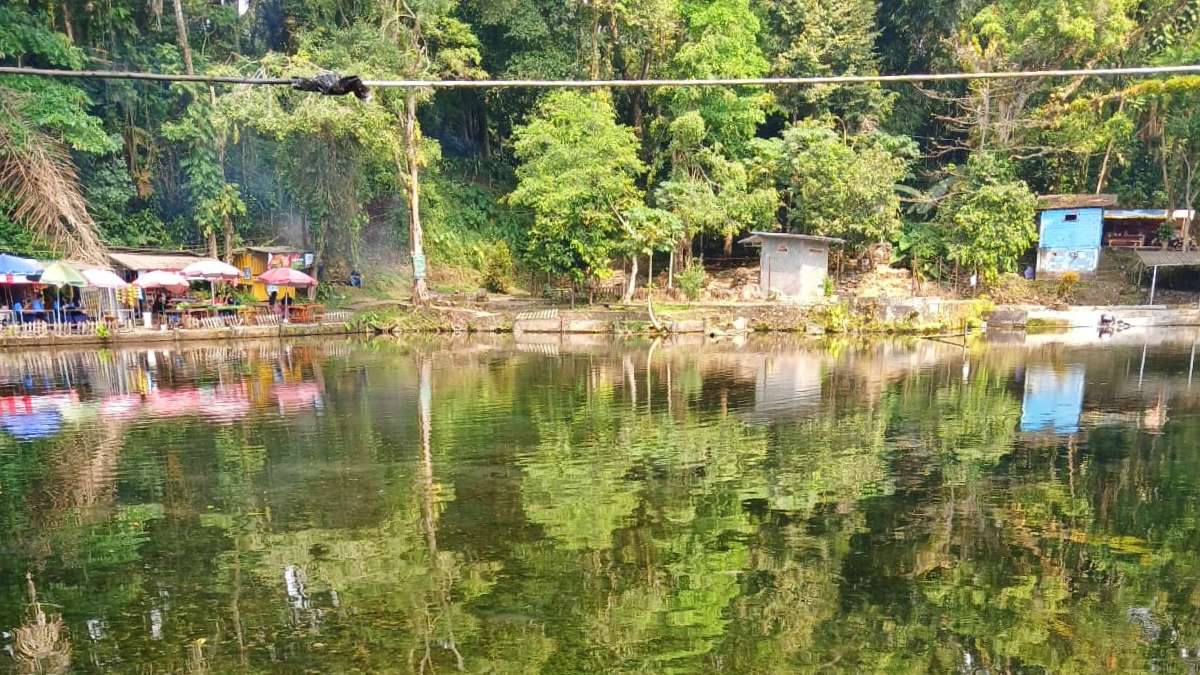
The site, often referred to as Sendang Senjoyo, is characterized by its vast, transparent pools and ancient trees that provide a canopy of shade over a landscape fed by the volcanic slopes of Mount Merbabu, Mount Telomoyo, and Mount Gajah Mungkur. At an elevation ranging between 450 and 800 meters above sea level, the area serves as a vital hydrological hub for the surrounding districts. Beyond its physical allure, Senjoyo represents a unique intersection of Javanese folklore, Hindu-Buddhist history, and Dutch colonial infrastructure, making it a subject of significant academic and cultural interest.
A Legacy of Colonial Recreation and Infrastructure
The recognition of Umbul Senjoyo as a premier leisure destination is not a modern phenomenon. Historical archives from the colonial era provide a glimpse into how the site was perceived over a century ago. On June 13, 1907, a resident of Salatiga wrote in the Dutch-language newspaper de Locomotief, describing Salatiga as a beautiful but quiet town lacking in diverse entertainment. According to the writer, the primary forms of recreation for the town’s inhabitants were walking, carriage rides, or horse riding, with Kali Taman, Kali Muncul, and Senjoyo (then spelled Senjaya) listed as the preeminent natural attractions.
However, Senjoyo’s importance to the Dutch East Indies administration extended far beyond simple aesthetics. By the early 20th century, the growing population of Salatiga necessitated a reliable source of clean water. In 1907, the colonial government began the ambitious project of installing a piped water network from the Senjoyo springs directly to residential homes. This was a significant technological milestone for the region, although it was not without its initial hurdles.
A report by de Locomotief on January 29, 1908, noted that while the infrastructure was a marvel of the time, some residents complained about inconsistencies in the service. One notable anecdote described a frustrated consumer who opened his tap only to find air rushing out instead of water, leading him to quipped that while he was willing to pay for water, he refused to pay for "government wind." Despite these early setbacks, the formalization of Salatiga as a gemeente (municipality) in 1917 saw the expansion of this system. A massive reservoir was constructed in the Mrican area, channeling Senjoyo’s water to public taps, fire hydrants, and private residences, effectively turning a sacred spring into a cornerstone of urban utility.
The Archaeological Mystery of the Missing Temples
One of the most intriguing aspects of Umbul Senjoyo is the presence of ancient stones that hint at a grander architectural past. Visitors to the site often notice that the steps and pathways are constructed from stones that bear a striking resemblance to temple ruins, some featuring intricate carvings and reliefs. This has led historians and archaeologists to speculate whether a major Hindu or Buddhist temple once stood on the grounds.
The Dutch historian Hermanus Johannes de Graaf explored this possibility in his 1958 study, De Verdwenen Tjandi te Salatiga (The Disappeared Temple in Salatiga). De Graaf cited the 1733 reports of C.A. Lons, an assistant trader who accompanied F.J. Coyett on a journey through the Mataram region. Lons described finding various small chapels and structures in the Salatiga area that matched the descriptions of ancient Javanese ruins.

Further evidence was found in the 1730 journals of Hendrik Graven, who recorded seeing "beautiful springs appearing naturally from the ground and a tall ancient building" on a hill in the middle of a river stream. This building was described as resembling a tomb, constructed from large stones carved with various figures and ornaments. According to local residents at the time, the monument was built centuries prior by a holy figure.
The disappearance of these structures is believed to be linked to the construction of Fort De Hersteller. H.J. Domis, the Resident of Semarang from 1822 to 1827, theorized that the name "Salatiga" was derived from Sela Tiga (Three Stones), referring to three temples that once stood near a large pool. Following the Geger Pacinan (the Chinese War of 1740–1743), the Dutch East India Company (VOC) required massive amounts of stone to build their fortifications. It is widely believed that the temples at Senjoyo were dismantled, and their stones repurposed to build the walls of Fort De Hersteller, a common practice during the colonial era where ancient heritage was often sacrificed for military necessity.
The Intersection of Legend and Sovereignty
The name "Senjoyo" itself is steeped in layers of mythology that span different eras of Javanese history. One popular folk belief attributes the name to Arya Senjaya, a figure from Javanese puppetry (Wayang) and a descendant of Arya Widura. Legend has it that after losing a battle against Adipati Karna, Arya Senjaya achieved moksa (spiritual liberation) and transformed into the spring that now bears his name.
Another historical connection points to King Sanjaya, the founder of the Medang Kingdom (Ancient Mataram), who ruled approximately between 732 and 746 AD. Historians like Nur Fauzi suggest that the spring was a favored location for King Sanjaya to perform meditations. This theory is supported by the discovery of stone artifacts from the Medang era near the site’s oldest trees, suggesting that Senjoyo has been a site of royal and spiritual significance for over 1,200 years.

Perhaps the most famous figure associated with Umbul Senjoyo is Joko Tingkir, also known as Sultan Hadiwijaya, the founder of the Pajang Kingdom in 1554. Local tradition holds that Joko Tingkir, who grew up in the nearby village of Tegalwaton, frequently visited the springs to perform kungkum—a Javanese ritual of immersing oneself in water for hours to gain spiritual strength and clarity.
One enduring myth suggests that the flow of the Senjoyo spring was once so powerful it threatened to flood the surrounding villages. To prevent a catastrophe, Joko Tingkir is said to have plugged the source of the water using a lock of his own hair. To this day, many locals believe that the hair of the Sultan remains hidden deep within the primary source of the spring. The presence of the graves of Ki Ageng Slamet and Nyai Welas Asih on a nearby hill, believed by some to be the final resting place of Joko Tingkir and his wife, further cements the site’s status as a sacred location for pilgrims.
Hydrological Importance and Modern Tourism
Geographically, Umbul Senjoyo is a complex of several springs, each with its own local name and perceived properties. According to local researchers like Lestariningsih, the primary springs include Sendang Slamet, Sendang Bandung, Sendang Putri, Sendang Lanang, Sendang Teguh, and Tuk Sewu. These springs are the result of a massive volcanic aquifer system that filters rainwater through the volcanic rock of the Merbabu complex, resulting in water that is exceptionally clear and rich in minerals.
In the modern era, Umbul Senjoyo has evolved into a multi-functional public space. While it continues to supply water to the city of Salatiga and irrigate the surrounding agricultural fields in Tengaran, it has also become a hub for eco-tourism. The site features various zones: a large central pool for swimming, a dedicated pool for fish where visitors can observe local aquatic life, and river-like channels where people can sit on repurposed tire chairs to enjoy the cool breeze.

The economic impact on Tegalwaton Village is significant. With a nominal entry fee—often just a small parking charge of Rp3,000—the site remains accessible to all socio-economic classes. This "people’s tourism" model supports local vendors and maintains the site as a communal gathering point. However, the site’s popularity also brings challenges regarding waste management and the preservation of the ancient trees that are essential to the spring’s health.
Analysis and Implications
The continued relevance of Umbul Senjoyo serves as a case study in the resilience of Javanese cultural heritage. It is a place where the past is not merely remembered but lived. The fact that stones from a 1,000-year-old temple are used as everyday footpaths, and that a colonial-era water system still functions alongside ancient meditation rituals, speaks to a unique layering of history.
From an environmental perspective, Senjoyo is a reminder of the critical need to protect the Merbabu watershed. As climate patterns shift and urban development in Salatiga and Semarang Regency expands, the discharge levels of these springs are under constant threat. The preservation of the "sacred" status of the springs by local communities often acts as an informal but effective environmental protection policy; people are less likely to pollute or damage a site they believe to be inhabited by ancestral spirits or historical kings.
In conclusion, Umbul Senjoyo is more than just a scenic retreat. It is a living archive of Central Java’s evolution. From the heights of the Medang Kingdom and the spiritual journeys of Joko Tingkir to the engineering feats of the Dutch and the modern-day family outings, the water of Senjoyo continues to flow, carrying with it the stories of the many generations that have sought its clarity. For the people of Salatiga and beyond, it remains a vital link to their ancestors and a refreshing sanctuary in an ever-changing world.