Socio Today
The recent World Cup, widely hailed as one of the most captivating tournaments in modern football history, unfolded with a dramatic narrative that saw the twilight of one legendary career intersect with the relentless brilliance of another. For Cristiano Ronaldo, this global spectacle represented what was likely his final opportunity to capture the one major international trophy that had eluded his illustrious career. The stakes were monumental; a World Cup triumph would undoubtedly ignite an even fiercer debate regarding his status as the Greatest Of All Time (GOAT), solidifying his claim in the pantheon of footballing legends.
Portugal’s Initial Optimism and a Deceptive Draw
Portugal entered the tournament with a palpable sense of optimism, bolstered by what appeared to be an exceedingly favourable group stage draw. Placed alongside Colombia, Congo, and Uzbekistan in Group C, the path to the knockout rounds seemed, on paper, akin to a smooth highway. Analysts and pundits widely predicted Portugal would comfortably secure the top spot, thereby avoiding early clashes with European powerhouses such as France, the Netherlands, Spain, or Germany until the deeper stages of the competition. This perceived advantage was crucial, as a first-place finish promised a significantly less arduous route through the knockout bracket. The anticipation within the Portuguese camp and among its legions of fans was high; the stage was set for a potential fairytale ending to Ronaldo’s unparalleled international career.
A Stuttering Start: Expectations Versus Reality
However, the reality on the pitch quickly diverged from the pre-tournament script. Portugal’s opening match against Congo proved to be an unexpected jolt, sending heart rates soaring among their supporters. The team’s performance was far from convincing, marked by disjointed play, missed opportunities, and a visible lack of cohesion. Whether it was the pressure of the occasion, individual nerves, or the immense burden of expectation weighing heavily on the squad, Portugal struggled to assert dominance against a spirited Congolese side. While they ultimately secured a narrow 1-0 victory, courtesy of a late penalty converted by Bernardo Silva in the 82nd minute, the display left much to be desired.
The sting of this underwhelming performance was amplified just hours later when news filtered through of Lionel Messi’s scintillating hat-trick in Argentina’s opening fixture. Messi’s performance was a masterclass, a stark contrast to Ronaldo’s subdued outing where he, despite playing the full 90 minutes, failed to register a significant impact or even a shot on target. The juxtaposition immediately fueled comparisons and heightened the narrative tension between the two titans of the sport. "While Ronaldo’s quest for glory began with a whimper, Messi’s exploded with a bang," noted veteran football analyst Marcus Thorne on a global sports network, capturing the mood perfectly.
The Group Stage Gauntlet and a Costly Slip
Following their unconvincing start, Portugal managed a more assured performance in their second group match, securing a 3-1 victory over Uzbekistan. Ronaldo found the net from open play in this game, providing a temporary reprieve and reigniting hopes among his fans. However, the momentum proved short-lived. Their final group stage encounter against Colombia saw them stumble once more, drawing 1-1 after conceding a late equaliser. This result, combined with Colombia’s strong showing, meant Portugal ultimately finished as runners-up in Group C, a development that irrevocably altered their tournament trajectory.
The consequence of finishing second was immediate and severe. Instead of the relatively clear path promised to group winners, Portugal was now plunged into the "Group of Death" side of the knockout bracket. This meant an early rendezvous with footballing giants – a daunting lineup that included Spain, Belgium, the Netherlands, France, and Germany. The seemingly "expressway" route had abruptly transformed into a treacherous mountain pass. "The draw was kind, but their execution wasn’t," commented Dr. Elena Petrova, a data analyst specializing in football, "Their failure to top the group cost them dearly, immediately putting them on a collision course with tournament favourites."
The Knockout Rounds: A Controversial Escape and a Heartbreaking Exit
Portugal’s Round of 16 clash against Croatia was a tense, fiercely contested affair, ultimately decided by a moment of significant controversy. The match, which finished 0-0 after 90 minutes, went into extra time. In the 117th minute, Portugal was awarded a contentious penalty after a VAR review, which many pundits and fans deemed soft. Bruno Fernandes converted the spot-kick, securing a dramatic 1-0 victory for Portugal. The decision sparked widespread debate, with Croatian players and staff vocally protesting the call, arguing it robbed them of a fair chance to progress. Regardless of the controversy, Portugal had navigated their first knockout hurdle, albeit not without a significant dent to their reputation. Ronaldo, despite playing a full 120 minutes, again struggled to impose himself, his frustration visibly mounting.
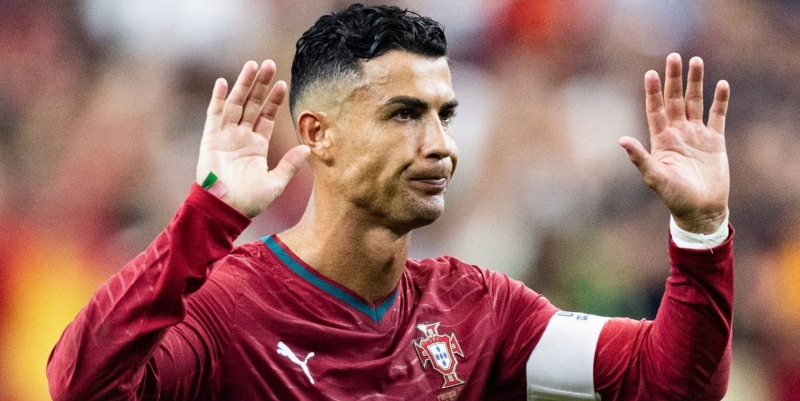
Their journey, however, came to an abrupt and painful halt in the quarter-finals against a formidable Spanish side. In a match filled with tactical intrigue and relentless pressure, Portugal battled valiantly but ultimately succumbed to the Spanish Armada. The decisive moment arrived in the 90th minute, a cruel twist of fate for Ronaldo and his team. A sublime through ball from Ferran Torres carved open the Portuguese defence, finding the clinical Moreno, who dispatched the ball past the goalkeeper with precision. The 1-0 defeat was a bitter pill to swallow, particularly given its timing. The final whistle brought an end to Portugal’s World Cup campaign and, by all indications, to Ronaldo’s dream of lifting the coveted trophy. The sight of Ronaldo, tears streaming down his face as he walked off the pitch, became one of the defining, and most poignant, images of the tournament. It was a raw, emotional display of a legend grappling with the end of a lifelong pursuit.
Argentina’s Miraculous Resurgence: Messi’s Indomitable Spirit
While Ronaldo’s World Cup dream dissolved into tears, Lionel Messi’s narrative arc took a dramatically different, almost miraculous, turn. After Argentina navigated a challenging group stage, securing top spot with two wins and a draw, their knockout stage journey began with an epic encounter against Egypt in the Round of 16. What initially appeared to be a straightforward path quickly became a test of character. Egypt, demonstrating remarkable resilience and tactical discipline, surged to a shocking 2-0 lead by the 78th minute, leaving Argentine fans in stunned silence and Ronaldo’s supporters briefly exultant.
"It felt like the stars were aligning for a double failure, a shared heartbreak," recounted a prominent Ronaldo fan account on social media. "We started to smile, thinking Messi’s tournament was over too."
But those smiles were premature. Messi, the architect of countless comebacks, refused to yield. In a breathtaking display of individual brilliance and leadership, he orchestrated an improbable turnaround. He first delivered a pinpoint assist in the 80th minute, setting up Julián Álvarez to halve the deficit. Then, in the 86th minute, Messi himself conjured an equalizer with a mesmerizing solo effort, weaving through defenders before slotting home. The crescendo of drama reached its peak in the 90th minute when Enzo Fernández, capitalizing on the momentum shift, scored the winning goal, sending the Argentine faithful into raptures. Argentina won 3-2, snatching victory from the jaws of defeat.
The Quarter-Finals presented another stern test against a well-organized Switzerland. Despite a tight, cagey affair that saw the Swiss hold their ground for much of the game, Argentina eventually broke the deadlock through a moment of Messi magic in the 70th minute, securing a hard-fought 1-0 victory and booking their place in the semi-finals.
The Semi-Final Showdown: England’s Despair, Messi’s Brilliance
The semi-final clash against England was yet another testament to Argentina’s and Messi’s unyielding resolve. England, boasting a talented squad and strong tactical setup, took a 1-0 lead in the 65th minute, holding firm as the clock ticked down. As the 84th minute approached, it seemed England was on the verge of reaching the final, and once again, the hopes of Ronaldo’s supporters briefly flickered. The thought of Messi’s elimination, especially at the hands of a team featuring players from Ronaldo’s former club, Manchester United, offered a sliver of solace.
However, once more, Messi proved to be the ultimate disruptor of narratives. Not through a goal this time, but through two sublime assists in the dying minutes of the game. In the 87th minute, a visionary pass from Messi unlocked the English defence, allowing Lautaro Martínez to level the score. Then, in injury time, a dazzling run and perfectly weighted pass by Messi set up Alexis Mac Allister for the winning goal, sealing a dramatic 2-1 victory for Argentina. England was left heartbroken, while Argentina, propelled by their captain’s genius, marched on to the final. "It’s beyond belief," exclaimed former England international Gary Lineker on air, "Messi just finds a way, time and time again. He’s rewriting the rules of what’s possible in clutch moments."
The "GOAT" Debate Intensifies and a Fan’s Agonizing Dilemma
With Portugal’s early exit and Messi’s relentless march to the final, the "GOAT" debate took on an unprecedented intensity. For many ardent Ronaldo fans, the initial hope after Portugal’s elimination had transformed into a singular, fervent wish: if Ronaldo couldn’t win, then Messi shouldn’t either. This sentiment became a dominant theme across social media platforms, evolving from quiet whispers to increasingly vocal declarations with each Argentine comeback.
The repeated dramatic victories by Argentina, particularly the late goals and Messi’s pivotal role, led to a proliferation of conspiracy theories among a segment of the fanbase. Phrases like "Piala Dunia settingan" (fixed World Cup), "wasit dibayar" (referees are paid), and "Anak emas FIFA" (FIFA’s golden boy) became commonplace, reflecting a deep-seated frustration and a refusal to accept Messi’s extraordinary performances as pure sporting achievement. The psychological toll on these fans was evident, as their hopes for Messi’s downfall were repeatedly crushed by his unstoppable form.
The Grand Finale: Argentina vs. Spain – A Clash of Eras
The stage was set for a final that promised to be a spectacle: Argentina, champions of South America, against Spain, the reigning European champions. It was a contest that, from a footballing perspective, was a dream matchup – a World Cup version of the Finalissima, pitting the tournament’s most potent attack against one of its most defensively resolute teams. Spain, under the guidance of Luis de la Fuente, had demonstrated a blend of tactical discipline and youthful exuberance, making their way to the final with a series of commanding performances and a robust defensive record.
However, for many Ronaldo fans, this final presented an agonizing dilemma, a no-win scenario that epitomized the World Cup of bitter irony.
On one hand, supporting Argentina meant endorsing a potential World Cup victory for Lionel Messi. A triumph would almost certainly tip the GOAT debate heavily in Messi’s favour, a prospect unbearable for those who championed Ronaldo. The narrative of Messi finally securing the ultimate prize, mirroring Maradona’s legacy, would be unassailable.
On the other hand, supporting Spain, while preventing a Messi victory, presented its own set of complications. Spain’s squad featured the prodigious Lamine Yamal, a talent who, at just 19 years old, was already a European Champion. If Spain were to win the World Cup, Yamal would, at a remarkably tender age, possess both a European Championship and a World Cup winner’s medal. This scenario, for Ronaldo’s long-suffering supporters, would create a new, equally vexing narrative: a young phenom achieving significant international success at an age when Ronaldo was still establishing himself, potentially overshadowing his own storied career achievements in a different, equally painful way.
"It’s a no-win situation," lamented a popular football blogger known for his Ronaldo advocacy. "Either Messi becomes indisputably the GOAT, or a teenager has more major international trophies than Ronaldo by the time he’s 19. It’s truly the most depressing World Cup imaginable for us."
Broader Implications and a Symbol of Transition
Beyond the individual rivalries and fan allegiances, the final between Argentina and Spain carried profound symbolic weight. It represented not just a clash of continents and playing styles, but also a poignant changing of the guard. Messi, the enduring king of a generation, still at the peak of his powers and chasing his ultimate crown, faced off against a Spanish side that showcased the emergence of a new prince in Lamine Yamal, poised to inherit the throne of global football. This dynamic underscored the tournament’s significance as a bridge between eras.
From a neutral footballing perspective, this World Cup was a resounding success. It delivered unparalleled drama, heroic comebacks, moments of individual brilliance, and tactical masterclasses. The final, regardless of the outcome, was destined to be a spectacle that encapsulated the beauty and unpredictability of the sport. It forced discussions about legacy, greatness, and the relentless march of time in sport. While it was undoubtedly a World Cup filled with anguish and frustration for a specific segment of the fanbase, for the broader football community, it was a tournament that will be remembered for its sheer quality, its narrative power, and its indelible mark on the history of the beautiful game. Viva España! ¡Vamos Argentina! The world watched, captivated, as history unfolded.