Socio Today
The United Kingdom’s ambitious drive to accelerate data center construction to support its burgeoning artificial intelligence (AI) sector is on a collision course with its already strained water resources, sparking urgent warnings from the nation’s water industry. Water UK, the representative body for water companies across England and Northern Ireland, has cautioned that the country’s existing water supply infrastructure is critically unprepared to meet the escalating demands of future data centers, potentially precipitating a severe water crisis if current government policies remain unchanged. This alarming prognosis underscores a growing tension between technological advancement and environmental sustainability, placing the UK’s "science superpower" aspirations under intense scrutiny.
Water UK’s stark warning was formally delivered in a document submitted to Members of Parliament, highlighting what it describes as "gravely flawed" government water demand projections that conspicuously omit the substantial water requirements of data centers. The organization further criticized various government policies aimed at fostering AI growth for their conspicuous silence on the critical issue of water supply. At the heart of the problem lies the inherent operational need for data centers to consume vast quantities of water, primarily for cooling the high-density servers that generate immense heat. This consumption occurs directly through cooling systems, chillers, and humidity control mechanisms, and indirectly through the significant electricity generation required to power these facilities, which itself can be water-intensive.
The oversight is particularly concerning given the impending release of the Environment Agency’s national water resources framework in June 2025, which, according to Water UK, has yet to incorporate projections for data center water usage. "There appears to be an assumption that the country will always have enough water to meet its economic needs. The reality is far from that," Water UK asserted, as reported by The Guardian on Tuesday, July 21, in a statement that encapsulates the industry’s profound apprehension.
The Thirst of the Digital Age: Why Data Centers Are Water-Intensive
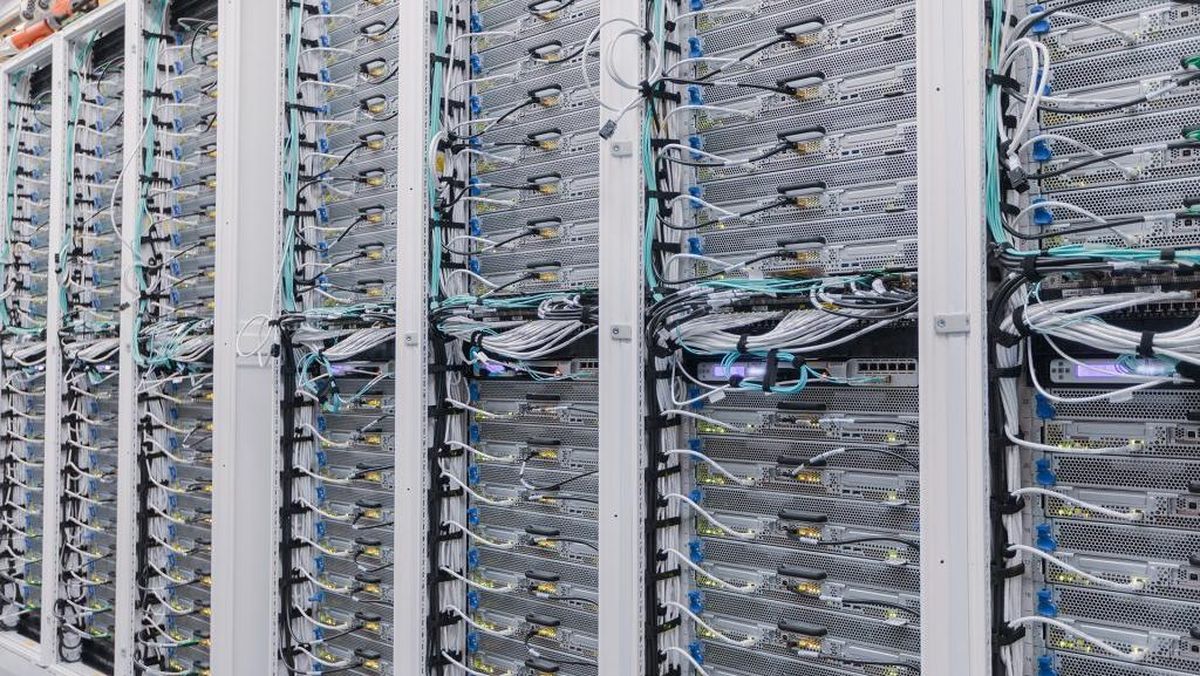
Data centers are the physical backbone of the digital economy, housing the servers, storage systems, and networking equipment that power everything from cloud computing to AI algorithms. These facilities are designed for continuous, high-performance operation, generating substantial heat as electricity flows through their components. To prevent overheating, which can lead to system failures and data loss, sophisticated cooling systems are essential.
Traditional cooling methods often rely on evaporative cooling towers, which use water to dissipate heat into the atmosphere. In these systems, water is continuously evaporated, requiring constant replenishment. For every megawatt of IT load, an evaporative cooling system can consume hundreds of thousands of liters of water annually. While some advanced data centers employ closed-loop liquid cooling or air-side economizers to reduce water consumption, even these technologies often require water for adiabatic cooling during peak temperatures or for humidification to maintain optimal environmental conditions within server halls. The indirect water footprint is also significant; the electricity generated to power these facilities, especially from thermal power plants, demands substantial water for cooling during the generation process itself. As AI models grow in complexity and computational demand, the energy and, consequently, water requirements for the underlying infrastructure are expected to skyrocket.
Geographical Hotspots and Existing Water Stress
The issue is compounded by the geographical concentration of data centers in the UK. Water UK reveals that more than three-quarters of the country’s data centers are strategically located in the South and East of England – regions already identified as experiencing significant stress on their water supplies. These areas have frequently been subject to hosepipe bans and other water restrictions during prolonged heatwaves and periods of low rainfall, a recurring phenomenon that climate change is projected to intensify.
Building new data centers in these already overstretched areas is deemed "impossible" by Water UK without fundamental shifts in policy, given the existing water networks are already operating under immense pressure. The region’s attractiveness to data center operators stems from its proximity to London, major financial hubs, and critical internet exchange points, offering low latency and robust connectivity. However, this economic advantage now presents a severe environmental and resource challenge.
A report by the House of Lords in May further underscored the precarious state of the UK’s water future, estimating that the country could face a public water supply deficit of up to 5 billion liters per day by 2055. This long-term projection looms large over the immediate concerns raised by the rapid data center expansion.
Escalating Demand: Current and Future Projections
The scale of the problem is illustrated by specific regional data. Affinity Water, a utility company serving areas including Slough – a town west of London that has become one of Europe’s largest data center hubs – reported that approximately 125 new data centers are either proposed or actively under construction within its service territory. The company highlighted instances where individual data center developers have applied for water supplies of up to 3 million liters per day, an astonishing volume equivalent to the daily water needs of roughly 3,500 homes during peak demand.
According to Water UK’s estimates, data centers across the UK currently consume an estimated 6.6 million liters of potable water daily. Should the government’s target of tripling data center capacity by 2030 materialize, this daily consumption is projected to surge to approximately 19.8 million liters. Such an increase would place unprecedented strain on a water infrastructure already struggling to cope with existing demand, aging pipes, and the impacts of a changing climate.
The UK’s AI Ambition Meets Environmental Reality
The UK government has explicitly stated its ambition to become a "science and technology superpower," with AI development at the forefront of this strategy. This vision necessitates robust digital infrastructure, including a substantial expansion of data center capacity. However, the environmental implications of this rapid growth are becoming increasingly difficult to ignore. The warnings from Water UK bring to light a critical flaw in integrated planning: the disconnect between economic growth strategies and fundamental resource management.
Environmental advocacy groups echo Water UK’s concerns, highlighting that the relentless pursuit of digital infrastructure without adequate consideration for its environmental footprint could undermine the UK’s broader climate change commitments. They argue that prioritizing data center water use over domestic or agricultural needs during periods of drought could lead to significant social and ecological conflict, impacting biodiversity and natural habitats that depend on healthy water systems.
Industry Responses and Mitigation Strategies
While the water industry raises alarms, the data center sector itself is not entirely unaware of its environmental impact. Many leading data center operators are actively exploring and implementing more water-efficient cooling technologies. These include:
- Liquid Cooling: Directly cooling servers with dielectric fluids, which can be significantly more efficient than air cooling and reduce or eliminate evaporative water loss.
- Air-Side Economization: Utilizing ambient outside air for cooling when temperatures permit, reducing the reliance on mechanical cooling systems.
- Wastewater Reuse: Treating and reusing greywater or even blackwater for cooling purposes, reducing the demand on potable water supplies.
- Rainwater Harvesting: Collecting and storing rainwater for non-potable uses within the data center, such as cooling.
However, the rapid pace of expansion and the sheer scale of water required for even "efficient" modern data centers mean that these individual efforts, while commendable, may not be sufficient to offset the overall increase in demand. Industry representatives often emphasize the critical role of data centers in powering the economy and facilitating innovation, calling for collaborative solutions with government and utilities to ensure sustainable growth. They suggest that clearer guidance, incentives for green technologies, and investment in diversified water sources are essential.
Government Response and Future Policy Challenges
In response to the growing concerns, the UK government has affirmed its commitment to ensuring that the growth of AI proceeds hand-in-hand with sustainable development. A government spokesperson stated that the administration is dedicated to protecting water supplies while simultaneously fostering economic growth. They indicated that efforts are underway to explore alternatives to mitigate the impact of data centers on water consumption and waste generation.
Furthermore, the spokesperson highlighted the government’s "decisive steps" to safeguard water supplies and meet rising demand, citing "record-high infrastructure investment" and the construction of "nine new dams." While these commitments signal an acknowledgment of the challenge, critics argue that the proposed measures may be insufficient or too slow to address the immediate and rapidly accelerating demands of the data center boom. The efficacy of "record investment" must be scrutinized against the backdrop of decades of underinvestment in water infrastructure and the scale of the projected deficit. Similarly, the construction of new dams, while providing additional storage, faces significant environmental hurdles and long lead times, making them less of an immediate solution to the burgeoning crisis.
Calls for Integrated Planning and Prioritization
Water UK’s recommendations extend beyond mere warnings. The organization is urging the government to establish clear priorities for water usage during periods of drought. Without such explicit guidelines, they contend, the increasing demands from both the public and industrial sectors will inevitably lead to conflicts and difficult compromises over water distribution. This necessitates a more integrated approach to national planning, one that harmonizes economic development goals with environmental and resource management imperatives.
The current fragmented approach, where digital infrastructure policy appears decoupled from water resource planning, is unsustainable. Future policy must consider:
- Mandatory Water Efficiency Standards: Implementing stringent water efficiency standards for new data centers, possibly linked to planning permissions.
- Location-Based Incentives/Restrictions: Encouraging or mandating data center development in regions with abundant water resources, or restricting it in water-stressed areas.
- Investment in Alternative Water Sources: Expediting investment in desalination plants, advanced wastewater treatment for reuse, and robust rainwater harvesting systems.
- Integrated Resource Planning: Developing a national strategy that explicitly accounts for the water and energy demands of emerging technologies like AI and integrates these into long-term infrastructure planning.
- Transparent Data and Reporting: Requiring data centers to publicly report their water usage metrics (e.g., Water Usage Effectiveness – WUE) to foster accountability and drive innovation.
Global Parallels and the Road Ahead
The UK’s predicament is not unique. Countries like Ireland, with its booming data center industry, have faced similar public outcry and government scrutiny over water and energy consumption. The arid regions of the United States, particularly states like Arizona and California, are grappling with the immense water demands of tech giants building massive data centers. Even in water-rich regions, concerns are rising, highlighting a global challenge in balancing technological advancement with finite natural resources.
The situation in the UK represents a critical juncture. The nation stands at the precipice of a digital revolution, with AI poised to transform industries and society. However, this future hinges on a sustainable foundation. The urgent warnings from Water UK serve as a powerful reminder that technological progress cannot be pursued in isolation from environmental realities. A proactive, integrated, and far-sighted approach to water management is not just an environmental necessity but an economic imperative to ensure the long-term viability of the UK’s AI ambitions and its broader digital economy. Without a fundamental shift in policy and investment, the dream of a "science superpower" could well run dry.