Socio Today
The global perception of urban safety and infrastructure has been thrust into the spotlight following a viral social media post documenting the unconventional journey of three female tourists in Singapore. On a humid morning in mid-July, the trio opted to bypass traditional ride-sharing services and public transportation, choosing instead to navigate the streets of the city-state on foot. Their 9.4-kilometer trek, which began in the early hours of the morning, has since sparked a widespread conversation regarding the intersection of public safety, urban design, and the evolving nature of modern tourism.
The incident gained international traction after a TikTok user identified as Angie uploaded a video montage of the journey on July 16, 2024. The footage, which has amassed over half a million views, captures the three women pulling their suitcases through deserted streets, underpasses, and well-lit sidewalks as they made their way toward Singapore Changi Airport. While the decision to walk nearly 10 kilometers with luggage might seem arduous to many, the narrative surrounding the video has focused less on the physical exertion and more on the remarkable level of security that allows such a journey to take place without incident.
A Chronology of the 9.4-Kilometer Trek
The journey commenced at approximately 2:42 AM. At an hour when most global metropolises see a significant reduction in foot traffic and a potential rise in security risks, the three tourists began their departure from their accommodation. According to the timestamps provided in the viral video, the women were scheduled to board a flight at 7:00 AM. Rather than booking a private hire vehicle or a taxi—a trip that typically takes roughly 16 minutes from many central and eastern residential districts to the airport—they chose to embrace a two-and-a-half-hour walk.
The footage illustrates a variety of urban environments encountered during the trek. The women were seen navigating wide, well-maintained sidewalks that are a hallmark of Singapore’s urban planning. However, the journey was not without its challenges. At several points, the trio had to navigate pedestrian tunnels. In one specific segment of the video, the women are seen walking through a dimly lit underpass, using the flashlights on their smartphones to illuminate their path. Despite the darkness and the isolation of the setting, the group appeared relaxed, documenting the experience with laughter rather than apprehension.
By 5:04 AM, the group arrived at the Changi Airport terminal. Their arrival time, roughly two hours before their scheduled flight, allowed them ample time for check-in and security procedures. The successful completion of the walk, totaling approximately 130 minutes of continuous movement with heavy luggage, served as the climax of a video that would soon ignite debates across various social media platforms.
Public Reaction and the Safety Narrative
The response from the digital community was swift and multifaceted. A significant portion of the commentary focused on the safety implications of the walk. Many female travelers and expatriates living in Singapore echoed the sentiments expressed in the video, citing the city-state as one of the few places in the world where three women could walk for hours in the middle of the night without fear of harassment or crime.
"I love Singapore because three girls can walk for two hours to the airport on proper sidewalks at 2 AM and feel perfectly safe doing so," noted one social media user. This sentiment was mirrored by hundreds of others who praised the country’s rigorous law enforcement and cultural emphasis on public order.
Conversely, a segment of the audience viewed the act through a lens of skepticism or humor. Critics pointed out the physical toll of walking 9.4 kilometers in Singapore’s tropical climate, which remains warm and humid even in the pre-dawn hours. Questions were raised regarding why the group would subject themselves to such labor when affordable transportation options are readily available. Others joked about the "peak unemployment activity" of walking to an airport, a phrase used by the original poster herself to describe the seemingly unnecessary effort.
The Infrastructure of Security: Why Singapore is Different
The ability of tourists to navigate a city at 3 AM with total confidence is not a matter of chance; it is the result of decades of deliberate policy and urban engineering. Analysts point to several key factors that contribute to Singapore’s reputation as one of the safest destinations globally.
Firstly, the Singapore Police Force (SPF) maintains a high level of visibility and a reputation for efficiency. However, much of the security is "passive." Singapore boasts one of the most extensive networks of Closed-Circuit Television (CCTV) cameras in the world. Under the "PolCam" initiative, thousands of cameras have been installed in public housing estates, neighborhood centers, and pedestrian walkways. This pervasive surveillance acts as a powerful deterrent against opportunistic crime.
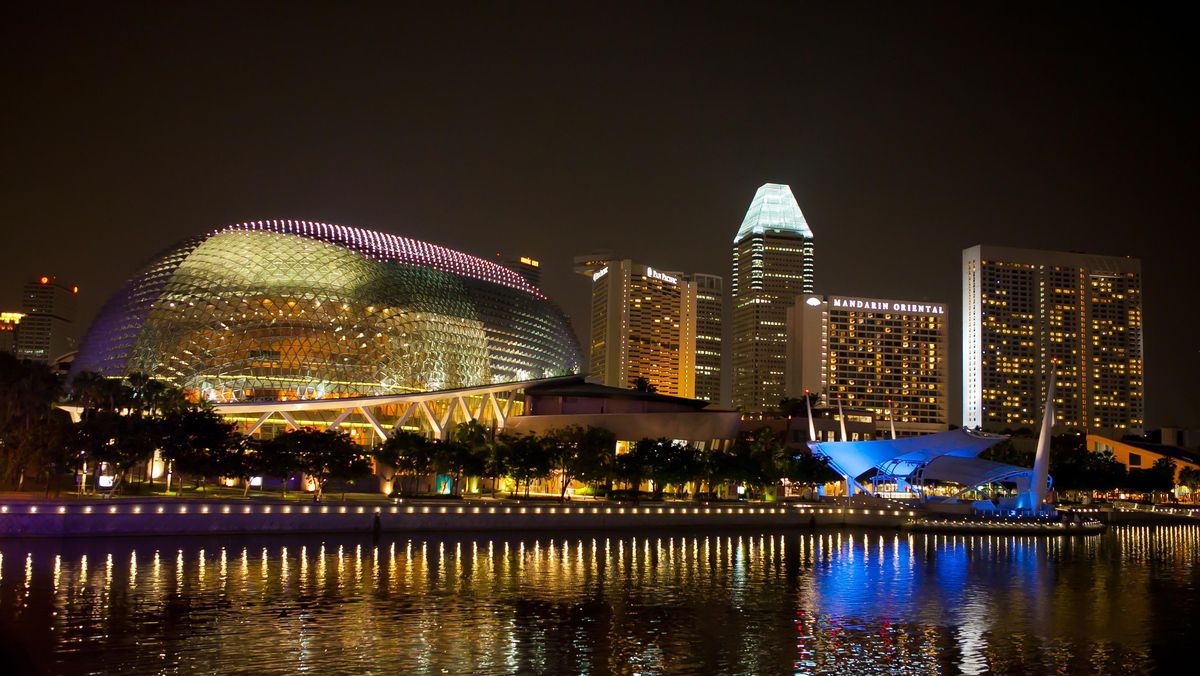
Secondly, the legal framework in Singapore is famously stringent. Harsh penalties for crimes such as theft, assault, and harassment contribute to a high level of social compliance. This is complemented by a high standard of living and low unemployment rates, which statistically correlate with lower crime rates.
Thirdly, the physical infrastructure plays a vital role. Singapore’s "Walk2Ride" program and the development of the Park Connector Network (PCN) ensure that pedestrian paths are not only continuous but also well-lit and unobstructed. The fact that the three tourists were able to pull suitcases for nearly 10 kilometers without encountering broken pavement or dead-end sidewalks is a testament to the city’s commitment to "walkability."
Analyzing the Walkability Paradox
Interestingly, despite the viral success of this story, Singapore’s ranking in global walkability indices is nuanced. According to data from GuruWalk, a leading platform for walking tours, Singapore ranked 70th in a list of the world’s 100 best cities for exploring on foot. This ranking placed it behind other regional neighbors such as Hanoi, Ho Chi Minh City, and Kuala Lumpur in terms of "tourist walkability."
This discrepancy often stems from how "walkability" is defined. While European cities like Rome or Florence rank highly due to the density of historical sites within walking distance, Singapore’s walkability is often categorized by functional efficiency and safety rather than leisure. The 9.4-kilometer trek to Changi Airport highlights a "functional walkability"—the ability to get from Point A to Point B safely and efficiently—even if the route itself is not a traditional tourist trail.
Furthermore, the tropical climate is a significant barrier to Singapore being a "walking city" in the traditional sense. With average humidity levels often exceeding 80%, long-distance walking is generally discouraged during daylight hours. The choice of the three tourists to walk at 3 AM was, in many ways, the only time such a feat would be physically tolerable.
Economic and Social Implications for Tourism
The viral nature of this event serves as a significant, albeit unofficial, marketing tool for the Singapore Tourism Board (STB). In an era where "solo female travel" and "safe travel" are highly searched keywords, organic content that proves a destination’s safety carries more weight than traditional advertising.
The event also underscores a shift in tourist behavior. Modern travelers, particularly those from Gen Z and Millennial cohorts, are increasingly seeking "experiences" that deviate from the norm. Walking to an airport—an act that is usually seen as a logistical necessity to be completed as quickly as possible—was transformed into a bonding experience and a social media "challenge."
From a broader perspective, the story invites a comparison with other global transit hubs. In many major cities, the route to the airport is often via industrial zones or highways that are inaccessible or dangerous for pedestrians. The fact that Changi Airport remains integrated into the island’s pedestrian fabric allows for such anomalies to occur.
Conclusion: A Testament to Urban Governance
While the decision of the three tourists to walk 9.4 kilometers to catch a flight may be viewed by some as an eccentric travel choice, its significance lies in what it reveals about the environment in which it occurred. It serves as a real-world validation of Singapore’s status as a "Safe City."
The journey from the city to Changi Airport at 3 AM is more than just a viral TikTok trend; it is a reflection of a society where public spaces are reclaimed by citizens and visitors alike, regardless of the hour. As urban centers worldwide grapple with rising crime rates and deteriorating infrastructure, the image of three women safely pulling suitcases through the night remains a powerful symbol of what effective urban governance and a commitment to public safety can achieve.
As the video continues to circulate, it stands as a reminder that for many travelers, the ultimate luxury is not a fast car or a high-end hotel, but the simple, unalienable freedom to walk through a city at any hour without looking over one’s shoulder. For Singapore, this viral moment has reinforced a brand of safety that is perhaps its most valuable export.