Socio Today
A recent study published in the journal PLOS One has presented compelling evidence, derived from a 250-million-year-old fossil, that the ancient ancestors of mammals, known as synapsids, were indeed egg-layers. This groundbreaking discovery centers on the meticulously analyzed embryo of a Lystrosaurus, a resilient "mammal-like reptile" that famously survived the most cataclysmic mass extinction event in Earth’s history approximately 252 million years ago. The research, spearheaded by scientists at the University of Witwatersrand in South Africa, sheds new light on a critical period in vertebrate evolution, offering unprecedented insights into the reproductive strategies of early synapsids and the subsequent development of defining mammalian characteristics like live birth and lactation.
Groundbreaking Discovery Unveiled in South Africa
The fossil in question, unearthed in South Africa, is not merely a bone fragment but a remarkably preserved embryo of a Lystrosaurus. Its age places it firmly within the late Permian to early Triassic periods, a pivotal epoch for life on Earth. The significance of this particular fossil lies in its extraordinary state of preservation, which allowed researchers to employ cutting-edge imaging technologies to peer into its ancient anatomy without causing any damage. The lead author of the study, Julien Benoit, a professor at the Evolutionary Studies Institute at the University of Witwatersrand, emphasized the rarity and importance of such a find, noting that intact embryonic fossils from this distant past are exceedingly rare. This discovery provides a direct window into the early developmental stages of an animal that played a crucial role in the lineage leading to modern mammals.
Anatomical Evidence Through Advanced Imaging
To unlock the secrets held within the ancient stone, the research team utilized a combination of high-resolution computed tomography (CT) scanning and synchrotron X-ray technology. Synchrotrons, essentially particle accelerators, produce X-ray beams far brighter and more focused than conventional X-ray sources, allowing for unparalleled detail in imaging dense materials like fossils. This advanced methodology enabled the scientists to create detailed 3D reconstructions of the Lystrosaurus embryo’s internal structures, revealing features that would otherwise remain hidden.
The critical anatomical evidence uncovered through these scans pertained to the embryo’s jaw structure. Researchers observed that the Lystrosaurus embryo’s jawbones were not yet fully fused. This particular characteristic, as highlighted by Professor Benoit, is a trait exclusively found in the embryos of modern birds and turtles. In these contemporary oviparous (egg-laying) species, the jawbones typically fuse later in development, often after hatching. The presence of this unfused jaw morphology in the Lystrosaurus embryo provides a robust indicator that the creature was still developing inside an egg at the time of its death. "This is the first time we can say, with full confidence, that mammal ancestors like Lystrosaurus laid eggs, making this a true milestone in the field," Benoit stated, underscoring the definitive nature of their findings. This direct evidence definitively resolves a long-standing debate among paleontologists regarding the reproductive mode of these ancient creatures, moving beyond inferences based solely on skeletal morphology of adult specimens.
The Permian-Triassic Extinction and Lystrosaurus‘s Resilience
The context of Lystrosaurus‘s existence is crucial to understanding its evolutionary significance. This genus of dicynodont therapsids lived during a tumultuous period in Earth’s history, straddling the boundary between the Permian and Triassic periods. The Permian-Triassic extinction event, occurring approximately 252 million years ago, stands as the most severe biotic crisis in the planet’s history. Often dubbed "The Great Dying," it led to the extinction of an estimated 90% of marine species and 70% of terrestrial vertebrate species.
The causes of this catastrophic event are widely attributed to massive volcanic eruptions in the Siberian Traps, which unleashed vast quantities of greenhouse gases into the atmosphere. This triggered runaway global warming, ocean acidification, widespread anoxia (lack of oxygen) in marine environments, and extensive aridification on land. Ecosystems collapsed worldwide, and the planet was left largely barren.
Amidst this devastation, Lystrosaurus emerged as a remarkable survivor, dominating the early Triassic terrestrial fauna to an extraordinary degree. Its fossils are found globally, from South Africa and India to Antarctica, indicating a widespread distribution. This widespread presence and abundance in the aftermath of the extinction event have long puzzled scientists, making Lystrosaurus a focal point for understanding post-extinction recovery and adaptive strategies. Its ability to thrive in the harsh, altered environments of the early Triassic, characterized by extreme temperatures and prolonged droughts, points to a suite of highly adaptive traits. The recent discovery about its reproductive strategy now adds another critical piece to this puzzle.
The Evolutionary Advantage of Leathery Eggs
Professor Benoit elaborated that the eggs of Lystrosaurus likely possessed soft, leathery shells, similar in texture to those of modern reptiles like snakes or lizards, rather than the hard, calcified shells characteristic of birds. Hard-shelled eggs, the research suggests, only evolved much later, at least 50 million years after Lystrosaurus. This leathery eggshell played a pivotal role in the animal’s survival strategy, particularly in the arid, desert-like conditions that prevailed during the early Triassic.
Lystrosaurus was known to inhabit extremely dry environments, likely foraging along the beds of dry rivers and digging burrows in soft, muddy ground to endure extended dry seasons. In such conditions, water conservation would have been paramount for survival. The study posits that the relatively thick, leathery shells of Lystrosaurus eggs were more effective at retaining moisture compared to the thinner-shelled eggs of other species prevalent at the time. This reduced water loss would have been a significant advantage in preventing desiccation, allowing the embryos to develop successfully even in water-scarce landscapes.
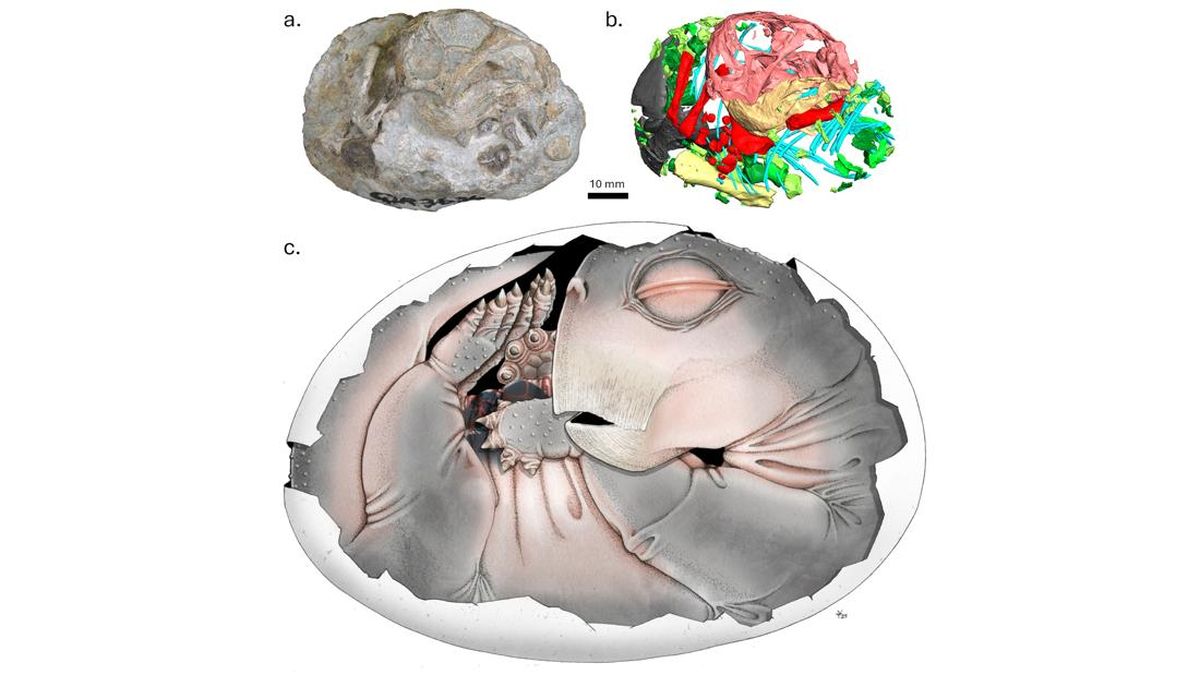
Furthermore, the study indicates that Lystrosaurus eggs were relatively large compared to the adult animal’s size. This characteristic implies that the hatchlings were already considerably developed upon emerging from the egg. Larger, more developed offspring would have had several critical advantages: they would be better equipped to forage for food independently, reducing the period of parental dependency; they would be more capable of evading predators from an earlier age; and they could reach sexual maturity faster, allowing for quicker reproduction cycles. In a post-extinction world where competition for resources was fierce and environmental pressures were immense, these combined factors would have provided Lystrosaurus with a crucial edge, contributing significantly to its remarkable success and proliferation across the globe.
Unraveling the Origins of Mammalian Traits: Lactation and Viviparity
Beyond confirming egg-laying, the study’s findings have profound implications for understanding the evolution of defining mammalian traits, particularly lactation and viviparity (live birth). The fact that Lystrosaurus laid eggs with leathery shells means that the evolution of these advanced reproductive strategies must have occurred later in the mammalian lineage.
The researchers propose that the ability to produce milk (lactation) likely evolved between the early and late Triassic periods (roughly 252-201 million years ago), a significant timeframe after the Permian-Triassic extinction event. This timeline is crucial because it suggests that lactation was not a primordial trait of synapsids but rather a later evolutionary innovation that further cemented the success of the mammalian line.
Intriguingly, the research lends strong support to a specific hypothesis regarding the initial evolutionary purpose of lactation. It suggests that milk production may have originally evolved not primarily to nourish offspring, but rather to keep the leathery-shelled eggs moist and protected. In arid environments, parental secretions could have maintained a humid microclimate around the eggs, preventing desiccation. Only later, as the composition of these secretions evolved and became more nutritious, would they have transitioned into a primary food source for hatchlings or live-born young. This hypothesis offers a compelling alternative to the traditional view that lactation immediately served a nutritive role, highlighting the incremental and adaptive nature of evolutionary processes.
The discovery also sets the stage for further investigation into the origins of viviparity. If Lystrosaurus, a direct ancestor, laid eggs, then the transition to live birth—where embryos develop internally within the mother—must have occurred at some point after this period. Unraveling this evolutionary pathway involves understanding the selective pressures that favored internal gestation and the complex physiological changes required for such a shift. As Benoit notes, "These are some of the most important traits that characterize our family, and we still don’t know exactly when and how they evolved."
Expert Perspectives
The scientific community has largely welcomed the findings, recognizing their importance in filling a critical gap in the understanding of mammalian evolution. Steve Brusatte, a professor of paleontology and evolution at the University of Edinburgh in Scotland, who was not involved in the study, commented on the significance of the Lystrosaurus embryo. He described it as a "fascinating fossil" and emphasized its role in clarifying early mammalian reproduction.
"This is strong evidence that some of our closest mammal ancestors were still laying eggs and reproducing like reptiles, and hadn’t yet given live birth and fed their babies milk," Brusatte stated in an email, reinforcing the study’s conclusions. He further elaborated that traits like live birth and lactation "would come later, and be hugely important in the current prosperity of mammals." This perspective underscores how the Lystrosaurus discovery provides a clearer demarcation point in the evolutionary timeline, highlighting that the journey from reptilian-like reproduction to distinctively mammalian strategies was a gradual process spanning millions of years. It pushes back the timeline for the appearance of certain advanced reproductive traits, allowing paleontologists to refine their models of mammalian ancestry.
Future Directions in Paleontology
The findings from the Lystrosaurus study serve as a springboard for future research. Professor Benoit and his team plan to delve deeper into the intricate evolutionary pathways of lactation and viviparity. Their next steps involve searching for more fossil evidence that can illuminate the transitional stages between egg-laying and live birth, and the incremental development of milk production. This might involve examining other synapsid fossils from different periods, looking for subtle clues in bone structure, dental wear patterns, or even preserved soft tissues that could indicate early forms of parental care or feeding.
Understanding these evolutionary milestones is not merely an academic exercise; it provides fundamental insights into the very nature of life’s diversity and adaptation. By tracing the origins of characteristics that define mammals, including humans, scientists can better comprehend the resilience of life in the face of environmental change and the complex interplay of genetics, environment, and behavior over geological timescales. "Unraveling this will be hugely helpful in understanding the mammalian success story," Benoit concluded, highlighting the broad implications of this research for the entire field of evolutionary biology. The ongoing quest to uncover these ancient secrets continues to reshape our understanding of where we come from and how the incredible diversity of life on Earth came to be.