Socio Today
French President Emmanuel Macron has formally welcomed the announcement of a comprehensive peace agreement between the United States and the Islamic Republic of Iran, describing the breakthrough as the culmination of intensive diplomatic efforts involving multiple international stakeholders. Speaking via social media and official diplomatic channels on Monday, June 15, 2026, President Macron hailed the resolution as a victory for multilateralism and a necessary step toward restoring order to global trade routes. The French leader’s remarks followed a series of dramatic announcements from Washington and Islamabad, signaling the end of a protracted military blockade in the Persian Gulf that had threatened to destabilize the global economy for the better part of the year.
President Macron emphasized that the deal was not merely a bilateral achievement but a result of a coordinated diplomatic framework. "I welcome the agreement reached between the United States and Iran, the result of diplomatic efforts involving several partners," Macron stated. He further issued an urgent call for the "rapid and full implementation" of the terms by all parties involved in the regional conflict. Central to Macron’s response was the immediate status of the Strait of Hormuz, a narrow waterway that serves as the world’s most important oil transit chokepoint. Macron insisted that the strait must be reopened "urgently and unconditionally," noting that France, in collaboration with the United Kingdom, stands ready to deploy international naval resources to ensure the safety and fluidity of maritime traffic.
The diplomatic breakthrough was first signaled by Pakistani Prime Minister Shehbaz Sharif, who acted as a key intermediary during months of back-channel negotiations. Shortly thereafter, U.S. President Donald Trump confirmed the cessation of hostilities through his Truth Social platform, declaring that the U.S. Navy’s blockade of the Strait of Hormuz had been officially lifted. "The deal with the Islamic Republic of Iran is now complete. Congratulations to all!" Trump announced, adding in a later statement, "Ships of the world, start your engines. Let the oil flow!"
The Strategic Importance of the Strait of Hormuz
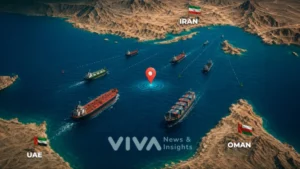
The reopening of the Strait of Hormuz marks a pivotal moment for the global energy market. Historically, the strait has been the most significant artery for the world’s petroleum industry. Located between Oman and Iran, it connects the Persian Gulf with the Gulf of Oman and the Arabian Sea. According to data from the U.S. Energy Information Administration (EIA), approximately 21 million barrels of oil per day—representing roughly 21% of global liquid petroleum consumption—pass through this 21-mile-wide passage.
The blockade, which had been in place following an escalation of maritime skirmishes in 2025, led to a dramatic spike in global energy prices and insurance premiums for shipping companies. President Macron highlighted that the "unrestricted and fee-free" restoration of maritime traffic is "essential for regional stability and the global economy." The French government has indicated that the mission to secure the strait, formed alongside British forces, has resources "already available and ready to be deployed" to assist in the transition from a military blockade to an open commercial corridor.
Chronology of the Conflict and the Path to Peace
The path to the June 2026 peace agreement has been marked by extreme volatility and high-stakes brinkmanship. To understand the significance of this deal, it is necessary to examine the timeline of events that led the two nations from the brink of total war to the negotiating table.
- Late 2024 – Early 2025: Rising Tensions: Following a series of stalled nuclear negotiations and increased drone activity in the region, tensions between Washington and Tehran reached a fever pitch. Incidents involving the seizure of commercial tankers led to a heightened U.S. naval presence in the Persian Gulf.
- Mid-2025: The Blockade Begins: In response to what it termed "unlawful sanctions," Iran began restricting access to the Strait of Hormuz. The United States responded by authorizing a "preventative blockade" to ensure that only "non-hostile" vessels could pass, effectively bringing regional oil exports to a grinding halt.
- Late 2025: Economic Fallout: Global oil prices surged past $150 per barrel, triggering inflationary pressures in Europe, Asia, and North America. International pressure began to mount on both Washington and Tehran to find a diplomatic exit ramp.
- January – May 2026: The Pakistani Mediation: Prime Minister Shehbaz Sharif of Pakistan, utilizing his country’s unique diplomatic position with both the West and Tehran, began hosting secret talks in Islamabad. These sessions, reportedly supported by Swiss and Qatari diplomats, focused on a "grand bargain" that included sanctions relief in exchange for maritime security guarantees.
- June 15, 2026: The Breakthrough: President Trump officially authorizes the lifting of the blockade, and President Macron confirms the international community’s support for the new security framework.
International Reactions and the Role of the United Nations
The United Nations has been quick to endorse the agreement, viewing it as a critical "momentum" for broader Middle Eastern peace. UN Secretary-General António Guterres, through his spokesperson Stephane Dujarric, expressed hope that this development would lead to a "final settlement of the conflict." The UN has long warned that a prolonged closure of the Strait of Hormuz could lead to a humanitarian catastrophe in developing nations reliant on affordable energy and food imports.
In London, the British government echoed Macron’s sentiments. A spokesperson for the Prime Minister confirmed that the Royal Navy would work in tandem with French forces to monitor the strait. This joint mission is intended to provide confidence to commercial shipping liners that have been hesitant to traverse the region due to the threat of minefields or ship seizures. The involvement of the UK and France provides a "multilateral veneer" to a deal that was largely brokered through unconventional channels, ensuring that the security of the waterway is not dependent on U.S. or Iranian forces alone.
Economic and Geopolitical Implications
The immediate impact of the peace deal was felt on the commodities markets. Brent Crude futures reportedly dropped by 8% within hours of President Trump’s announcement. For the global economy, the reopening of the strait means more than just cheaper gasoline; it signifies a reduction in the "geopolitical risk premium" that has stifled international investment for the past two years.
Key Economic Data Points:
- Shipping Costs: Maritime insurance premiums for tankers in the Persian Gulf are expected to drop by as much as 40% in the coming weeks.
- Energy Supply: The sudden influx of stalled Iranian and Saudi Arabian crude into the market is expected to stabilize global reserves ahead of the winter season in the Northern Hemisphere.
- Trade Volume: Beyond oil, the Strait is a vital route for Liquefied Natural Gas (LNG), particularly from Qatar, which provides a significant portion of Europe’s heating fuel.
From a geopolitical perspective, the deal represents a significant shift in U.S. foreign policy. President Trump’s "deal-making" approach appears to have prioritized economic stability and the withdrawal of costly naval deployments over the "maximum pressure" campaigns of the past. For Iran, the agreement offers a much-needed lifeline to its domestic economy, which has been battered by years of isolation and the recent blockade.
Looking Toward June 19: The Signing Ceremony
While the blockade has been lifted and the "engines are started," the formalization of the peace treaty is scheduled for June 19, 2026. This upcoming signing ceremony is expected to be a major international event, potentially held on neutral ground or at the United Nations headquarters. The document, which President Trump claims is already fully agreed upon, will likely outline the specifics of sanctions removal, the parameters of Iran’s nuclear program, and a permanent framework for maritime security in the Persian Gulf.
President Macron has signaled that France will play an active role in the oversight of this agreement. He called for "full and rapid implementation," suggesting that the international community will be watching closely to ensure that neither side reneges on their commitments. The mention of "no tolls" by President Trump also addresses a long-standing concern that Iran might attempt to charge transit fees for ships passing through its territorial waters in the strait—a move that would have been contested under the United Nations Convention on the Law of the Sea (UNCLOS).
Conclusion: A New Era for Regional Diplomacy?
The news of the U.S.-Iran peace deal has been met with a mixture of relief and cautious optimism. While the immediate threat of a global energy crisis has been averted, the long-term success of the agreement will depend on the "new momentum" cited by Secretary-General Guterres. The involvement of regional powers like Pakistan and global players like France and the UK suggests a more inclusive approach to Middle Eastern security than has been seen in previous decades.
As the world prepares for the formal signing on June 19, the focus remains on the Strait of Hormuz. The successful transition from a zone of military confrontation to a corridor of free-flowing commerce will be the ultimate litmus test for this historic agreement. For now, the message from world leaders is clear: the path of diplomacy has prevailed over the path of war, providing a rare moment of de-escalation in a region long defined by its volatility.