Iranian President Masoud Pezeshkian and Senior Officials Express Strong Support for Pope Leo XIV Following Tensions with US President Donald Trump

In an unprecedented alignment of interests between the Islamic Republic of Iran and the Holy See, President Masoud Pezeshkian and high-ranking political figures in Tehran have issued a series of statements backing Pope Leo XIV. This wave of support comes in the wake of escalating verbal hostilities between the Pontiff and United States President Donald Trump, a conflict that has transcended traditional diplomatic boundaries to touch upon sensitive religious imagery and global security policies. The rift, which reached a fever pitch in mid-April 2026, centers on the Pope’s vocal opposition to the Trump administration’s aggressive stance toward Iran and what the Vatican describes as "warmongering" rhetoric.
The friction intensified after President Trump utilized his Truth Social platform to launch a series of critiques against the head of the Catholic Church. Trump characterized the Pope as being "weak in the face of evil" and suggested that the Vatican’s diplomatic overtures were undermining American foreign policy interests. The situation was further exacerbated when Trump reportedly shared an AI-generated image depicting himself in a manner reminiscent of Jesus Christ, an act that triggered a global backlash before the post was eventually removed.
The Iranian Diplomatic Response
President Masoud Pezeshkian addressed the controversy through an official diplomatic communique directed to the Vatican. In his message, Pezeshkian condemned the perceived "disrespect" shown toward both the Pope and Jesus Christ. The Iranian President emphasized that Jesus is revered in Islam as a prophet of peace and brotherhood, making any perceived desecration of his image or the office of the Papacy a matter of international concern. Pezeshkian wrote that such "penodaan" or desecration of holy figures is unacceptable to any individual or nation that values freedom and spiritual sanctity.
Speaking on behalf of the Iranian people, Pezeshkian expressed solidarity with Pope Leo XIV, framing the Pontiff’s stance as a courageous defense of global stability. This diplomatic move is seen by analysts as a strategic effort by Tehran to align itself with moral authorities in the West who oppose unilateral military action and economic sanctions. By positioning Iran as a defender of the Pope’s honor, Pezeshkian is attempting to bridge a cultural divide, highlighting shared values of "peace and brotherhood" against what he describes as the disruptive policies of the White House.
Rhetorical Escalation: From Policy to Persona
The conflict between the two leaders is rooted in a fundamental disagreement over international relations. Pope Leo XIV has consistently criticized the United States’ recent policy shifts, particularly those involving heightened military posturing in the Middle East and the abandonment of de-escalation frameworks with Tehran. The Pope’s advocacy for a "culture of encounter" rather than "walls of exclusion" has frequently put him at odds with the "America First" doctrine.
President Trump’s response has been uncharacteristically direct even by his own standards. Beyond the social media posts, Trump told reporters that he was "not a fan" of the current Pope, arguing that religious leaders should stay out of geopolitical strategy unless they are prepared to support the security interests of the United States and its allies. The use of AI-generated imagery to liken his own political struggles to religious narratives was the breaking point for many international observers, leading to accusations of blasphemy from both Christian and Muslim leaders.
The Pope’s Defiance: "I Am Not Afraid"
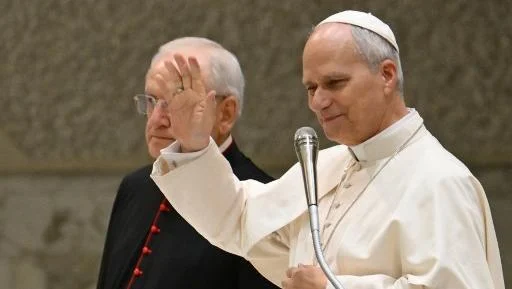
Despite the vitriol coming from Washington, Pope Leo XIV has maintained a composed yet firm demeanor. During a recent press conference held aboard a flight to Aljazair (Algeria), the Pontiff was asked about his reaction to the American President’s insults. The Pope clarified that he had no intention of engaging in a "public spat" or a "war of words" with the US President. However, he refused to retract his criticisms of modern warfare.
"I am not afraid," the Pope stated, a phrase that has since become a rallying cry for his supporters globally. He reiterated his commitment to peace, specifically calling the recent threats directed at Iran "unacceptable." The Pope’s comments underscore a broader Vatican policy that views the threat of preemptive war as a violation of "just war" doctrine and a catastrophic risk to civilian populations. His vocal opposition to the conflict has made him one of the most prominent religious critics of the current US administration’s foreign policy.
Iranian Legislative Support and Global Resonance
The support for the Pope within Iran is not limited to the executive branch. Mohammad Bagher Ghalibaf, the Speaker of the Iranian Parliament, also weighed in on the controversy. In a post on the social media platform X, Ghalibaf praised the Pope’s "fearless" stance. He noted that the Pontiff’s refusal to remain silent in the face of what he termed "crimes" by Israel and the United States served as an inspiration for millions.
Ghalibaf’s statement focused heavily on the Pope’s "I am not afraid" declaration, suggesting that such moral clarity illuminates the path for those who resist the "killing of innocent people." The Speaker’s remarks highlight how the Pope’s message has resonated in the Global South and in nations that often find themselves at odds with Western hegemony. This alignment between a Shia Islamic theocracy and the Roman Catholic Church marks a significant moment in interfaith diplomacy, driven by a shared opposition to military interventionism.
Chronology of the Dispute
The timeline of this diplomatic fallout provides context to the current state of affairs:
- Early March 2026: Pope Leo XIV issues a papal encyclical focusing on global peace, explicitly mentioning the dangers of renewed tensions in the Persian Gulf and criticizing "nationalistic isolationism."
- March 20, 2026: The White House issues a statement suggesting that the Vatican’s comments are "uninformed" and "naive" regarding the realities of global security.
- April 5, 2026: President Trump posts the controversial AI-generated image on Truth Social, which is interpreted by many as a messianic comparison.
- April 8, 2026: Trump explicitly labels the Pope "weak" during a campaign-style rally, citing the Vatican’s willingness to engage in dialogue with Tehran.
- April 12, 2026: Pope Leo XIV, during his flight to Algeria, delivers his "I am not afraid" speech, reaffirming his stance against war.
- April 15, 2026: President Pezeshkian and Speaker Ghalibaf issue formal statements of support for the Pope, condemning the "ketidakhormatan" (disrespect) shown by the US leadership.
Geopolitical and Moral Implications
The implications of this rift are manifold. Historically, the Vatican has played a crucial role as a mediator in international conflicts, such as the rapprochement between the US and Cuba during the Obama administration. However, under the current circumstances, the Holy See appears to be moving into a role of "moral opposition" to American policy. This shift could potentially influence Catholic voters in the United States and abroad, creating a domestic political challenge for the Trump administration.
For Iran, the alignment with the Pope offers a form of "moral legitimacy" on the international stage. By framing their struggle not just as a political or economic one, but as one supported by the world’s most prominent Christian leader, Tehran seeks to undermine the narrative that the conflict is a "clash of civilizations." Instead, they present it as a conflict between those who seek peace and those who seek dominance.
Furthermore, the controversy surrounding the AI-generated imagery highlights a new frontier in political communication and religious sensitivity. The rapid condemnation from a Muslim nation like Iran regarding the treatment of a Christian figure underscores the high stakes of using religious icons in political campaigning.
Analysis: The Power of Moral Authority
The phrase "I am not afraid" signals a significant moment in Pope Leo XIV’s papacy. It suggests that the Vatican is prepared to endure diplomatic friction or even the loss of traditional alliances to maintain its stance on humanitarian issues. By calling the threats against Iran "unacceptable," the Pope is effectively placing the moral weight of the Church against the strategic objectives of the world’s most powerful military.
The support from Iran, while perhaps opportunistic from a geopolitical standpoint, reflects a genuine recognition of the Pope’s influence. In an era of increasing polarization, the Vatican remains one of the few institutions capable of commanding attention across different cultures and political systems.
As the situation develops, the international community remains watchful. Whether this tension will lead to a formal cooling of diplomatic relations between the US and the Vatican—or if it will prompt a shift in US policy toward the Middle East—remains to be seen. What is clear, however, is that the intersection of religion, technology, and high-stakes diplomacy has created a new and unpredictable chapter in global affairs. For now, the "nabi perdamaian" (prophet of peace) remains the central figure in a struggle that is as much about the soul of international relations as it is about the security of nations.