Iran Threatens Total Maritime Shutdown in Red Sea and Persian Gulf Amid Escalating US Naval Blockade

The Iranian military issued a stark ultimatum on Wednesday, April 15, 2026, declaring its intention to obstruct all commercial traffic through the Red Sea, the Persian Gulf, and the Gulf of Oman if the United States Navy continues its current maritime blockade of Iranian ports. This development represents a significant escalation in regional tensions, marking a potential shift toward a direct naval confrontation between Washington and Teheran. In a statement broadcast via Iranian state media, the head of the military command center, Ali Abdollahi, warned that the ongoing U.S. efforts to restrict Iranian commerce would be met with reciprocal force, effectively ending the period of relative stability in these vital international shipping lanes.
According to Abdollahi, the U.S. Navy’s decision to "create insecurity for Iranian commercial vessels and tankers" constitutes a violation of existing ceasefire understandings and international norms. "The Armed Forces of the Islamic Republic will not allow exports and imports to continue in the Persian Gulf, the Gulf of Oman, and the Red Sea if our own interests are compromised," Abdollahi stated, as reported by RTHK. He further emphasized that the Iranian military would "act appropriately to maintain national sovereignty and its interests," suggesting that Teheran is prepared to deploy its asymmetric naval capabilities to enforce a total maritime shutdown if the blockade is not lifted.
The Catalyst: Failure of the Islamabad Negotiations
The current crisis traces its immediate roots to the weekend of April 11–12, 2026, during which high-level diplomatic talks were held in Islamabad, Pakistan. These negotiations, aimed at resolving long-standing disputes over trade sanctions, maritime security, and regional influence, reportedly collapsed without a breakthrough. While official details regarding the specific points of contention remain sparse, diplomatic sources suggest that the two nations reached an impasse over the verification of maritime cargo and the lifting of energy-related sanctions.
Following the failure of these talks, the United States Department of Defense moved swiftly to implement what it termed a "maritime enforcement operation." Beginning on Monday, April 13, 2026, U.S. naval assets began intercepting and preventing vessels from entering or exiting major Iranian ports, including Bandar Abbas and Chabahar. The U.S. administration has defended the move as a necessary measure to curb the illicit transport of restricted materials, though Teheran has characterized it as an illegal act of war and a "maritime siege."
Chronology of the April 2026 Escalation
The timeline of the current standoff illustrates the rapid deterioration of security in the Middle East’s maritime corridors:
- April 11–12, 2026: U.S. and Iranian delegations meet in Islamabad for emergency talks mediated by Pakistani and international observers. The talks conclude on Sunday evening with no joint statement, signaling a total breakdown in communication.
- April 13, 2026 (Monday): The U.S. Navy’s Fifth Fleet, stationed in Bahrain, announces the commencement of a blockade. Multiple carrier strike groups are positioned near the Strait of Hormuz and the Bab el-Mandeb strait. Reports emerge of Iranian tankers being turned back by U.S. destroyers.
- April 14, 2026 (Tuesday): Global oil markets react sharply, with Brent Crude prices surging by 8% in a single trading session. Insurance companies begin raising "War Risk Surcharges" for vessels operating in the Middle East.
- April 15, 2026 (Wednesday): Ali Abdollahi delivers Iran’s military response, threatening to close the three most critical waterways for global energy and trade. Simultaneously, the Tasnim news agency reports that some Iranian exports are still successfully navigating the blockade, citing anonymous sources within the port authorities.
Strategic Significance of the Targeted Waterways
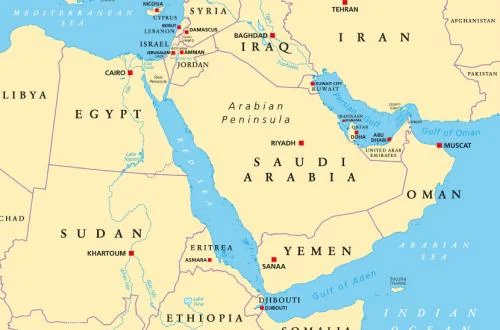
The threat to close the Red Sea, the Persian Gulf, and the Gulf of Oman is a maneuver of immense geopolitical weight, as these three bodies of water form the "chokepoints" of the global economy.
The Persian Gulf and the Strait of Hormuz
The Persian Gulf is the world’s most critical energy artery. Approximately 21 million barrels of oil per day—representing roughly 21% of global petroleum liquid consumption—pass through the Strait of Hormuz. A closure of this strait would effectively trap the exports of Saudi Arabia, Iraq, Kuwait, and the United Arab Emirates, leading to an immediate and catastrophic spike in global energy prices.
The Red Sea and the Bab el-Mandeb
The Red Sea serves as the primary link between Asia and Europe via the Suez Canal. The Bab el-Mandeb strait, located at the southern entrance of the Red Sea, is a narrow passage through which approximately 12% of total seaborne-traded oil and 8% of global liquefied natural gas (LNG) pass. If Iran were to successfully disrupt traffic here, it would force global shipping companies to reroute vessels around the Cape of Good Hope, adding weeks to transit times and billions of dollars in logistics costs.
The Gulf of Oman
Acting as the outer gateway to the Strait of Hormuz, the Gulf of Oman is the staging ground for international shipping entering the Middle Eastern theater. By threatening this area, Iran signals its intent to extend its defensive perimeter far beyond its immediate coastline, potentially involving deep-sea naval engagements.
Conflicting Reports on the Ground
Despite the bellicose rhetoric from the military command, there are conflicting reports regarding the current effectiveness of the U.S. blockade. On Wednesday, the Tasnim News Agency, which is often linked to the Islamic Revolutionary Guard Corps (IRGC), quoted an anonymous source stating that commercial activities at southern Iranian ports have not been fully halted.
"Iranian commercial vessels have continued to sail to various destinations around the world in the last 24 hours," the source claimed. This statement suggests a complex "cat-and-mouse" game occurring at sea, where Iranian vessels may be utilizing "dark fleet" tactics—such as turning off AIS (Automatic Identification System) transponders or conducting ship-to-ship transfers in international waters—to bypass U.S. naval cordons.
Analysts suggest that while the U.S. can monitor large tankers, the sheer volume of smaller dhows and commercial traffic in the region makes a "hermetic" blockade nearly impossible to maintain without a massive increase in naval assets. The military threat from Teheran may, therefore, be a strategic attempt to force the U.S. to withdraw its fleet before the situation evolves into a hot war.
Potential Global Implications and Economic Fallout
The international community has viewed these developments with extreme concern. If Iran follows through on its threat to close these waterways, the economic repercussions would be felt globally.
- Energy Security: Financial analysts at major investment banks have warned that a sustained closure of the Strait of Hormuz could push oil prices toward $150 or even $200 per barrel. This would trigger inflationary pressures across the globe, particularly in energy-dependent economies in Europe and East Asia.
- Supply Chain Disruption: Beyond oil, the Red Sea is a vital route for consumer goods, electronics, and automotive parts. A disruption would exacerbate the fragilities of the global "just-in-time" delivery system, leading to shortages and price hikes for everyday goods.
- Military Escalation: A move to close international waters would likely trigger a military response from a coalition of nations. The United States, United Kingdom, and regional allies would almost certainly launch "Freedom of Navigation" operations, which could lead to direct exchanges of missile fire, mine-clearing operations, and potential strikes on coastal defense batteries.
- Insurance and Maritime Law: The legal status of such a blockade is a matter of intense debate. Under the United Nations Convention on the Law of the Sea (UNCLOS), the right of "transit passage" through international straits is protected. However, Iran is not a party to all aspects of UNCLOS, and the U.S. blockade itself occupies a legal gray area, often described by critics as a "pacific blockade" that borders on an act of aggression.
Regional and International Reactions
The reaction from neighboring states has been a mix of caution and preparation. Saudi Arabia and the United Arab Emirates have reportedly placed their naval forces on high alert, while simultaneously engaging in back-channel diplomacy to prevent a total collapse of regional security.
In Washington, the White House has remained firm, with spokespersons stating that the U.S. will continue to take "all necessary measures" to ensure that Iran complies with international obligations. Meanwhile, the European Union has called for an immediate de-escalation, urging both parties to return to the negotiating table in Islamabad or a neutral European capital.
China, a major purchaser of Iranian oil and a significant user of the Red Sea shipping lanes, has expressed "grave concern." Beijing has called for "restraint on all sides," highlighting that the stability of the Middle Eastern waterways is a matter of global interest, not just a bilateral issue between Teheran and Washington.
Fact-Based Analysis: The Risks of Asymmetric Warfare
Military analysts point out that Iran does not need a conventional "blue-water" navy to close the straits. Instead, Teheran relies on asymmetric capabilities, including:
- Anti-Ship Missiles: Extensive batteries of shore-based missiles capable of hitting targets across the narrow straits.
- Naval Mines: A relatively low-cost but highly effective way to halt commercial shipping, as seen during the "Tanker War" of the 1980s.
- Fast Attack Craft: Small, highly maneuverable boats that can swarm larger naval vessels or commercial tankers.
- Unmanned Systems: The use of suicide drones and unmanned underwater vehicles (UUVs) to target shipping infrastructure.
The threat issued by Ali Abdollahi indicates that Iran is prepared to utilize these assets to create a "denial of access" zone. While the U.S. Navy possesses superior firepower, the cost of clearing mines and defending against swarm attacks in such confined waters is immense and carries a high risk of casualties.
Conclusion: A Precarious Standoff
As of the evening of April 15, 2026, the situation remains a volatile stalemate. The world’s eyes are fixed on the waters of the Middle East, where a single miscalculation by a naval commander or a rogue drone strike could ignite a conflict with unprecedented consequences for the global economy.
The failure of the Islamabad talks has removed the primary diplomatic safety valve, leaving the military commanders on both sides to dictate the pace of events. While Iran’s threat to close the Red Sea and the Persian Gulf may be viewed by some as a rhetorical gambit, the presence of U.S. warships at Iran’s doorstep ensures that the risk of a real-world confrontation is higher than it has been in decades. The coming days will be critical in determining whether diplomacy can be resurrected or if the world is headed toward a major maritime conflict.