Socio Today
President Donald Trump has issued a high-stakes appeal for military restraint following a series of Israeli airstrikes targeting the Lebanese capital of Beirut, warning that such escalations could jeopardize a landmark peace agreement currently being negotiated in the Middle East. Speaking from Washington on Sunday, June 14, 2026, the President emphasized that the United States is on the precipice of securing a comprehensive diplomatic breakthrough that would involve multiple regional powers, including Iran. Trump’s remarks come at a sensitive time when the fragile security architecture of the Levant is under immense pressure, threatening to dissolve months of back-channel diplomacy and formal mediation efforts.
The President’s intervention was prompted by an Israeli military operation in the southern suburbs of Beirut, a region known as a stronghold for the militant group Hezbollah. While Israel maintains that the strikes were a necessary response to earlier provocations, Trump characterized the move as a potential "spoiler" to a broader regional settlement. "We are very close to a deal that will bring peace to this region, including to Lebanon, and all parties must stop the conflict," Trump stated, according to reports from AFP and CNN International. He described the potential agreement as the "beginning of a long and beautiful peace," urging regional leaders not to let the opportunity go to waste.
The Beirut Escalation: A Chronology of Events
The latest flare-up began in the early hours of Sunday morning when a series of projectiles were launched from southern Lebanon toward northern Israeli territory. According to the Israel Defense Forces (IDF), these initial attacks resulted in minimal damage and no reported casualties. However, the IDF responded swiftly by deploying fighter jets to strike what it described as "strategic Hezbollah assets" in the Dahiyeh district of southern Beirut.
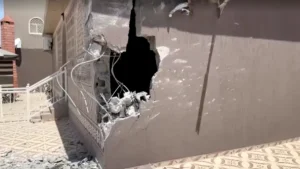
The Israeli response was significant in its geographical reach. For months, the conflict had largely been confined to the border regions, but the decision to strike the capital signaled a shift in tactical posture. Images emerging from Dahiyeh showed significant structural damage to a residential apartment complex in the Ghoebeiry neighborhood. The Lebanese Civil Defense Agency confirmed that search-and-rescue teams recovered three bodies from the rubble, while the National News Agency (NNA) reported at least 15 injuries. The blast also caused extensive damage to surrounding commercial shops and parked vehicles, further displacing civilians in an area already reeling from economic instability.
Trump’s critique of the operation was pointed. He argued that while Israel possesses an inherent right to self-defense, the scale of the response in Beirut was disproportionate to the initial threat. "The attack this morning in Beirut should not have happened," Trump remarked. "Israel has the right to defend itself against threats, but the attacks they responded to were very small and insignificant—no one was hurt, injured, or killed—and it should not have interfered with this important process."
A Fragile Ceasefire Under Pressure
The exchange of fire occurs against the backdrop of a pre-existing, albeit precarious, ceasefire agreement between Israel and Lebanon. This ceasefire, brokered with international assistance earlier in the year, was intended to create a "cooling-off period" to allow for the implementation of UN Security Council Resolution 1701 and the demarcation of a permanent maritime and land border.
Despite the formal cessation of major hostilities, the "Blue Line"—the unofficial border between the two nations—has remained a flashpoint. Frequent violations have been reported by the United Nations Interim Force in Lebanon (UNIFIL), with both sides accusing the other of provocative maneuvers. The recent strikes in Beirut represent the most serious violation of this ceasefire to date, raising fears that the conflict could expand into a full-scale regional war involving non-state actors and their sovereign patrons.
The Lebanese government has condemned the strikes as a violation of national sovereignty. Prime Minister’s office representatives in Beirut have called on the international community to exert pressure on Israel to adhere to the terms of the truce. Conversely, Israeli officials have maintained that they will not tolerate any fire from Lebanese territory, regardless of the perceived "insignificance" of the damage caused by Hezbollah’s provocations.
The Strategic Importance of the "Grand Bargain"
The core of Trump’s concern lies in the potential collapse of a multi-lateral peace initiative that has been the cornerstone of his administration’s foreign policy in 2026. While specific details of the "Grand Bargain" remain classified, diplomatic sources suggest the deal aims to integrate Iran into a regional security framework in exchange for verifiable nuclear de-escalation and a cessation of support for proxy militias.
For the Trump administration, the inclusion of Lebanon in this framework is essential. Lebanon’s stability is viewed as a prerequisite for the broader normalization of relations between Israel and its neighbors. The President’s rhetoric suggests that the deal is not merely a bilateral agreement but a "New Deal for the Middle East" that would expand upon the foundations of the Abraham Accords.
"This could be the start of something historic," Trump noted during his address. The implication is that any major military escalation by Israel at this juncture provides hardliners in Tehran and Beirut with the political ammunition necessary to withdraw from the negotiating table. By publicly calling for Israeli restraint, Trump is attempting to signal to Iran and other regional players that the United States remains committed to a diplomatic rather than a military solution to the current impasse.
Regional Reactions and Diplomatic Fallout
The international community has reacted with a mixture of caution and urgency. In Riyadh and Abu Dhabi, officials have echoed the call for de-escalation, fearing that a renewed conflict in Lebanon would destabilize global energy markets and disrupt regional trade routes. European leaders have also expressed concern, with the French Foreign Ministry issuing a statement urging all parties to respect the sanctity of the ceasefire and protect civilian lives.
Within Israel, the President’s comments have sparked a heated domestic debate. While some members of the Israeli security establishment agree that a diplomatic breakthrough with Iran would be a generational achievement, others argue that "insignificant" attacks by Hezbollah are a litmus test for national deterrence. Critics of the Israeli government’s current strategy argue that allowing even minor provocations to go unanswered invites more daring attacks in the future. However, Trump’s direct intervention puts the Israeli leadership in a difficult position, as the U.S. remains Israel’s primary security guarantor and diplomatic ally.
Hezbollah, for its part, has framed its actions as a "defensive necessity" in the face of perceived Israeli aggression. The group’s leadership has yet to comment directly on Trump’s claims regarding a looming peace deal, but analysts suggest that Hezbollah’s actions are often calibrated to test the limits of Israeli and American patience during high-stakes negotiations.
Implications for Future Stability
The coming days will be critical for the survival of the peace process. If Israel heeds Trump’s call for restraint and the border remains quiet, the momentum for the "Grand Bargain" may be preserved. However, if the cycle of retaliation continues, the region could see a return to the high-intensity warfare that characterized previous decades.
The humanitarian impact of the Beirut strikes cannot be overlooked. Lebanon is currently grappling with one of the worst economic crises in modern history, with a collapsed currency and a paralyzed political system. Any further military destruction of infrastructure in Beirut would exacerbate the suffering of the civilian population and potentially lead to a total state failure, creating a power vacuum that extremist elements could exploit.
Furthermore, the "insignificant" nature of the initial Hezbollah attack, as described by Trump, highlights the complexities of modern asymmetric warfare. In a digital age where every skirmish is broadcast globally, the psychological impact of a missile launch often outweighs its physical destruction. Trump’s assessment focuses on the strategic "big picture," suggesting that tactical wins on the battlefield are secondary to the long-term goal of regional integration and the containment of Iranian influence through diplomacy.
Conclusion: A Pivotal Moment for US Diplomacy
The situation in Beirut serves as a stark reminder of the volatility of Middle Eastern geopolitics. President Trump’s decision to speak out against a traditional ally’s military actions underscores a "peace through strength and negotiation" doctrine that seeks to redefine American involvement in the region. By framing the conflict as a choice between a "long and beautiful peace" and a "wasted opportunity," the President has placed the burden of responsibility on both Israeli and Lebanese actors.
As the 2026 diplomatic calendar progresses, the world will be watching to see if the "Grand Bargain" can survive the reality of cross-border violence. For now, the ruins in Dahiyeh stand as a testament to the fragility of the current peace, while Trump’s words reflect an ambitious, if risky, attempt to steer the Middle East toward a new era of stability. The success of this endeavor will depend not only on the restraint of military commanders but on the willingness of long-standing adversaries to prioritize the potential of a peaceful future over the grievances of the past.