 Socio Today
In discussions concerning global conservation, restorative economies, and climate change mitigation, the vital contributions of indigenous peoples and traditional communities in Indonesia have historically been marginalized. Vulnerable groups, particularly women, frequently find themselves entirely excluded from mainstream environmental discourse. For decades, global and national dialogues centered on planetary preservation have been disproportionately dominated by elite frameworks and patriarchal structures that overlook the intricate relationship between local communities and their ecosystems.
While societal norms often confine women strictly to domestic and household responsibilities, a paradigm shift is quietly underway at the grassroots level. Mothers and young female leaders are increasingly proving themselves indispensable to the frontlines of ecological stewardship. They successfully navigate the delicate balance between community economic survival and robust environmental protection. This dynamic was brought to the forefront during the Bangkok Climate Action Week, held from October 3 to 11, 2026, where indigenous and local women finally claimed their rightful space to share their lived experiences on an international platform.
The Nature-Based Economy Pavilion: Amplifying Marginalized Voices
As part of the broader Bangkok Climate Action Week 2026, the Earth Economy Coalition (Koalisi Ekonomi Membumi – KEM) spearheaded the Nature-based Economy Pavilion from October 5 to 7. The pavilion served as a critical hub for high-level panels and discussions, dedicating substantial space to women from various regions across Indonesia. These women shared compelling narratives about safeguarding customary forests, managing sustainable plantations, and building economic resilience through the preservation of traditional ecological knowledge.
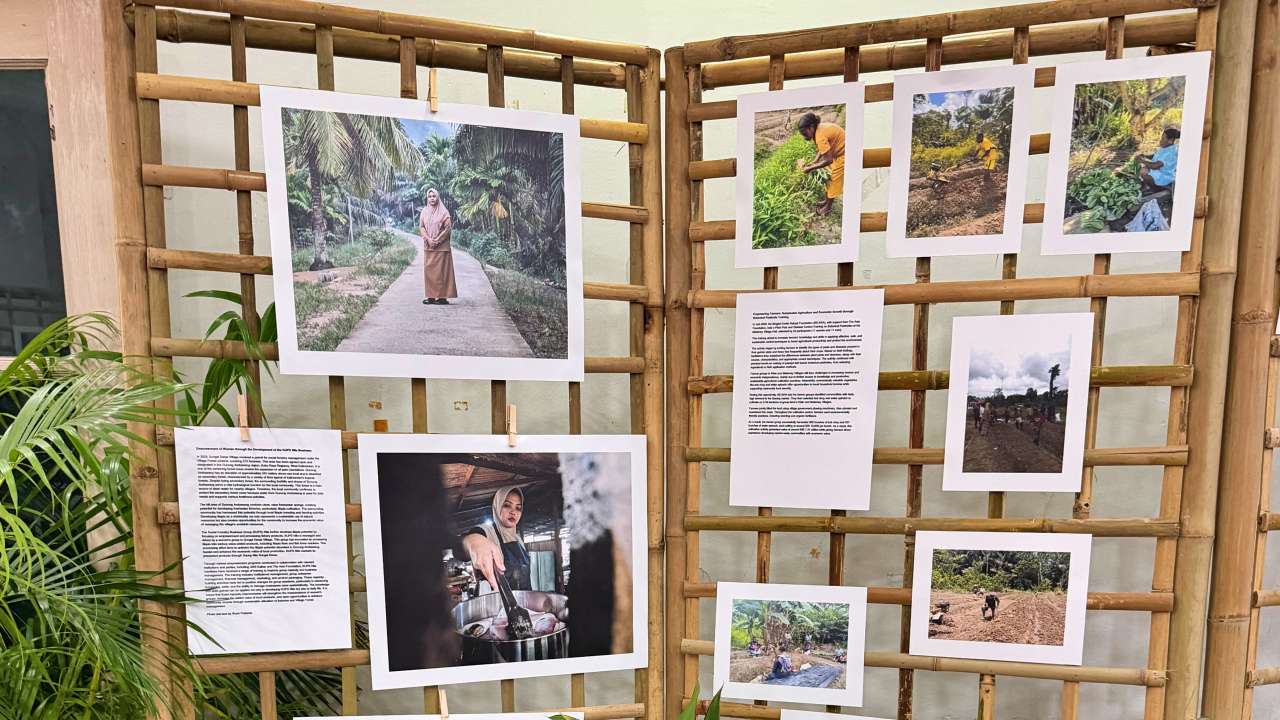
The presence of these female representatives did more than merely inspire international audiences; it shattered systemic barriers that have long restricted their autonomy and restricted inclusive climate action. By demonstrating how forest resources can be managed sustainably without accelerating deforestation, these women highlighted pathways for more inclusive and enduring climate interventions. Exhibits by organizations such as The Asia Foundation showcased tangible products and stories from the ground, featuring initiatives like the Women Forest Defenders program. Among the prominent figures was Ani Tasriah from South Sumatra, whose journey underscored the crucial intersection of legal social forestry frameworks and indigenous governance.
Bridging Customary Law and State Regulation: The Case of South Sumatra
On October 4, 2026, thematic panels organized by The Asia Foundation highlighted the grassroots impact of the Women Forest Defenders program—a collaborative effort between the foundation and local civil society organizations. The initiative aims to position women at the core of conservation efforts while generating sustainable livelihoods from Non-Timber Forest Products (NTFPs) backed by legal social forestry rights.
Ani Tasriah, Secretary of the Customary Forest Management Board (LPHAD) of Penyandingan Village in Muara Enim Regency, South Sumatra, articulated how modern state regulations can successfully harmonize with indigenous customary laws that predate the nation itself. Since acquiring legal social forestry rights from the Ministry of Environment and Forestry in 2019, her community has maintained strict ecological protocols that reinforce, rather than disrupt, traditional management systems.
According to Tasriah, community members are permitted to harvest specific resources like firewood and bamboo for personal use free of charge. However, commercial or large-scale extraction is strictly regulated by customary consensus. "If a community member needs to cut down a mature tree that is decades old, the customary forest institution mandates that they must plant 15 new trees as a replacement," Tasriah explained. This self-imposed regulatory enforcement ensures that utilization never outpaces regeneration, preserving the structural integrity of the customary forest for future generations.
Grassroots Mentorship and Leadership in West Nusa Tenggara
In West Nusa Tenggara (NTB), the cultivation of local women champions has taken root through similar capacity-building frameworks. Epy Liyana, a Community Organizer with the Consortium for Participatory Study and Development (KONSEPSI NTB), shared her experiences mentoring four Women’s Social Forestry Business Groups (KUPS). In this region, female participation in social forestry is remarkably active, spanning three NTB groups focused on NTFPs and one group specializing in ecotourism.
Mentoring these groups required navigating complex social dynamics and heavy domestic workloads. Because the members are primarily married women balancing childcare, household chores, and agricultural labor, Liyana emphasized the importance of patience, empathy, and adaptive scheduling. "The most important lesson I learned is that as mentors, we should not simply provide answers to the community," Liyana noted. "Instead, we must create a safe space where they can independently identify their own challenges and formulate sustainable solutions."
This philosophy of active listening and collaborative problem-solving was echoed by Hayatus Saadiah, another community organizer in NTB. Saadiah oversaw two distinct KUPS units in separate hamlets of the same village: KUPS Argapura Adventure, which focuses on gastronomy-based tourism, and KUPS Gula Madu, which specializes in the downstream processing of palm sap into crystal and liquid palm sugar.
Through persistent advocacy, Saadiah successfully drove structural reforms within these groups, transforming male-dominated leadership boards into female-led enterprises. A notable transformation occurred with Yulkiyani, a local mother with a primary school education and no prior organizational experience. Initially hesitant and overwhelmed by self-doubt regarding her education and ability to communicate with urban markets, Yulkiyani was gradually persuaded to take the helm of KUPS Gula Madu with her husband’s blessing.

"Today, Ibu Yulkiyani has transformed," Saadiah shared. "From someone who was initially too timid to speak and could only communicate in the local Sasak language, she now speaks fluent Indonesian and confidently negotiates with urban consumers." Yulkiyani’s newfound leadership has catalyzed the entire group, driving successful production cycles from harvesting raw palm sap to marketing finished goods in urban centers.
Kalara Borneo: Reviving Agroforestry and Indigenous Cacao Traditions
Moving to the island of Kalimantan, indigenous knowledge systems continue to offer robust solutions to modern environmental challenges. During a panel discussion on October 6, 2026, titled "From Forest Fires to Transboundary Haze: A Call for Collective Action in Southeast Asia," Yessy Octavia R. Tuani Mangasih shared insights from Kapuas Hulu, West Kalimantan. An indigenous Dayak Iban woman from Sungai Utik, Mangasih serves as the Head of Production for Kalara Borneo, a Pontianak-based social enterprise supporting local cacao farmers.
Cacao cultivation in West Kalimantan previously faced severe setbacks due to a lack of sustained institutional support. Early government interventions often consisted of isolated, one-off distributions of seedlings without long-term agronomic training, leading to neglected plantations and increased vulnerability to annual forest and land fires (karhutla). In response, Kalara Borneo introduced an agroforestry management system, integrating timber cultivation with agricultural crops to diversify farmer income and mitigate climate volatility.
This modern enterprise model is deeply rooted in ancestral practices known locally as tembawai—traditional agroforestry sites where indigenous communities cultivate multiple commodities alongside indigenous flora. Kalara Borneo leveraged this traditional knowledge to pioneer the first "beans-to-bar" chocolate production initiative in West Kalimantan. By producing high-value chocolate without clearing pristine forests, the enterprise demonstrates how localized ecological wisdom can drive sustainable economic models.
For the Dayak Iban of Sungai Utik, ecological preservation is inseparable from cultural identity, encapsulated by the guiding philosophy: "The forest is our father, the earth is our mother, and the water is our blood." Mangasih emphasized that indigenous communities are not merely passive victims of deforestation or climate change; rather, they are proactive architects of a new economic paradigm where standing forests hold significantly higher economic value than cleared land.
Endo Sagadok Betenun: Preserving Biodiversity Through Wastra Art
The preservation of cultural heritage and forest ecosystems intersects vividly in the work of Margaretha Mala, founder of the Endo Sagadok Betenun community in Dusun Sadap, Kapuas Hulu Regency, West Kalimantan. Speaking during an October 8 panel titled "Local Solutions, Shared Futures: Youth Responses to Climate Crisis," Mala highlighted how traditional textile arts serve as a vehicle for sustainable resource management.

Named after a mythological celestial weaver from Dayak Iban folklore, the community is dedicated to keeping traditional backstrap weaving alive while utilizing strictly natural dyes sourced from the surrounding forests and gardens. Weavers rely on approximately 29 local plant species—including various roots, leaves, and wild indigo derivatives—to produce their characteristic hues. Prior to weaving, artisans perform traditional rituals known as nakar, treating the threads with natural lipids to ensure color permanence and durability.
This intricate process requires the absolute preservation of local biodiversity, turning customary forests and gardens into living repositories of raw materials. However, Mala pointed out that the community’s primary challenge lies in capacity building, specifically in transitioning skilled artisans into confident storytellers capable of articulating the complex socio-ecological narratives behind their textiles. By actively working alongside community members rather than acting as a distant administrator, Mala has facilitated targeted training programs that empower female weavers to take charge of both their craft and its market presentation.
Policy Implications and the Path Forward
The collective testimonies presented by indigenous women from South Sumatra, West Nusa Tenggara, and West Kalimantan during Bangkok Climate Action Week 2026 deliver a unified message: women at the grassroots level are active agents of resilience rather than passive casualties of ecological degradation.
Civil society organizations and local partners attending the forum have called upon the Indonesian government to enact targeted regulatory frameworks that safeguard the rights of indigenous and traditional women. Recommended policy adjustments include guaranteeing female representation in social forestry management bodies, delivering tailored technical assistance with continuous skills training, ensuring active and participatory engagement from Regional Forest Management Units (KPH), and systematically including civil society organizations and women’s groups in regional climate planning through official working groups (Pokja Perhutanan Sosial and Pokja Perubahan Iklim).
Ultimately, the experiences shared in Bangkok underscore a fundamental truth for contemporary conservation policy: safeguarding Indonesia’s remaining tropical forests requires moving beyond exclusionary protectionist models. True ecological sustainability can only be achieved by formally recognizing the rights, knowledge, and leadership of indigenous women who have successfully nurtured and protected their ancestral homes for generations.