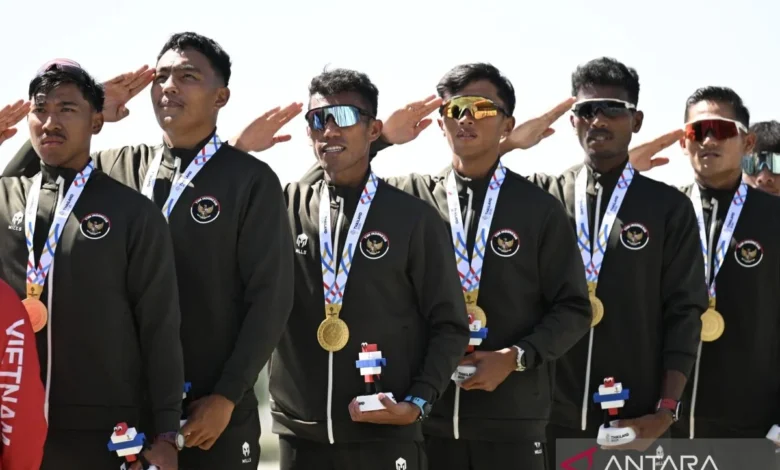
The vibrant tapestry of Southeast Asian athletic prowess is set to unfold once again as the 33rd Southeast Asian Games (SEA Games) officially commence on December 9 and will run through December 20, with Thailand proudly assuming the mantle of host nation. This prestigious multi-sport event, a cornerstone of regional sporting diplomacy, is held biennially in odd-numbered years, bringing together the brightest athletic talents from across the ASEAN member states. Operating under the auspices of the Southeast Asian Games Federation (SEAGF), the SEA Games are conducted with the guiding principles and oversight of the International Olympic Committee (IOC) and the Olympic Council of Asia (OCA), ensuring adherence to international standards of sport and fair play.
A Legacy Forged in Fraternity: The Genesis of the SEA Games
The origins of the SEA Games can be traced back to a visionary idea conceived in 1957 by Laung Sukhumnaipradit, then the esteemed Vice President of the Thai Olympic Committee. Deeply moved by the potential of sport to foster camaraderie and understanding among the nations of Southeast Asia, Sukhumnaipradit proposed the establishment of a regional athletic competition. His ambition extended beyond mere competition; he envisioned an event that would mirror the aspirations and developmental trajectory of larger international sporting spectacles like the Asian Games and the Olympic Games, thereby elevating the standard of sportsmanship and athletic development across the ASEAN region.
This compelling proposition was subsequently shared with Dave Kitcher, who at the time served as the coach for the Thai Athletics Association. Recognizing the significance of Sukhumnaipradit’s vision, Kitcher took the initiative to further discuss and champion the idea. In February 1958, a crucial meeting was convened where Kitcher engaged with representatives from Cambodia and Vietnam. The enthusiastic reception and support from these nations underscored the shared desire for a regional sporting platform.
The momentum gathered pace, leading to a pivotal meeting of the Thai Olympic Committee on February 22, 1958. This assembly was attended by delegates from Thailand, Cambodia, and Vietnam, alongside representatives from Myanmar, Laos, and Malaysia. The outcome of this historic gathering was a unanimous agreement to officially launch the "Southeast Asian Peninsular Games" (SEAP Games) in Bangkok, Thailand, with an inaugural event slated for December 1958. Furthermore, the participating nations resolved to institutionalize the Games as a biennial event and to establish a dedicated organizing body, the SEAP Games Federation Committee. This foundational meeting marked the formal inception of the SEAP Games, with Thailand, Vietnam, Malaysia, Cambodia, Myanmar, and Laos recognized as the pioneering nations.
From Peninsular Rivals to Regional Powerhouses: The Evolution of the SEA Games
The inaugural SEAP Games officially took place in Bangkok, Thailand, from December 12 to 17, 1959. While initially planned to include Cambodia, the nation’s participation was ultimately unable to materialize for the first edition, leading to Singapore stepping in to fill the void. This event also marked Singapore’s official entry into the SEAP Games family.
The federation continued to grow and evolve. By the 8th edition of the SEAP Games in 1975, a significant decision was made by the Federation Committee to expand its membership. Indonesia, Brunei Darussalam, and the Philippines were officially invited and subsequently joined the ranks of participating nations in 1977. This expansion necessitated a renaming of the organizing body to better reflect its broader regional scope. In 1977, the SEAP Games Federation was officially rebranded as the Southeast Asian Games Federation (SEAGF), and consequently, the competition itself was renamed from SEAP Games to the now globally recognized SEA Games.
The most recent addition to the SEA Games roster occurred in 2003 when Timor-Leste became the eleventh nation to join the federation. This brought the total number of participating countries to the current eleven, representing a diverse and dynamic spectrum of Southeast Asian cultures and sporting aspirations.
A Unique Sporting Spectacle: The Distinctive Appeal of the SEA Games
One of the most captivating aspects of the SEA Games, setting it apart from more established international multi-sport events like the Olympic Games, is the flexibility afforded to the host nation in selecting additional sports for inclusion in the program. This policy allows host countries to showcase not only their athletic talent but also their rich cultural heritage and national identity through the lens of sport.
This distinctive approach has led to the inclusion of a fascinating array of sports that reflect local traditions and customs. For instance, at the 2003 SEA Games held in Vietnam, traditional sports such as xe đạp đua (bicycle racing) and Pencak Silat (a traditional martial art) were featured. In 2019, the Philippines introduced obstacle course racing, a dynamic and challenging discipline. More recently, at the 2023 SEA Games hosted by Cambodia, the ancient martial art of bokator was prominently displayed, offering a glimpse into Cambodia’s historical martial prowess.
The 33rd edition of the SEA Games, hosted by Thailand, is set to feature a comprehensive program of 50 sports. The logistical planning for such a large-scale event involves significant coordination, with Thailand strategically designating three key locations to host the various competitions: the bustling capital city of Bangkok, the coastal province of Chonburi, and the southern province of Songkhla. This multi-city approach allows for a wider geographical reach and a more immersive experience for both athletes and spectators.
Supporting Data and Context
The SEA Games have grown exponentially since their inception. The first SEAP Games in 1959 featured a modest number of participating nations and sports. Over the decades, the number of athletes, events, and spectators has surged, reflecting the increasing popularity and significance of the Games within the region. For example, the 2019 SEA Games in the Philippines involved over 11,000 athletes competing in 56 sports, highlighting the scale of modern SEA Games. The economic impact of hosting the SEA Games is also substantial, with significant investments in infrastructure, tourism, and local economies. Studies by host nations have often indicated a considerable boost in revenue and job creation during the Games period.
Broader Impact and Implications
The SEA Games serve as more than just a sporting competition; they are a powerful instrument for regional integration and diplomacy. The shared experience of organizing and participating in the Games fosters stronger bilateral and multilateral relationships among ASEAN nations. For athletes, the SEA Games represent a crucial stepping stone in their careers, offering valuable international competition experience and opportunities for exposure that can lead to participation in larger global events.
The tradition of host nations introducing unique sports also plays a vital role in preserving and promoting cultural heritage. By integrating traditional sports into the SEA Games program, countries can ensure these disciplines are not only showcased to a regional audience but also gain renewed interest and participation from younger generations. This cultural exchange through sport is a unique and invaluable aspect of the SEA Games.
Furthermore, the SEA Games act as a catalyst for sports development within participating countries. The increased focus and investment in athletic training and infrastructure leading up to the Games often have a lasting positive impact on the overall sporting landscape of the region. For instance, the successful hosting of major sporting events like the SEA Games can inspire a new generation of athletes and enthusiasts, creating a virtuous cycle of sporting growth and national pride.
The organization of the SEA Games also presents opportunities for technological innovation and advancement, particularly in areas such as sports broadcasting, event management, and athlete performance monitoring. As the Games evolve, they increasingly embrace modern technologies to enhance the athlete experience and the spectator engagement.
The 33rd SEA Games in Thailand are poised to continue this rich legacy, offering a platform for athletic excellence, cultural exchange, and the strengthening of bonds across Southeast Asia. As the countdown to the opening ceremony begins, anticipation builds for a spectacular display of sportsmanship and regional unity.