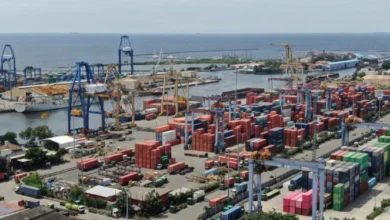
US-Indonesia Defense Pact Signals Strategic Pivot Towards Malacca Strait Amidst Global Chokepoint Tensions


Thursday, April 16, 2026 – A recent defense agreement between the United States and Indonesia has ignited speculation across geopolitical circles, suggesting a potential recalibration of Washington’s strategic focus towards the critical Malacca Strait. This development unfolds against a backdrop of heightened global maritime tensions, notably following a severe blockade in the Strait of Hormuz, attributed to the fallout from policies enacted by former U.S. President Donald Trump, which had previously escalated regional instability in the Middle East. While the world grapples with the reverberations of disrupted oil shipments and trade routes in the Persian Gulf, the spotlight is now rapidly shifting to Southeast Asia, specifically its vital sea lanes.
The agreement, formally announced earlier this week, grants U.S. military aircraft significantly broader operational access to Indonesian airspace. While officially framed by both nations as a move to deepen existing defense cooperation and enhance regional stability, analysts, as reported by NDTV and widely cited, interpret this accord as a strategic maneuver that could substantially bolster U.S. surveillance capabilities and operational reach within the Malacca Strait. This narrow waterway, connecting the Indian Ocean to the South China Sea and the broader Pacific, is not merely another shipping lane but a pivotal artery for global trade and energy transit, making its security a paramount concern for numerous world powers.
The Genesis of Renewed Strategic Focus: Hormuz and Beyond
The decision to expand defense cooperation between the U.S. and Indonesia is not an isolated event but rather a response to a complex and evolving global security landscape. The Middle East, historically a flashpoint for geopolitical rivalries, has seen a dramatic escalation in maritime tensions. The hypothetical blockade in the Strait of Hormuz, a critical chokepoint for a significant portion of the world’s oil supply, serves as a stark reminder of the vulnerabilities inherent in global maritime trade. While the specifics of Trump’s policies leading to this particular blockade are subject to ongoing debate and interpretation within the geopolitical analysis community, the general consensus points to an era of assertive foreign policy that, in certain contexts, inadvertently heightened regional volatility. This period saw increased naval deployments, tit-for-tat actions, and a general erosion of established norms in international waters, creating a precedent for potential disruptions to vital maritime passages.
This experience in the Middle East has evidently prompted a strategic reassessment in Washington, underscoring the imperative of securing alternative and equally critical maritime chokepoints. The Indo-Pacific region, already a cornerstone of U.S. foreign policy under successive administrations, has thus gained renewed prominence. The Malacca Strait, often dubbed the "superhighway of the seas," naturally emerges as a prime candidate for enhanced strategic attention. Its vulnerability to disruption, whether from state-sponsored aggression, piracy, or natural disasters, has long been a concern, and the lessons from Hormuz appear to have amplified these anxieties.
A Chronology of Engagement: U.S.-Indonesia Defense Ties
Defense cooperation between the United States and Indonesia has a long and multifaceted history, evolving from Cold War alignments to a more contemporary partnership focused on regional security, counter-terrorism, and disaster relief.
- Early Years (Post-WWII to Cold War): Initial U.S. support for Indonesia’s independence and subsequent security assistance during the Cold War era.
- Post-Suharto Era (Late 1990s-Early 2000s): A period of rebuilding trust and resuming military-to-military ties after sanctions related to human rights concerns. Focus on professionalization of the Indonesian military (TNI).
- 2000s-2010s: Enhanced Partnership: Significant increase in joint military exercises, training programs, and defense dialogues. Key initiatives included the Indonesia-United States Bilateral Defense Dialogue (BDD) and participation in multilateral exercises like CARAT (Cooperation Afloat Readiness and Training) and Garuda Shield. These exercises typically focused on maritime security, humanitarian assistance, and disaster relief (HADR), counter-terrorism, and interoperability.
- 2020s: Strategic Alignment Intensifies: As the Indo-Pacific strategy gained traction, the U.S. increasingly viewed Indonesia as a crucial partner due to its strategic location, large population, and growing economic and military influence within ASEAN. Discussions began to explore more expansive forms of cooperation, including intelligence sharing and broader operational access.
- April 2026: The Landmark Agreement: The culmination of these discussions, the recent agreement allows for "broader operational access" for U.S. military aircraft. While the exact details remain under wraps, this implies more streamlined procedures for overflights, potential refueling stops, and enhanced logistical support for U.S. operations in the region. This marks a significant upgrade from previous agreements, which were often more limited in scope and duration.
The Malacca Strait: A Global Economic Lifeline
Unlike the Strait of Hormuz, which is predominantly a conduit for global oil shipments, the Malacca Strait serves as a far more diversified and voluminous trade artery. It is jointly managed by Indonesia, Malaysia, and Singapore, and its strategic importance is difficult to overstate.
- Volume of Trade: Annually, over 90,000 vessels traverse the strait, carrying approximately 25-30% of the world’s traded goods. This includes about 80% of China’s, 60% of Japan’s, and 90% of South Korea’s crude oil imports. In terms of overall cargo, an estimated one-third of global seaborne trade, worth trillions of dollars, passes through this narrow waterway.
- Diverse Cargo: Beyond crude oil and liquefied natural gas (LNG), the Malacca Strait is a critical pathway for manufactured goods, electronics, textiles, raw materials, and components for industrial supply chains across Asia and beyond. This makes its security paramount not just for energy prices but for the stability of global manufacturing and consumer markets.
- Geographical Constraints: At its narrowest point, near the southern tip of Malaysia and Singapore, the strait is only about 1.7 nautical miles wide (approximately 3.1 kilometers). This makes it an ideal chokepoint, highly susceptible to disruption from piracy, accidents, or military actions. The depth in some areas also limits the size of vessels, creating further navigational challenges.
- Interconnectedness: It links the major economies of East Asia (China, Japan, South Korea) with the Middle East, Africa, and Europe, effectively serving as a gateway between the Indian Ocean and the Pacific Ocean. Any significant disruption here would have cascading effects on global supply chains, leading to delays, increased shipping costs, and potential economic instability worldwide.
The "Malacca Dilemma" and China’s Strategic Imperatives
For China, the Malacca Strait represents a significant strategic vulnerability, often termed the "Malacca Dilemma" by Beijing’s strategists. Given its heavy reliance on the strait for energy imports – particularly oil from the Middle East and Africa – and for exporting its vast manufactured goods, any disruption could cripple its economy and national security.
- Energy Security: China’s rapidly growing economy and industrial base are heavily dependent on imported energy. The overwhelming majority of its oil and gas imports transit the Malacca Strait. A blockade or significant disruption would force China to seek highly inefficient and costly alternative routes, such as longer voyages around Australia or through less secure passages.
- Economic Vulnerability: Beyond energy, the strait is crucial for China’s export-driven economy. Disruptions would delay or halt shipments of goods to its major markets in Europe, the Middle East, and Africa, causing immense economic damage.
- Mitigation Strategies: In response to this dilemma, China has pursued several long-term strategies:
- Naval Expansion: Building a formidable "blue-water" navy capable of projecting power and protecting its sea lines of communication (SLOCs), including the Malacca Strait.
- Belt and Road Initiative (BRI): Investing in alternative land-based transportation routes, such as oil and gas pipelines across Myanmar and Pakistan, and rail links through Central Asia, to reduce reliance on maritime chokepoints.
- Deepening Bilateral Ties: Forging stronger economic and diplomatic relationships with countries along its SLOCs, including those bordering the Malacca Strait, to ensure continued access.
- Strategic Stockpiling: Building up strategic petroleum reserves to cushion the impact of potential supply disruptions.
The U.S. move to enhance its presence near the Malacca Strait is therefore likely to be viewed by Beijing through the lens of this existing dilemma, potentially exacerbating China’s concerns about encirclement and challenges to its regional influence.
Statements and Reactions from Related Parties (Inferred)
While no specific direct statements are available for an event in 2026, based on current geopolitical dynamics, the reactions can be logically inferred:
- United States: Official statements would likely emphasize shared security interests, commitment to freedom of navigation, regional stability, and strengthening alliances to address transnational threats such as piracy, terrorism, and natural disasters. The U.S. would underscore that the agreement with Indonesia is about enhancing interoperability and collective security, not about confronting any specific nation. High-ranking U.S. defense officials might state, "This agreement with our vital partner Indonesia reinforces our shared commitment to a free and open Indo-Pacific, ensuring the security of critical international waterways and fostering regional stability through robust defense cooperation and interoperability."
- Indonesia: Jakarta would likely highlight its sovereign right to forge defense agreements that serve its national interests, emphasizing its "free and active" foreign policy. Indonesian officials would stress that the cooperation aims to enhance its own defense capabilities, protect its territorial integrity, and contribute to regional peace and security. They would likely reassure neighboring countries that the agreement is not aimed at militarizing the region or taking sides in great power rivalries. A possible statement could be, "Indonesia remains committed to an independent foreign policy. Our expanded defense cooperation with the United States is a testament to our efforts to strengthen national defense, enhance maritime security in our waters, and contribute actively to regional peace and stability, in line with ASEAN’s principles."
- Malaysia and Singapore: As co-managers of the Malacca Strait, these nations would express a nuanced perspective. While recognizing the importance of U.S. engagement in regional security, they would likely voice concerns about potential militarization of the strait and the risk of becoming entangled in great power competition. Their primary focus would remain on ensuring the unimpeded flow of commercial traffic. They might emphasize, "The security of the Malacca Strait is paramount for global trade. While we welcome efforts to combat piracy and enhance maritime safety, we urge all external powers to exercise restraint and ensure that any increased military presence contributes to, rather than detracts from, regional peace and stability, respecting the sovereignty of littoral states."
- China: Beijing would almost certainly issue a strongly worded response, expressing "grave concern" over what it would perceive as an escalation of U.S. military presence near its vital sea lanes. China would likely accuse the U.S. of fostering a "Cold War mentality," attempting to "contain" China, and destabilizing the region. They might call on regional countries to resist external interference and maintain neutrality. A typical Chinese Foreign Ministry statement could read, "We firmly oppose any actions that exacerbate regional tensions and undermine peace and stability in the South China Sea and the Malacca Strait. The United States’ increasing military presence in the region, under the guise of cooperation, is a clear attempt to contain China and does not serve the interests of regional countries. We urge relevant parties to abandon the Cold War mentality and work towards common security."
- Other ASEAN Nations: Other members of the Association of Southeast Asian Nations (ASEAN) would likely express general concern about the rising great power competition in the region. While some might tacitly welcome the U.S. presence as a counterbalance to China, others would emphasize the need for ASEAN centrality and a balanced approach to external powers, advocating for dialogue and de-escalation.
Broader Impact and Implications
The U.S.-Indonesia defense agreement, particularly its implications for the Malacca Strait, carries significant geopolitical weight with far-reaching consequences:
- Shifting Regional Security Dynamics: The agreement could signal a more robust and direct U.S. engagement in securing Southeast Asian maritime chokepoints, potentially altering the regional balance of power. It might encourage other regional states to reassess their own defense postures and alignments.
- Increased Geopolitical Competition: The enhanced U.S. presence is almost certain to intensify the strategic rivalry with China in the Indo-Pacific. This could lead to a more overt competition for influence, military presence, and diplomatic leverage across the region, putting pressure on ASEAN nations to choose sides.
- Economic Stability and Trade Routes: While the agreement aims to secure trade routes, an increased military presence and heightened tensions could paradoxically increase the perceived risk for commercial shipping, potentially impacting insurance rates and supply chain logistics. However, a more secure strait could also deter piracy and other threats, ensuring smoother trade flows.
- Sovereignty and International Law: The agreement will test the delicate balance between the sovereignty of littoral states (Indonesia, Malaysia, Singapore) over their airspace and territorial waters, and the principle of freedom of navigation for international maritime and air traffic. Any misstep could ignite debates over international law.
- Indonesia’s Pivotal Role: The agreement solidifies Indonesia’s position as a crucial strategic partner for the U.S. in Southeast Asia. Jakarta will face the challenge of balancing its deepening ties with Washington while maintaining good relations with Beijing and upholding its non-aligned foreign policy principles. This balancing act will be critical for regional stability.
- Precedent for Other Chokepoints: If successful in securing enhanced operational access in Indonesia, the U.S. might seek similar arrangements with other strategic partners near vital chokepoints globally, further solidifying its network of alliances and forward operating bases.
In conclusion, the U.S.-Indonesia defense agreement marks a significant chapter in the ongoing geopolitical narrative of the Indo-Pacific. Born from lessons learned in the volatile Middle East, it underscores a strategic imperative to safeguard global maritime arteries. While framed as a measure to deepen cooperation and enhance regional stability, its implications for the Malacca Strait will undoubtedly reshape security dynamics, intensify great power competition, and place Indonesia at the heart of a complex and evolving geopolitical chessboard. The world watches closely to see how this strategic pivot will unfold in one of the most economically vital regions on Earth.