Wednesday, April 15, 2026 – 14:33 WIB
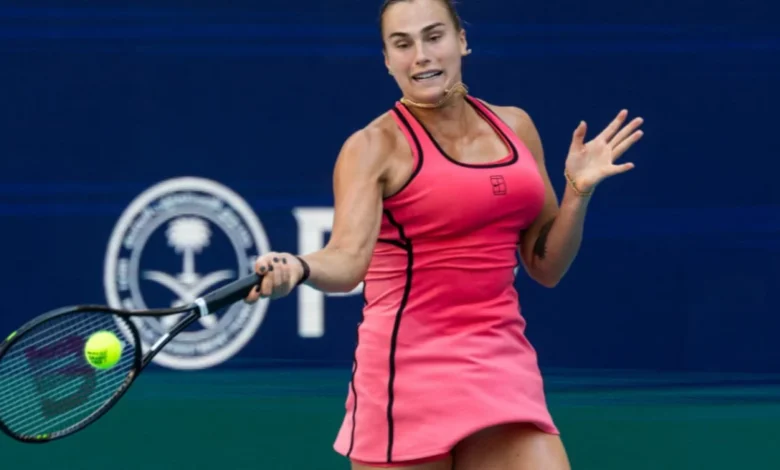
Paris, France – The hallowed clay courts of Roland Garros are poised to witness another thrilling chapter in tennis history as the official entry list for the 2026 tournament has been unveiled, confirming a formidable lineup of the sport’s elite. Spearheading the charge are world number one Aryna Sabalenka and two-time Grand Slam champion Coco Gauff, setting the stage for an intensely competitive battle for the coveted Suzanne-Lenglen Cup.
In a testament to the tournament’s prestige, an astounding 100 of the top 101 ranked WTA players have committed to compete. The spotlight will undoubtedly shine brightly on Iga Swiatek, the reigning queen of Parisian clay. Swiatek enters the tournament with the extraordinary ambition of etching her name into the annals of Open Era tennis by securing her fifth Roland Garros title. Should she succeed, she will join the rarefied company of legends Chris Evert and Steffi Graf, who are the only other women to have achieved this remarkable feat.
The Gauntlet of Champions: A Stellar Field Assembled
Swiatek’s quest for a historic fifth title will not be a solitary pursuit. She faces a formidable challenge from a trio of former Roland Garros champions also vying for supremacy: Jelena Ostapenko, who claimed the title in 2017, Barbora Krejcikova, the champion of 2021, and the aforementioned Coco Gauff, who has established herself as a consistent threat on the Grand Slam stage.
Beyond the former champions, the field is further bolstered by seven other Grand Slam titleholders, all eager to add a maiden Roland Garros trophy to their illustrious careers. This includes Aryna Sabalenka, who narrowly missed out on the title in the 2025 final, Elena Rybakina, and the returning Grand Slam champions Naomi Osaka and Emma Raducanu. Their presence guarantees a high level of play and the potential for significant upsets. The depth of talent extends throughout the top 20, with formidable players such as Elina Svitolina, Mirra Andreeva, and Elise Mertens also confirmed participants, ensuring that every match promises compelling drama.
The Roland Garros tournament, often referred to as the French Open, is one of the four annual Grand Slam tennis events. Held over two weeks in late May and early June at the Stade Roland Garros in Paris, it is the only Grand Slam played on clay. Its history dates back to 1891, and it has become renowned for its physically demanding nature due to the slow surface, often leading to extended rallies and strategic battles. The tournament has a rich legacy of champions, and the 2026 edition is shaping up to be one of the most anticipated in recent memory, given the caliber of players lining up.

A New Star Rises: Lilli Tagger’s Sensational Debut
Among the most captivating stories emerging from this year’s entry list is the debut of 18-year-old Austrian sensation, Lilli Tagger. Having clinched the junior title last year, Tagger has rapidly ascended the professional rankings, breaking into the top 100 this week following an impressive performance at the Linz tournament. Her inclusion in the main draw is a significant achievement, marking her as one of the most promising young talents to watch.
Tagger’s direct entry into the senior main draw is a notable accomplishment, making her the first Roland Garros girls’ singles champion since Leylah Fernandez in 2019 to earn an automatic spot in the following year’s main draw. She leads a strong contingent of emerging teenage stars, including the highly-touted Mirra Andreeva and Iva Jovic, who are expected to make their mark on the Grand Slam stage. The influx of fresh talent injects an exciting dynamic into the tournament, offering a glimpse into the future of women’s tennis.
The development of young players like Tagger is a crucial aspect of the sport. Grand Slams often serve as a significant platform for these rising stars to gain invaluable experience and test their mettle against the world’s best. Their performances can shape their careers and signal a shift in the established order of women’s tennis. The anticipation surrounding Tagger’s debut is palpable, with many eager to see if she can translate her junior success into senior Grand Slam glory.
The Lone Absence from the Elite Ranks
In stark contrast to the overwhelming presence of top talent, only one player from the WTA’s top 101 will be absent from the clay courts of Roland Garros. This sole notable withdrawal is France’s number two player, Varvara Gracheva. Ranked 59th in the world, Gracheva has been sidelined due to a foot injury sustained during the Miami tournaments, a significant blow for the home crowd who would have been eager to support one of their leading contenders.
The final direct entry into the main draw is secured by Ukrainian talent Daria Snigur, who will be making her Grand Slam main draw debut. Her inclusion underscores the ongoing emergence of Ukrainian players on the international circuit, with players like Marta Kostyuk and Anhelina Kalinina having also achieved significant success in recent years. Snigur’s journey to the main draw is a testament to her hard work and dedication, and her debut will be closely watched.
Historical Context and the Significance of Roland Garros
Roland Garros has long been a crucible for champions, a tournament where endurance, mental fortitude, and tactical brilliance are paramount. The clay surface, with its slower ball pace and higher bounce, demands a different kind of game than hard courts or grass. Players must be prepared for grueling rallies, exceptional defensive skills, and the ability to construct points patiently. This unique characteristic has historically favored players with strong groundstrokes, excellent footwork, and a high level of fitness.
The tournament’s origins can be traced back to the late 19th century, with the first men’s singles championship held in 1891. The women’s singles championship was introduced in 1900. It was not until 1925 that the tournament opened its doors to international competitors, truly establishing it as a global spectacle. The iconic Stade Roland Garros, named after the pioneering French aviator, has been its home since 1928, evolving over the decades to accommodate the growing demands of professional tennis.

The "Open Era," which began in 1968, marked a pivotal moment, allowing professional players to compete alongside amateurs in all major tournaments, including Roland Garros. This era has witnessed some of the most memorable rivalries and dominant performances in tennis history. For women, the achievements of Chris Evert, Steffi Graf, and Martina Navratilova on the Parisian clay are legendary, and Iga Swiatek is now striving to join their elite ranks.
Looking Ahead: Implications and Future Prospects
The 2026 Roland Garros entry list paints a picture of a tournament poised for unparalleled excitement. The blend of seasoned champions seeking further glory, established stars aiming to solidify their legacies, and a vibrant cohort of emerging talents promises a compelling narrative throughout the fortnight. The potential for groundbreaking performances, unexpected upsets, and the crowning of a new queen of clay is higher than ever.
The physical and mental demands of a Grand Slam, particularly on clay, mean that fitness and resilience will be key. Players who have managed their schedules effectively and maintained peak physical condition will have a distinct advantage. The psychological aspect of playing in front of passionate French crowds, coupled with the pressure of Grand Slam competition, will also play a significant role in determining the ultimate victor.
The continued rise of young players like Lilli Tagger and Mirra Andreeva signals a potential shift in the power dynamics of women’s tennis. Their fearlessness and aggressive styles of play could challenge the established order and introduce new strategies to the forefront. Their performances at Roland Garros will be closely scrutinized, offering insights into their potential to become future Grand Slam champions.
Furthermore, the presence of multiple Grand Slam champions beyond the top seeds means that the draw is exceptionally deep. Any player facing a top-ranked opponent will need to be at their absolute best. The strategic matchups that will unfold over the two weeks of the tournament are sure to captivate tennis fans worldwide.
The absence of Varvara Gracheva is a notable loss for French tennis, highlighting the unforgiving nature of injuries in professional sports. However, the depth of talent still present ensures that the French contingent will be well-represented, and the home crowd will undoubtedly rally behind their remaining stars.
As the countdown to Roland Garros 2026 continues, the tennis world eagerly anticipates the spectacle that awaits. The convergence of established titans and rising stars on the iconic red clay promises a tournament filled with drama, skill, and the potential for history to be made. The battle for the Suzanne-Lenglen Cup is set to be one of the most compelling narratives in the sport’s storied history.