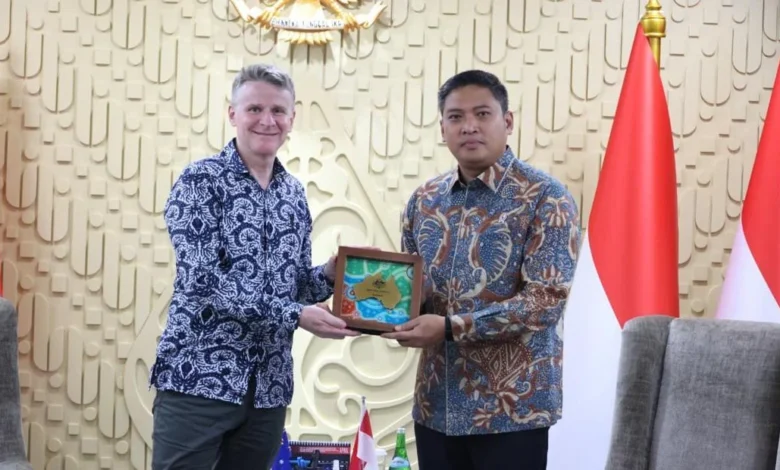
Jakarta, Indonesia – In a significant diplomatic and economic engagement, Indonesia’s Vice Minister of Agriculture (Wamentan), Sudaryono, hosted the Australian Ambassador to Indonesia at the Ministry of Agriculture office on Wednesday, April 15, 2024. The high-level meeting underscored both nations’ commitment to agricultural cooperation, with particular focus on Indonesia’s burgeoning potential as a reliable exporter of urea fertilizer to Australia and the broader global market. This dialogue comes at a crucial juncture, as persistent geopolitical conflicts and supply chain vulnerabilities continue to exert immense pressure on the international fertilizer trade, prompting nations worldwide to seek stable and diverse sourcing options.
The discussions, detailed in an official statement released on Thursday, April 16, 2024, highlighted Indonesia’s strategic advantage in urea production. Vice Minister Sudaryono emphasized that the ongoing global geopolitical instability, particularly disruptions affecting critical maritime routes such as the Strait of Hormuz, has severely impacted the worldwide distribution of fertilizers. The Strait of Hormuz, a narrow yet vital chokepoint, facilitates approximately one-third of the global fertilizer supply, making any impediment to its passage a significant concern for agricultural economies globally. This volatility has ignited a global scramble for urea, a critical nutrient for crop growth.
"With these disruptions, many countries are in urgent need of urea. Indonesia possesses a significant advantage because we are capable of producing urea from domestic natural gas resources, which ensures we are not reliant on imports for this essential commodity," Sudaryono stated, underscoring Indonesia’s self-sufficiency and strategic autonomy in fertilizer production. This capacity positions Indonesia not merely as a regional player but as a potentially pivotal actor in stabilizing global food production systems.
Global Fertilizer Market Under Duress: Geopolitical Impacts and Supply Chain Vulnerabilities
The global fertilizer market has experienced unprecedented turbulence since early 2022, primarily triggered by the Russia-Ukraine conflict. Russia, a major global supplier of natural gas—a key feedstock for urea production—and a significant exporter of various fertilizers, faced extensive sanctions that sent shockwaves through the market. This led to dramatic price surges, exacerbated by export restrictions from other major producers like China, who prioritized domestic supply. For instance, global urea prices, which were around $400-500 per ton in early 2021, soared to over $900 per ton by mid-2022, though they have since moderated, remaining volatile and susceptible to external shocks.
More recently, escalating tensions in the Red Sea and the Strait of Hormuz, driven by Houthi attacks on commercial shipping, have further complicated maritime trade. Shipping companies have been forced to reroute vessels around the Cape of Good Hope, adding weeks to transit times and significantly increasing freight costs and insurance premiums. For bulk commodities like fertilizers, these disruptions translate directly into higher prices for farmers and increased food security risks for importing nations. The Strait of Hormuz, connecting the Persian Gulf to the Arabian Sea, is particularly critical for energy and petrochemicals, including fertilizer intermediates from Middle Eastern producers. Any threat to its free passage sends jitters across global commodity markets, underscoring the precariousness of current supply chains.
Indonesia’s Strategic Advantage: Domestic Gas and Self-Sufficiency
Indonesia’s unique position stems from its substantial domestic natural gas reserves, which provide a reliable and cost-effective feedstock for urea production. The country boasts proven natural gas reserves estimated at over 40 trillion cubic feet (Tcf), making it a significant player in the global gas market. This domestic supply shields Indonesian fertilizer producers from the volatility of international gas prices, a major cost component for urea manufacturing in many other countries. By leveraging its natural gas endowment, Indonesia has cultivated a robust domestic fertilizer industry that primarily serves its vast agricultural sector, a cornerstone of its economy and a crucial contributor to national food security.
The primary entity responsible for managing this critical national asset is PT Pupuk Indonesia (Persero), a state-owned enterprise. With a national urea fertilizer production capacity reaching an impressive 9.3 to 9.4 million tons per year across its various subsidiaries, PT Pupuk Indonesia stands as one of the largest fertilizer producers in Southeast Asia. Its integrated facilities, strategically located near gas fields and major agricultural regions, enable efficient production and distribution. This integrated approach minimizes logistical bottlenecks and ensures a steady supply for Indonesian farmers.
Boosting Production and Export Ambitions: PT Pupuk Indonesia’s Role and Targets
Looking ahead, PT Pupuk Indonesia has set ambitious targets for 2026. The company aims to achieve a total urea production of 7.8 million tons. Out of this, a substantial 6.3 million tons are earmarked to meet the subsidized fertilizer needs of Indonesian farmers. The remaining 1.5 million tons represent a significant potential surplus available for export. This planned surplus is a testament to Indonesia’s commitment to optimizing its industrial capacity while simultaneously securing domestic food production.
Vice Minister Sudaryono emphasized that this surplus opens doors for Indonesia to export to various countries, including Australia. This potential shift from solely satisfying domestic demand to becoming a net exporter signals a strategic evolution in Indonesia’s agricultural policy. "The need for fertilizer for Indonesian farmers is our super priority. Once that is met, only then can the remaining production be allocated for export," Sudaryono firmly stated, reaffirming the government’s unwavering commitment to its agricultural workforce. This approach ensures that export ambitions do not compromise the welfare of local farmers or national food security.
Balancing Domestic Needs with Global Demand
Indonesia’s strategy is carefully calibrated to balance the imperative of domestic food security with the economic opportunities presented by global demand. The government’s prioritization of local farmers reflects a deep understanding of agriculture’s socio-economic importance. Indonesia’s agricultural sector employs a significant portion of its workforce and contributes substantially to its GDP. Ensuring a stable and affordable supply of fertilizers directly impacts crop yields, farmer livelihoods, and ultimately, national stability.
The Vice Minister also revealed that interest in Indonesian urea extends beyond Australia, with several other countries, including India, the Philippines, and Brazil, expressing keen interest. These nations, each with large agricultural bases, are similarly exposed to the volatilities of the global fertilizer market and are actively seeking reliable supply partners. India, for example, is one of the world’s largest consumers of urea, heavily reliant on imports to meet its agricultural demands. Similarly, the Philippines and Brazil, major agricultural exporters, require consistent fertilizer inputs to maintain productivity.
Despite the strong international demand, Sudaryono stressed the government’s cautious approach. "The government remains careful not to promise supplies that exceed our national production capabilities," he noted. This prudence is critical to maintaining credibility as a supplier and avoiding overcommitment, which could jeopardize domestic supply or lead to unmet international obligations. This pragmatic stance ensures long-term sustainability for Indonesia’s role in the global fertilizer market.
A Reciprocal Partnership: Indonesia-Australia Trade Dynamics
The relationship between Indonesia and Australia in the fertilizer trade is characterized by reciprocity. While Indonesia is poised to export urea to Australia, it simultaneously imports essential raw materials, such as phosphate, including Diammonium Phosphate (DAP), from Australia. Australia possesses significant phosphate rock reserves and is a notable producer and exporter of phosphate-based fertilizers. This two-way trade underscores a mutually beneficial economic relationship, where each country fulfills critical supply chain gaps for the other.
"This is a reciprocal relationship; we need each other. The important thing is how we secure national interests while maintaining healthy trade relations," Sudaryono remarked. This balanced approach not only strengthens bilateral trade ties but also diversifies supply chains for both nations, reducing over-reliance on single sources or volatile markets. For Australia, sourcing urea from Indonesia could offer a geographically closer and potentially more stable alternative compared to more distant suppliers, reducing logistical complexities and environmental footprints.
Ensuring National Food Security: Domestic Supply Assurances
Addressing concerns about domestic fertilizer availability, Sudaryono provided assurances regarding the stability of the national supply, particularly for subsidized fertilizers. He indicated that the high absorption rate of fertilizers by farmers serves as a positive indicator of increased planting activities across various regions, signaling a robust agricultural season.
"If farmers occasionally report not finding fertilizer at kiosks, it is more a matter of distribution moving quickly. Within one to two days, it is usually available again. This means that fertilizer exists and is sufficient," he clarified. This explanation highlights that any localized, temporary shortages are typically logistical in nature rather than indicative of an overall supply deficit, emphasizing the efficiency of the distribution network managed by PT Pupuk Indonesia and its regional partners. This assurance is vital for maintaining farmer confidence and ensuring uninterrupted agricultural cycles.
Modernization for Future Growth: Factory Rejuvenation Plans
Looking towards sustained growth and enhanced competitiveness, the Indonesian government has outlined plans for the rejuvenation of older fertilizer factories. This strategic initiative aims to significantly improve efficiency, reduce operational costs, and boost national production capacity. Many of Indonesia’s fertilizer plants, some dating back several decades, can benefit immensely from technological upgrades and modernization.
"By rejuvenating older plants, we can adopt newer, more efficient technologies that consume less energy and raw materials, thereby reducing our environmental footprint and increasing overall output," explained an official from PT Pupuk Indonesia, speaking on background. This modernization drive is crucial for maximizing export opportunities in the face of persistently high global demand. By investing in infrastructure and technology, Indonesia seeks to solidify its position as a reliable and competitive supplier in the international market for the long term.
"With these conditions, Indonesia will not only be able to maintain national fertilizer resilience but also has the potential to strengthen its position as a fertilizer supplier in the international market," Sudaryono concluded. This forward-looking vision encompasses both domestic food security and strategic economic growth through exports.
Statements from Stakeholders and Analytical Perspectives
Australian Ambassador’s Perspective (Inferred):
While specific statements from the Australian Ambassador were not detailed in the original report, it can be logically inferred that Australia’s interest in Indonesian urea stems from a desire to diversify its supply chains and secure reliable inputs for its significant agricultural sector. Australia’s vast farming lands, particularly in grains and livestock, are heavily dependent on fertilizers to maintain productivity and competitiveness in global markets. An Australian diplomat, perhaps speaking on condition of anonymity, might have conveyed, "Australia is committed to strengthening its economic partnership with Indonesia. Securing stable and proximate sources of essential agricultural inputs like urea is paramount for our farmers and our national food security. Indonesia’s growing capacity and strategic location make it an ideal partner in this endeavor."
PT Pupuk Indonesia’s Commitment (Inferred):
From PT Pupuk Indonesia’s perspective, this export potential represents a significant opportunity for growth and increased contribution to the national economy. A spokesperson for PT Pupuk Indonesia might have stated, "Our primary mission remains supporting Indonesian farmers and national food security. The planned modernization of our facilities will not only ensure a robust domestic supply but also enable us to confidently meet international demand, thereby enhancing Indonesia’s economic resilience and global trade footprint. We are fully prepared to meet the 2026 targets, balancing subsidized supply with lucrative export opportunities."
Economic Analysts’ Insights:
Economic analysts view Indonesia’s strategy as a shrewd move to capitalize on current global market dynamics. Dr. Sari Dewi, a leading economist specializing in commodity markets at a Jakarta-based think tank, commented, "Indonesia’s ability to produce urea from domestic natural gas provides a significant competitive edge in a volatile global market. The export of surplus urea could generate substantial foreign exchange earnings, improve the country’s trade balance, and bolster its manufacturing sector. However, the government must continuously monitor global price fluctuations and domestic demand to maintain this delicate balance." She added, "The reciprocal trade in phosphate with Australia further exemplifies a mature approach to international commerce, fostering interdependence rather than mere transactional relationships."
Implications and Outlook: Economic, Geopolitical, and Food Security
The strategic shift in Indonesia’s fertilizer policy carries significant implications across economic, geopolitical, and food security dimensions. Economically, increased urea exports will contribute positively to Indonesia’s balance of payments and diversify its export portfolio beyond traditional commodities. It also signals a move towards higher-value manufacturing and greater industrial sophistication. The planned factory rejuvenation will stimulate investment, create jobs, and foster technological advancement within the country.
Geopolitically, by becoming a reliable supplier of a critical agricultural input, Indonesia strengthens its position as a responsible and influential actor in Southeast Asia and beyond. This enhances its soft power, deepens bilateral relationships with key partners like Australia, and contributes to regional stability by mitigating food security risks. In an era marked by increasing economic nationalism and supply chain fragmentation, Indonesia’s commitment to balanced trade and regional cooperation stands out.
From a food security perspective, the dual focus on prioritizing domestic needs while exploring exports is a robust strategy. It insulates Indonesian farmers from global price shocks and supply shortages, ensuring sustained agricultural productivity and affordable food for its large population. Simultaneously, by contributing to global fertilizer supply, Indonesia indirectly supports food security in importing nations, reinforcing its role as a global citizen.
Looking forward, the success of this strategy will depend on several factors: sustained investment in infrastructure and technology, efficient management of natural gas resources, adaptability to evolving global market conditions, and robust logistical capabilities to ensure timely distribution both domestically and internationally. Indonesia’s journey from a net importer of certain goods to a potential key exporter of critical agricultural inputs like urea exemplifies its growing economic prowess and strategic foresight in a rapidly changing world.