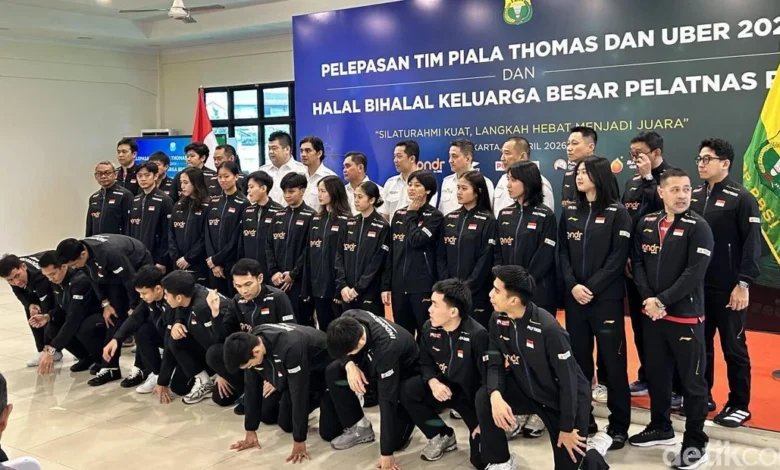
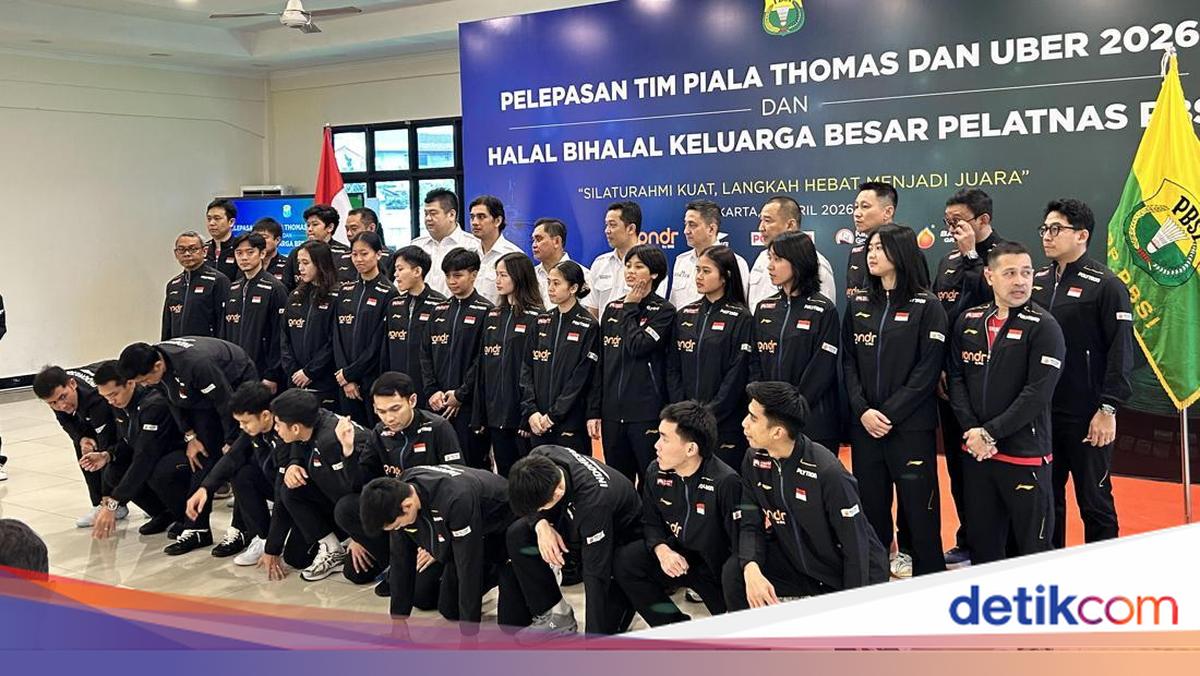
Jakarta – The Indonesian Badminton Association (PBSI) has officially set its sights on the upcoming Thomas Cup and Uber Cup 2026 tournaments, outlining ambitious yet pragmatic targets for both the men’s and women’s national teams. Chairman of PP PBSI, M. Fadil Imran, announced that the men’s squad is expected to reach the final of the Thomas Cup, while the women’s team is tasked with achieving a semifinal berth in the Uber Cup. These objectives have been meticulously crafted, taking into account the current global badminton landscape, the formidable strength of rival nations, and the latest world rankings issued by the Badminton World Federation (BWF).
Fadil Imran candidly acknowledged that while Indonesia remains a powerhouse in the sport, China currently holds a dominant position as the primary favorite in both competitions. "Our targets, of course, when looking at the calculations and rankings released by the BWF, place us behind China. We hope that on the court, as you all know, there are many factors that influence the situation. We hope to reach the final for the Thomas Cup, and hopefully, our players can bring pride to everyone," Fadil stated during the send-off ceremony for the 2026 Thomas and Uber Cup contingent. This measured approach reflects a deep understanding of the competitive dynamics and a commitment to setting achievable benchmarks for the athletes.
The draw for the group stages has presented Indonesia with distinct challenges and opportunities. In the Thomas Cup, the men’s team has been placed in Group D, alongside formidable opponents France, Thailand, and Algeria. This group promises intense encounters, particularly against Thailand, a nation with a strong badminton pedigree. For the Uber Cup, the Indonesian women’s team finds itself in a competitive bracket, grouped with Taiwan, Canada, and Australia. "Then for the Uber Cup, grouped with Canada, Australia, and Taiwan, we hope to overcome Canada and Australia, and then Indonesia can qualify for the next round. We hope our [women] players can reach the semifinals," Fadil elaborated. This strategic positioning within the draw means early performances will be crucial for momentum and confidence building.
A Deep Dive into the Thomas and Uber Cup Legacy
The Thomas Cup, officially known as the World Men’s Team Championships, and the Uber Cup, the World Women’s Team Championships, are the most prestigious international team badminton tournaments. Held biennially, these events pit national teams against each other in a series of singles and doubles matches, fostering an atmosphere of intense national pride and collective effort. The format typically involves a group stage followed by knockout rounds, culminating in a grand final.
Indonesia has a storied history in both tournaments. The men’s team, often referred to as the "Red and White," has a remarkable record in the Thomas Cup, having clinched the title an impressive 13 times, second only to China’s 10 titles. Their last triumph was in 2002. The Uber Cup, while also a significant event, has seen less consistent success for Indonesia, with their last victory dating back to 1994. The PBSI’s renewed focus and strategic targeting for the 2026 edition underscore a desire to reclaim past glories and solidify Indonesia’s standing as a global badminton superpower.
Strategic Considerations and Performance Metrics
The BWF rankings serve as a critical barometer of a nation’s strength in badminton. While Indonesia consistently fields world-class talent, the depth and consistent performance of the Chinese contingent have often placed them at the pinnacle of these rankings. For instance, in recent BWF world rankings, China has frequently occupied top positions across multiple men’s and women’s singles and doubles categories. This dominance translates to seeded positions and a perceived psychological advantage in major tournaments.
PBSI’s target of reaching the Thomas Cup final is a testament to the caliber of players like Anthony Sinisuka Ginting, Jonatan Christie, and the formidable men’s doubles pairs that Indonesia possesses. These athletes have consistently demonstrated their ability to compete at the highest level in individual tournaments. The challenge, however, lies in replicating this individual brilliance within the unique pressure cooker environment of a team championship.
Similarly, the Uber Cup semifinal target for the women’s team reflects a strategic acknowledgment of the current competitive landscape. While Indonesia has emerging talents in the women’s singles and doubles, the depth of competition from nations like China, South Korea, and Japan remains a significant hurdle. Reaching the semifinals would represent a substantial achievement, indicating progress and the effective development of the women’s program.
Emphasizing Team Cohesion and Mental Fortitude
Beyond individual skill, PBSI Chairman M. Fadil Imran has placed a strong emphasis on the intangible yet crucial elements of team cohesion and mental resilience. He articulated this point by drawing a clear distinction between individual tournaments and team championships. "I always motivate our players by saying that individual [competitions] are different from team [events]. The atmosphere is vastly different. Therefore, sometimes cohesion, togetherness, becomes important, and that can be the energy to defeat anyone," Fadil emphasized.
This perspective is rooted in the understanding that team events are not merely an aggregation of individual talents but a collective endeavor where mutual support, shared strategy, and unwavering belief can propel a team beyond its perceived limitations. The history of badminton is replete with examples where underdog teams, fueled by exceptional team spirit, have upset heavily favored opponents.
Fadil also drew parallels to past successes, specifically referencing the 2021 Thomas Cup campaign where Hendra Setiawan captained the winning squad. "Hopefully, it’s about how they, their mentality within this team, right? This is what we hope for, hopefully, this year [2021] can be repeated, when Hendra was the captain. Hopefully, we can win again in Denmark," he remarked. This nostalgic reference serves as a potent reminder of what is possible when the team unites under a common goal and embodies the spirit of champions. The 2021 victory, in particular, was a significant morale booster for Indonesian badminton, demonstrating their capacity to triumph against formidable opposition and reignite the nation’s passion for the sport.
Broader Implications for Indonesian Badminton
The setting of these targets for the 2026 Thomas and Uber Cups is more than just a statement of intent; it is a strategic move that impacts player development, resource allocation, and national morale. By clearly defining expectations, PBSI can better tailor training programs, identify areas requiring reinforcement, and foster a sense of accountability within the squads.
The performance in these prestigious team events also has a ripple effect on the broader badminton ecosystem in Indonesia. Success on the international stage inspires young aspiring players, attracts greater sponsorship opportunities, and elevates the sport’s profile within the nation. Conversely, underperformance can lead to introspection and a re-evaluation of strategies.
The journey to the 2026 Thomas and Uber Cups will undoubtedly be challenging. The global badminton landscape is dynamic, with emerging talents and established powerhouses constantly evolving. However, with a clear strategic vision, a focus on collective strength, and the unwavering support of the nation, Indonesia aims to once again etch its name in the annals of badminton history. The success of the Thomas and Uber Cup campaigns will not only be measured by the trophies won but also by the spirit of unity, resilience, and national pride displayed by the Indonesian contingent on the world stage. The upcoming tournaments represent a critical juncture for Indonesian badminton, offering a platform to showcase their enduring legacy and their aspirations for future dominance.