Isu Perpecahan di Pemerintahan Iran Mencuat Jelang Putaran Kedua Perundingan

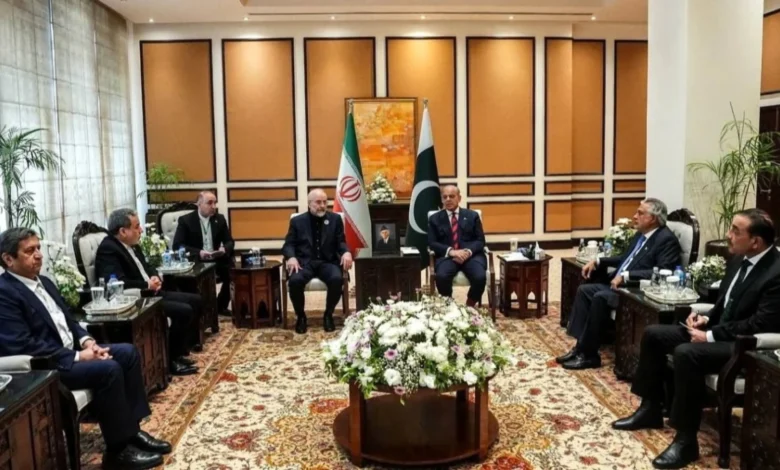
As the geopolitical spotlight sharpens on Islamabad, where a second round of high-stakes negotiations between Iran and the United States is reportedly slated for April 16, 2026, a recent exposé by Israel Hayom has cast a long shadow over the proceedings, alleging significant internal schisms within the Iranian government. The report, circulating widely and citing unnamed sources, claims a profound split between Iran’s political leadership, spearheaded by President Masoud Pezeshkian and Foreign Minister Abbas Araghchi, and the powerful Islamic Revolutionary Guard Corps (IRGC), potentially jeopardizing any diplomatic breakthroughs. This alleged internal discord comes at a critical juncture, with the United States having reportedly laid down two stringent new conditions for its participation, emphasizing the imperative of a unified Iranian negotiating front and unimpeded global maritime passage through the Strait of Hormuz.
The unfolding narrative from Israel Hayom suggests a deep-seated power struggle, detailing an incident in which senior IRGC officials, identified as Ahmad Vahidi and Ali Abdollahi, allegedly interceded to prevent the political delegation already present in Pakistan from offering a definitive response to American proposals. This purported intervention underscores the persistent challenge of reconciling Iran’s dual power centers – the elected government and the ideologically driven, military-economic behemoth of the IRGC. According to NDTV, which corroborated parts of the Israel Hayom report on Thursday, April 16, 2026, President Pezeshkian was subsequently compelled to appeal to Parliament Speaker Mohammad Bagher Ghalibaf, who leads the Iranian delegation, urging him to take a decisive stance to "save Iran from total economic ruin." This plea highlights the profound economic pressures weighing on Tehran and the perceived urgency within certain governmental factions to secure a diplomatic resolution. The United States, keenly aware of these internal dynamics, has reportedly made it clear that its return to the negotiating table is contingent upon the Iranian political delegation possessing the genuine authority to finalize an agreement, free from external interference.
Allegations of Internal Strife: A Deeper Look into Tehran’s Power Dynamics
The claims of a rift between Iran’s elected government and the IRGC are not entirely unprecedented, reflecting a long-standing tension within the Islamic Republic’s unique political architecture. While the Supreme Leader, Ayatollah Ali Khamenei, holds ultimate authority, the daily governance is managed by the President and his cabinet, while the IRGC wields immense influence across military, economic, and political spheres, often acting as a state within a state. The Israel Hayom report specifically points to a divergence in approach to the critical negotiations with the United States. President Pezeshkian, who assumed office in a period marked by severe economic hardship exacerbated by international sanctions, is generally perceived as leaning towards pragmatism and seeking avenues for economic relief. Foreign Minister Araghchi, a seasoned diplomat, would naturally align with efforts to de-escalate tensions through negotiation.
Conversely, the IRGC, founded after the 1979 revolution to protect the Islamic system, often takes a more hardline stance, viewing engagement with the West, particularly the United States, with deep suspicion. Figures like Ahmad Vahidi, a former IRGC commander and current Minister of Interior, and Ali Abdollahi, a senior IRGC general, represent a significant portion of the establishment that prioritizes ideological purity and national security concerns, even at the cost of immediate economic benefits. Their alleged intervention in Pakistan, if true, suggests a fundamental disagreement over the scope of concessions or the very legitimacy of certain negotiating parameters. This internal friction complicates any efforts to present a unified front to international interlocutors, raising questions about the durability and enforceability of any potential agreement. The implied appeal from President Pezeshkian to Speaker Ghalibaf underscores the gravity of the situation, indicating a belief that economic stability is directly tied to the success of these diplomatic efforts and that the IRGC’s stance might be an impediment.
US Preconditions: A Focus on Maritime Security and Iranian Authority
The United States has reportedly articulated two critical new preconditions for commencing the second round of negotiations in Islamabad. These demands reflect Washington’s persistent concerns regarding regional stability and the efficacy of diplomatic engagement with Tehran.
The first condition centers on the Strait of Hormuz, with Washington demanding its "full and unrestricted" reopening. This vital waterway, located at the mouth of the Persian Gulf, is a crucial choke point through which approximately one-fifth of the world’s total petroleum consumption, including crude oil and liquefied natural gas, passes daily. Its strategic importance cannot be overstated, linking oil producers in the Middle East to markets worldwide. Iran has historically threatened to close the strait in response to perceived threats or sanctions, a move that would have catastrophic implications for global energy markets and international shipping. The US demand for "full and unrestricted" access is coupled with the principle of reciprocity, meaning that if Iran obstructs maritime traffic, Iranian vessels would face similar restrictions. This reciprocal principle aims to establish a clear deterrent against any future Iranian attempts to disrupt international shipping lanes, emphasizing adherence to international maritime law.
The second, and perhaps more telling, condition from the US side is that the Iranian delegation must possess "full authority from the Islamic Revolutionary Guard Corps (IRGC) to settle any agreement." This demand directly addresses the alleged internal divisions within Iran and reflects a pragmatic recognition by the US of where ultimate power often resides in Tehran. Washington seeks assurance that any understanding reached in Islamabad will not be unilaterally undermined or rejected by the IRGC or other powerful non-governmental entities. The US insistence on approval from "all high-ranking regime officials" underscores a desire for a comprehensive and truly binding agreement, rather than one that could be later disavowed by powerful factions within the Iranian establishment. This condition highlights the deep skepticism in Washington regarding the capacity of Iran’s elected government to independently execute significant foreign policy commitments.
Chronology of Escalations and Diplomatic Efforts
The current state of Iran-US relations is a culmination of decades of animosity, punctuated by periods of intense diplomatic engagement and severe geopolitical friction. Following the 1979 Islamic Revolution and the hostage crisis, diplomatic ties were severed, setting the stage for a prolonged era of confrontation. The emergence of Iran’s nuclear program in the early 2000s further exacerbated tensions, leading to international sanctions and fears of nuclear proliferation.
A brief period of détente occurred with the signing of the Joint Comprehensive Plan of Action (JCPOA) in 2015, a landmark agreement that limited Iran’s nuclear activities in exchange for sanctions relief. However, this accord was unilaterally abandoned by the previous US administration in 2018, which reimposed and expanded sanctions, initiating a "maximum pressure" campaign. This move triggered a rapid escalation of tensions in the Persian Gulf, characterized by:
- 2019-2020 Maritime Incidents: Attacks on oil tankers in the Gulf of Oman, drone shoot-downs, and seizures of commercial vessels, largely attributed to or claimed by Iran, led to a surge in international concerns about the safety of shipping.
- January 2020: The US assassination of IRGC Quds Force commander Qasem Soleimani in Baghdad, followed by Iranian retaliatory missile strikes on US bases in Iraq, brought the two nations to the brink of direct military conflict.
- Ongoing Proxy Conflicts: Iran’s support for various non-state actors in Iraq, Syria, Lebanon, and Yemen continued to be a major point of contention, with the US and its regional allies viewing these activities as destabilizing.
Against this backdrop of sustained tension, reports of initial, unconfirmed talks began to surface in late 2025 or early 2026, aimed at de-escalating the "conflict in the Gulf." These preliminary discussions, likely held in a neutral third country (the original text suggests Pakistan might have been involved in initial hosting or facilitation, leading to the current proposed second round), reportedly concluded without a definitive outcome, paving the way for the current proposed meeting in Islamabad. Pakistan, with its historical ties to both Iran and the US and its geographical position, has often played a role as a facilitator or intermediary in regional diplomacy, making it a plausible venue for such sensitive negotiations. The current talks are thus an attempt to pick up the threads from those inconclusive initial discussions, but under renewed pressure and with more explicit demands from the US side.
The Strait of Hormuz: A Global Economic Lifeline and Iranian Lever
The Strait of Hormuz is more than just a waterway; it is a critical artery of the global economy. Its narrowest point is only about 21 nautical miles (39 km) wide, making it highly susceptible to disruption. On average, 17 million barrels of oil, representing about 20% of the world’s daily petroleum consumption, traverse the Strait. This includes oil from major producers like Saudi Arabia, Iran, UAE, Kuwait, and Iraq, as well as Qatar’s liquefied natural gas exports. Any significant disruption, even a temporary one, can send shockwaves through international energy markets, causing crude oil prices to spike and creating economic instability worldwide.
Iran’s repeated threats to close the Strait, often in response to international sanctions or military pressures, serve as a potent reminder of its strategic leverage. While a full closure would be an act of war and likely trigger a robust international military response, even minor incidents or perceived threats can significantly increase shipping insurance premiums and create logistical nightmares for global trade. The US demand for "full and unrestricted" passage, therefore, is not merely about freedom of navigation but about safeguarding global economic stability and preventing Iran from using this vital corridor as a tool of coercion. The principle of reciprocity embedded in the US condition—that if Iran impedes traffic, its own vessels will face similar restrictions—is a strategic move designed to elevate the cost of such actions for Tehran, making any disruption a double-edged sword.
The IRGC’s Pervasive Influence and its Diplomatic Ramifications
The Islamic Revolutionary Guard Corps (IRGC) is a unique institution that transcends the typical definition of a military force. Beyond its conventional military branches (ground, navy, air, and the elite Quds Force for extraterritorial operations), it operates a vast economic empire, controlling numerous businesses, foundations, and financial institutions. This economic power grants it significant autonomy and influence over domestic and foreign policy. Ideologically, the IRGC is a staunch guardian of the Islamic Revolution’s principles, often taking a hardline stance against perceived Western influence and advocating for Iran’s regional power projection.
The US demand for the Iranian delegation to have "full authority from the IRGC" is a stark acknowledgment of this reality. It suggests that Washington has learned from past diplomatic encounters, recognizing that agreements made with the civilian government might not hold if they lack the endorsement, or at least tacit approval, of the IRGC. The alleged intervention by Vahidi and Abdollahi in Pakistan serves as a concrete example of how this power can be exercised, effectively overriding the political delegation’s mandate. This situation creates a complex challenge for negotiators: how to engage with a state whose official representatives may not possess the ultimate decision-making power. For a deal to be truly effective and durable, it must somehow satisfy or at least not overtly antagonize the powerful elements within the IRGC. The current impasse, therefore, is not just about the content of a potential agreement but also about the internal Iranian architecture of power and decision-making.
Economic Pressures: The Driving Force Behind Pezeshkian’s Urgency
President Pezeshkian’s reported plea to "save Iran from total economic ruin" is a direct reflection of the severe and cumulative impact of international sanctions, particularly those reimposed by the US following its withdrawal from the JCPOA. For years, Iran’s economy has grappled with:
- Crippling Oil Sanctions: The inability to export oil freely, once the cornerstone of its economy, has dramatically reduced government revenues.
- Currency Depreciation: The Iranian Rial has suffered significant devaluation, leading to rampant inflation and a loss of purchasing power for ordinary citizens.
- High Unemployment: Sanctions have stifled investment, leading to business closures and a struggling job market, particularly for Iran’s large youth population.
- Limited Access to Global Financial Systems: Restrictions on banking and financial transactions have made it exceedingly difficult for Iran to conduct international trade, import essential goods, and attract foreign investment.
These economic hardships have fueled widespread discontent and occasional protests within Iran. For the political faction represented by President Pezeshkian, securing a diplomatic agreement that leads to sanctions relief is paramount to alleviating these pressures, stabilizing the economy, and potentially averting further social unrest. The reported resistance from the IRGC, if it delays or derails such an agreement, would exacerbate these economic woes, potentially widening the internal divide and intensifying the struggle between economic pragmatism and ideological steadfastness.
International Reactions and Broader Implications
While official confirmations and statements regarding the Islamabad talks remain scarce, the reports themselves have significant international implications.
- United States: Its firm conditions signal a pragmatic yet unyielding approach. By insisting on IRGC approval, the US acknowledges the power dynamics in Tehran. By demanding unrestricted passage through Hormuz, it reinforces its commitment to global maritime security. A successful negotiation could lead to regional de-escalation; failure could mean renewed diplomatic stalemate and heightened tensions.
- Iran (Official Stance): Publicly, the Iranian government would likely continue to project an image of national sovereignty and a willingness to negotiate based on mutual respect, while rejecting what it perceives as excessive demands or interference in its internal affairs. The challenge for Tehran is to reconcile the internal divisions and present a unified front without appearing to capitulate under pressure.
- Regional Allies (e.g., Saudi Arabia, UAE, Israel): These nations, deeply affected by Iran’s regional activities, would observe the talks with a mix of cautious optimism and skepticism. They would likely emphasize the need for any agreement to address Iran’s broader regional conduct, not just its nuclear program or maritime behavior. Israel, in particular, would remain vigilant, given its long-standing concerns about Iranian influence and nuclear ambitions.
- International Community (e.g., European Union, United Nations): International bodies and major powers would likely welcome any diplomatic initiative aimed at de-escalation. They would advocate for a peaceful resolution that upholds international law, ensures regional stability, and prevents a resurgence of nuclear proliferation concerns. The EU, a signatory to the original JCPOA, would be particularly keen on finding a pathway to revive diplomatic engagement.
The implications of these negotiations extend far beyond the immediate concerns of Iran and the US. A resolution could stabilize global oil markets, reduce the risk of military confrontation in a volatile region, and potentially open doors for broader diplomatic engagement. Conversely, a failure to reach an agreement, particularly due to internal Iranian divisions, could plunge the region back into a cycle of escalation, with renewed sanctions, increased maritime incidents, and intensified proxy conflicts. The stakes in Islamabad are thus extraordinarily high, not only for the future of Iran’s economy and its relations with the West but for the broader security and stability of the Middle East and the global economy. The world watches keenly as the drama of internal Iranian politics intertwines with high-stakes international diplomacy.