Socio Today
Jakarta – The Indonesian Badminton Federation (PBSI) has formally announced its strategic objectives for the upcoming Thomas Cup and Uber Cup tournaments in 2026. M. Fadil Imran, the Chairman of PP PBSI, has set a clear target for the men’s team to reach the final of the Thomas Cup, while the women’s team is expected to advance to the semifinals of the Uber Cup. These ambitious yet calculated goals reflect PBSI’s assessment of the global badminton landscape and the current standing of the Indonesian squads against formidable international competition, particularly acknowledging the perennial dominance of China as the top contender.
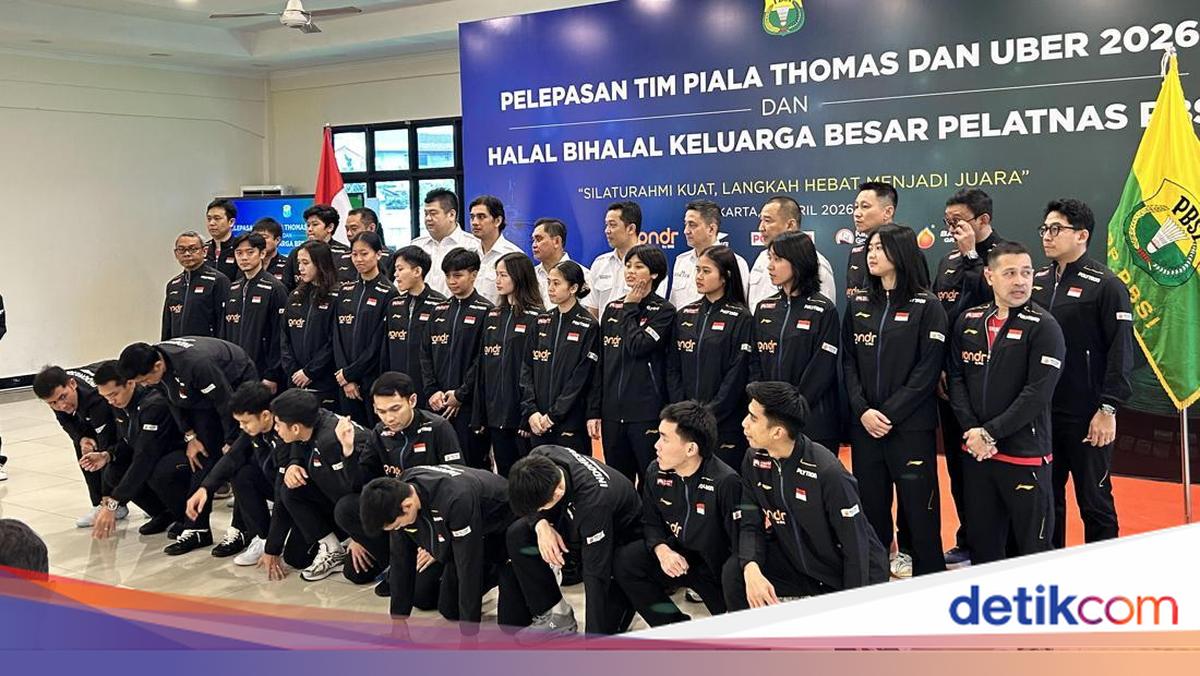
Fadil Imran articulated these aspirations during the official send-off ceremony for the Indonesian contingents heading to the prestigious team championships. His statements underscored a pragmatic approach, grounded in the latest Badminton World Federation (BWF) rankings and the perceived strength of rival nations. "Our target, of course, when looking at the calculations and the rankings released by the BWF, is that we are behind China," Fadil stated, acknowledging the formidable challenge posed by the Chinese team. "Hopefully, on the court, you all know that there will be many factors influencing the situation. We hope to reach the final for the Thomas Cup, and hopefully, the players can bring pride to everyone." This sentiment highlights a realistic appraisal of the team’s position while simultaneously instilling a strong sense of national expectation and pride.
The draw for the group stages has placed the Indonesian men’s team in Group D of the Thomas Cup, where they are set to face formidable opponents in France, Thailand, and Algeria. This group presents a challenging yet manageable path for Indonesia to advance, with Thailand often proving to be a strong European adversary. On the women’s side, the Uber Cup draw has positioned the Indonesian team in a competitive group alongside Taiwan, Canada, and Australia. The expectation is for the Indonesian women to overcome Canada and Australia, thereby securing their passage to the knockout stages. "Then, for the Uber Cup, which is in a group with Canada, Australia, and Taiwan, we hope to overcome Canada and Australia, and then Indonesia can qualify for the next round," Fadil elaborated. "We hope the players (women’s team) can reach the semifinals." This statement reveals a focused strategy on navigating the initial hurdles to build momentum for deeper runs in the competition.
A Legacy of Excellence and Strategic Vision
The Thomas and Uber Cups, often referred to as the "World Cup of Badminton," are the premier international team badminton championships for men and women, respectively. First held in 1949 for the Thomas Cup and 1957 for the Uber Cup, these tournaments have a rich history of national pride, intense rivalries, and breathtaking performances. Indonesia has a storied legacy in both competitions, having won the Thomas Cup a remarkable 13 times and the Uber Cup three times. This historical success places a significant weight of expectation on current and future generations of Indonesian shuttlers.
The 2026 edition of the tournaments promises to be another fiercely contested affair, with traditional powerhouses like China, Denmark, Malaysia, and South Korea posing significant threats. PBSI’s strategic planning, as articulated by Fadil Imran, aims to leverage Indonesia’s inherent talent pool and competitive spirit to reclaim its former glory. The emphasis on reaching the finals and semifinals is not merely about participation but about contending for the ultimate prize and solidifying Indonesia’s position among the elite badminton nations.
The Crucial Role of Team Dynamics and Mental Fortitude
Beyond the technical prowess of individual players, Fadil Imran emphasized the paramount importance of mental strength and team cohesion, particularly in the unique environment of team championships. He underscored that the dynamics of a team event differ significantly from individual tournaments, where the collective spirit can often transcend individual brilliance. "I always motivate the players by explaining that individuals are different from a team, you know. The atmosphere is vastly different. So, sometimes, cohesion and togetherness become important, and that can be the energy to defeat anyone," Fadil remarked. This highlights a deep understanding of the psychological aspects of team sports and a strategic focus on fostering an environment where players can draw strength from one another.
The chairman’s words also invoked the spirit of past triumphs, drawing parallels with the victorious Indonesian Thomas Cup campaign in 2021, where the team, led by veteran Hendra Setiawan, showcased exceptional teamwork and resilience. "Hopefully, it’s all about how they are, their mentality within this team, right. This is what we hope for, hopefully, the 2021 edition can be repeated, when Hendra was the captain. Hopefully, they can win again in Denmark," Fadil expressed, looking to reignite the winning mentality that characterized that successful era. This nostalgic reference serves as a powerful reminder of what is achievable when the team rallies together, aiming to inspire the current generation to emulate such achievements.
Analyzing the Group Stage Draw and Potential Pathways
Thomas Cup 2026: Group D – A Strategic Gauntlet
Indonesia’s position in Group D of the Thomas Cup pits them against France, Thailand, and Algeria. While on paper, Indonesia and Thailand might be considered the favorites to advance, the unpredictable nature of team competitions means that no opponent can be underestimated.
- France: A steadily improving European badminton nation, France has demonstrated its capability to challenge established powers in recent years. Their singles and doubles departments possess a blend of experience and emerging talent.
- Thailand: A perennial contender in Thomas Cup, Thailand boasts a strong contingent of world-class singles players and competitive doubles pairs. Matches against Thailand are often intense and closely fought, demanding peak performance from the Indonesian squad.
- Algeria: While generally considered an underdog in this group, Algeria’s presence signifies the growing global reach of badminton. Any team in a major championship can pose an upset, and Indonesia will need to maintain focus from the outset.
Indonesia’s path to the final will likely involve navigating a tough encounter against Thailand and ensuring they secure maximum points against France and Algeria. The team’s depth in singles and doubles will be crucial, as each match in a tie contributes to the overall result.
Uber Cup 2026: Group Stage Aspirations
The Indonesian women’s team faces a challenging yet achievable task in their Uber Cup group, which includes Taiwan, Canada, and Australia. The target of reaching the semifinals necessitates a strong performance in the group stages to secure favorable seeding in the knockout rounds.
- Taiwan: A formidable force in women’s badminton, Taiwan possesses several top-ranked singles and doubles players. A match against Taiwan will be a significant test of Indonesia’s strength and strategy.
- Canada: While not historically as dominant as some other nations, Canada has shown improvement and possesses capable players who can deliver strong performances on any given day.
- Australia: As a developing badminton nation, Australia will likely be looking to gain experience and challenge their more established opponents.
The primary objective for the Indonesian women’s team will be to secure victories against Canada and Australia to guarantee progression. The crucial match will likely be against Taiwan, where a win would significantly boost their confidence and chances of advancing deep into the tournament. The ambition to reach the semifinals signals a belief in the team’s potential to compete at the highest level.
Broader Implications and the Road Ahead
The targets set by PBSI for the 2026 Thomas and Uber Cups reflect a strategic commitment to not only compete but to contend for championship titles. The emphasis on mental fortitude and team unity is a testament to the understanding that success in team events hinges on more than just individual rankings. It requires a collective spirit, unwavering support, and the ability to perform under pressure.
The historical context of Indonesian badminton success imbues these aspirations with a sense of legacy and national pride. The nation has a deep-seated passion for the sport, and any stride towards reclaiming its former glory will be met with widespread enthusiasm. The journey to the 2026 tournaments will undoubtedly involve rigorous training, strategic planning, and a dedicated focus on player development. The performances in these upcoming championships will not only define the immediate success of the Indonesian teams but will also set the tone for future generations of shuttlers, inspiring them to uphold the nation’s rich badminton heritage. The path is challenging, but with clear objectives and a strong emphasis on teamwork, Indonesia is poised to make a significant impact on the world stage.