Indonesia and United States Elevate Strategic Ties through Major Defense Cooperation Partnership Signed at the Pentagon

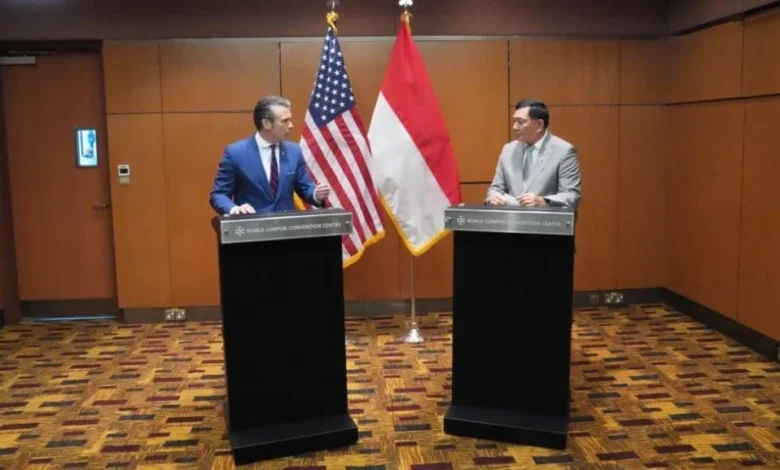
The Indonesian Minister of Defense, Sjafrie Sjamsoeddin, and the United States Secretary of Defense, Pete Hegseth, officially formalized the establishment of the Major Defense Cooperation Partnership (MDCP) during a high-level bilateral meeting held at the Pentagon in Arlington, Virginia. This landmark agreement, announced on Tuesday, April 14, 2026, marks a significant elevation in the security relationship between the world’s second and third-largest democracies. The MDCP is designed to serve as a comprehensive framework for deepening operational collaboration, accelerating military modernization, and enhancing the interoperability of the two nations’ armed forces.
The meeting at the headquarters of the U.S. Department of Defense signifies a pivotal moment in the Indo-Pacific geopolitical landscape. Both leaders emphasized that the partnership is not merely a technical agreement but a reflection of a shared vision for regional stability and a commitment to the "peace through strength" doctrine. According to the official statement released by the U.S. Department of Defense, the MDCP will focus on three fundamental pillars: military modernization and capacity building, professional military education and training, and expanded operational cooperation and joint exercises.
A New Era of Strategic Alignment
The elevation of the bilateral relationship to a Major Defense Cooperation Partnership follows years of incremental growth in security ties. During the discussions, Secretary Hegseth praised Indonesia’s proactive role in international security, specifically noting Jakarta’s contributions to the Board of Peace and its leadership within International Stabilization Forces. Indonesia’s long-standing tradition of contributing to United Nations peacekeeping missions—most notably in Lebanon and various African nations—was highlighted as a cornerstone of its "Free and Active" foreign policy, which seeks to promote global harmony while maintaining national sovereignty.
Minister Sjafrie Sjamsoeddin underscored that the MDCP aligns with Indonesia’s ongoing efforts to modernize its defense capabilities. Under the leadership of President Prabowo Subianto, Indonesia has sought to diversify its defense acquisitions while strengthening its domestic defense industry. The partnership with the United States provides a structured pathway for Indonesia to access advanced technology, high-level tactical training, and strategic expertise.
The agreement comes at a time of increasing complexity in the Indo-Pacific. With rising maritime tensions and the need for disaster relief preparedness, the U.S. and Indonesia have found common ground in ensuring that the region remains open, stable, and governed by international law. The MDCP is expected to streamline the process for military sales, technology transfers, and joint research initiatives between the two defense ministries.
Chronology of the U.S.-Indonesia Defense Relationship
The path to the MDCP has been a multi-decade journey characterized by periods of both tension and intense cooperation. Understanding the context of this 2026 agreement requires a look back at the milestones that shaped the current alliance:
- The Post-Cold War Transition: In the 1990s and early 2000s, defense ties faced significant hurdles due to human rights concerns, leading to various legislative restrictions on military assistance.
- The Re-engagement Era (2005–2010): Following the 2004 Indian Ocean Tsunami, where the U.S. military provided massive humanitarian aid to Aceh, relations began to thaw. Full military-to-military ties were restored in 2005.
- Comprehensive Partnership (2010): Presidents Barack Obama and Susilo Bambang Yudhoyono signed a Comprehensive Partnership, which included a strong security component.
- The Rise of Super Garuda Shield (2022–Present): What began as a bilateral army exercise (Garuda Shield) evolved into "Super Garuda Shield," a massive multilateral exercise involving over a dozen nations, signaling Indonesia’s central role in regional security architecture.
- Comprehensive Strategic Partnership (2023): During a visit to Washington in late 2023, the two nations elevated their ties to a Comprehensive Strategic Partnership (CSP), setting the stage for the specific defense-oriented MDCP signed in 2026.
This timeline illustrates a steady trajectory toward the institutionalization of defense ties, culminating in the current agreement at the Pentagon.
The Three Pillars of the MDCP
The Major Defense Cooperation Partnership is built upon three foundational pillars that will guide the implementation of collaborative projects over the next decade.
1. Military Modernization and Capacity Building
Indonesia is currently in the midst of a multi-phase military modernization program. The MDCP facilitates smoother procurement processes for U.S.-made defense systems, such as the F-15IDN fighter jets and Black Hawk transport helicopters. Beyond hardware, this pillar emphasizes the development of Indonesia’s domestic defense manufacturing sector. The U.S. has committed to supporting Indonesia’s goal of becoming a regional hub for defense maintenance and repair, which includes knowledge transfer and the development of local supply chains.
2. Professional Military Education and Training
Education remains a vital component of "soft power" in defense relations. The MDCP expands the International Military Education and Training (IMET) programs, allowing more Indonesian officers to attend prestigious U.S. institutions such as West Point, the Naval Academy at Annapolis, and the National Defense University. Conversely, the agreement encourages U.S. personnel to participate in Indonesian military staff colleges, fostering a mutual understanding of tactical doctrines and cultural nuances.
3. Exercises and Operational Cooperation
The third pillar focuses on the "complexity and scale" of joint maneuvers. Both Sjafrie and Hegseth committed to expanding Super Garuda Shield to include more sophisticated domains, such as cyber defense, space awareness, and advanced maritime interdiction. The goal is to move beyond basic drills toward high-end interoperability, where the two militaries can operate seamlessly in humanitarian assistance, disaster relief, and maritime security operations.
Supporting Data: The Scale of Cooperation
The depth of the U.S.-Indonesia defense relationship is supported by significant data points that highlight the level of engagement:
- Joint Exercises: The two nations participate in over 200 bilateral engagements annually, ranging from small-scale subject matter expert exchanges to large-scale field training exercises.
- Peacekeeping Leadership: Indonesia is currently one of the top 10 contributors to UN peacekeeping missions globally, with over 2,500 personnel deployed. The U.S. provides substantial funding and training support for these deployments through the Global Peace Operations Initiative (GPOI).
- Defense Trade: In the last five years, Indonesia has signaled intent or signed contracts for U.S. defense equipment totaling several billion dollars, including the potential acquisition of 24 F-15EX aircraft.
- Education: Hundreds of Indonesian military personnel have graduated from U.S. military schools over the past two decades, creating a network of "alumni" who now occupy senior leadership positions in the Indonesian National Armed Forces (TNI).
Reactions and Regional Implications
The announcement of the MDCP has drawn significant attention from geopolitical analysts and regional stakeholders. While the agreement is bilateral, its implications are inherently regional.
Indonesian Perspective:
Within Indonesia, the agreement is seen as a pragmatic step to bolster national defense without compromising the country’s non-aligned stance. Analysts in Jakarta suggest that by strengthening ties with Washington, Indonesia gains a necessary "deterrence dividend" that helps protect its sovereign rights in the North Natuna Sea, where maritime incursions have become a recurring issue.
U.S. Strategic Outlook:
For the United States, the MDCP with Indonesia is a critical piece of its Indo-Pacific Strategy. By securing a "Major Defense Cooperation Partnership" with the largest economy in Southeast Asia, Washington reinforces its commitment to the region. Secretary Hegseth’s emphasis on "peace through strength" suggests that the U.S. views a strong, capable Indonesia as a primary stabilizer that can prevent conflict through credible defense capabilities.
Regional Reactions:
Neighboring ASEAN countries are likely to view the development with a mix of support and caution. While most welcome a more capable Indonesia as a regional leader, there is a constant desire to avoid an arms race or the hardening of bloc mentalities in Southeast Asia. However, because the MDCP focuses heavily on "capacity building" and "education," it is generally perceived as a constructive contribution to regional resilience.
Analysis: The Future of the Partnership
The MDCP represents a shift from "transactional" defense relations to "institutional" defense integration. By creating a permanent framework, the two nations ensure that their cooperation is shielded from the fluctuations of domestic politics in either capital.
One of the most significant aspects of this partnership is the focus on special forces training and professional military education. This suggests a long-term investment in the "human capital" of the TNI. As Indonesian officers train alongside their American counterparts, they adopt shared standards for command and control, which is essential for any future joint operations, particularly in disaster-prone areas of the Pacific.
Furthermore, the emphasis on maritime security within the MDCP highlights the importance of the sea lanes that pass through the Indonesian archipelago. The Malacca, Sunda, and Lombok Straits are among the world’s most vital maritime chokepoints. A partnership that enhances Indonesia’s ability to monitor and secure these waters has direct benefits for global trade and energy security.
Conclusion
The meeting between Minister Sjafrie Sjamsoeddin and Secretary Pete Hegseth at the Pentagon has set a new course for U.S.-Indonesia relations. The establishment of the Major Defense Cooperation Partnership is a testament to the maturing of a relationship that has overcome historical hurdles to become a pillar of Indo-Pacific security.
As the two nations begin to implement the three pillars of the MDCP, the focus will remain on building a partnership based on mutual respect, national sovereignty, and a shared desire for a peaceful international order. Through modernized forces, educated leadership, and complex operational cooperation, the U.S. and Indonesia are not just preparing for the challenges of today, but are investing in a stable and secure future for the entire region. The MDCP stands as a clear signal that the strategic bond between Jakarta and Washington has reached a new level of permanence and purpose.