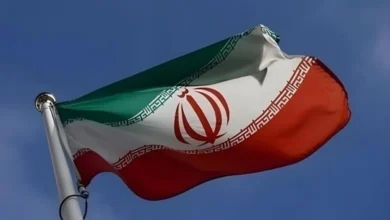
President Trump Declares US-Iran Conflict "Almost Over," Citing Military Defeat and Teheran’s Eagerness for a Peace Deal

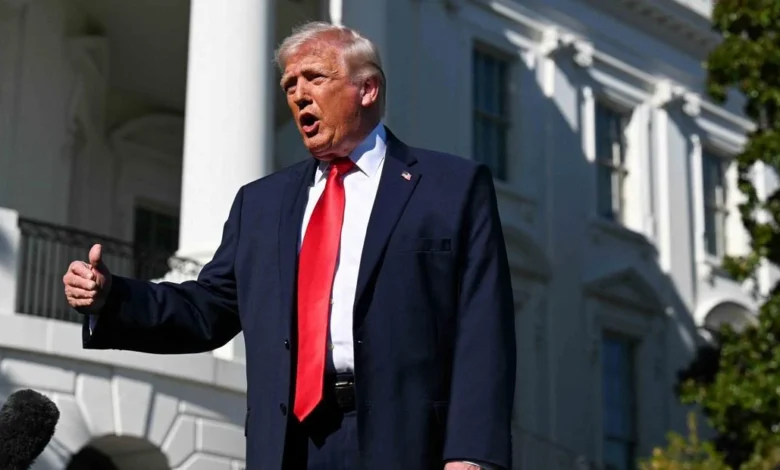
President Donald Trump asserted on Wednesday, April 15, 2026, that the protracted conflict between the United States and Iran was nearing its conclusion, claiming a decisive military victory for Washington and indicating that authorities in Tehran were keen to finalize a peace agreement. Speaking to CNBC, Trump declared, "We have defeated them militarily, completely. I think it’s almost over, I see it almost over." His remarks come amid persistent geopolitical tensions and a complex history of confrontation that has gripped the Middle East for years, influencing global energy markets and international diplomacy.
A Decade of Escalation: The Road to April 2026
The current state of affairs between the United States and Iran is the culmination of decades of strained relations, significantly exacerbated by key events over the past decade. The withdrawal of the United States from the Joint Comprehensive Plan of Action (JCPOA), commonly known as the Iran nuclear deal, in May 2018, served as a critical turning point. This move, spearheaded by the Trump administration, reinstated and expanded a comprehensive sanctions regime against Iran, targeting its oil exports, financial sector, and key industries. The stated goal was to compel Tehran to negotiate a "better deal" that would address not only its nuclear program but also its ballistic missile development and regional proxy activities.
Following the JCPOA withdrawal, tensions escalated sharply throughout 2019 and into the early 2020s. A series of incidents in the Persian Gulf, including attacks on oil tankers and a Saudi oil facility, were attributed by Washington and its allies to Iran, though Tehran consistently denied direct involvement. The downing of a US surveillance drone by Iran in June 2019 brought the two nations to the brink of direct military confrontation. The situation reached a critical peak in January 2020 with the US drone strike that killed Major General Qasem Soleimani, commander of the Quds Force of Iran’s Islamic Revolutionary Guard Corps, near Baghdad International Airport. Iran retaliated with missile strikes on US military bases in Iraq, causing traumatic brain injuries to numerous American service members. This period was characterized by a cycle of provocation and response, leading many observers to describe it as a "shadow war" or a "cold war" with intermittent hot phases.
Subsequent years saw continued pressure from the US, with sanctions tightening and occasional military posturing. Iran, in turn, accelerated its nuclear program beyond JCPOA limits and continued its regional activities, albeit under severe economic duress. Diplomatic efforts, often involving European intermediaries, frequently stalled, hampered by deep mistrust and maximalist positions from both sides. The "failed peace talks" mentioned by Trump last weekend were likely one of several attempts by international actors or even direct, discreet channels to de-escalate the situation and explore pathways to a more stable arrangement. These talks often struggle with the fundamental disagreement over Iran’s nuclear enrichment capabilities and its regional influence.
Trump’s Declaration and Strategic Rationale
Trump’s pronouncements on April 15, 2026, elaborated on his perspective of Iran’s current predicament. He asserted that Iran’s capacity to rebuild its nation after the extensive economic and military pressures would require "another 20 years." This claim underscores the severe impact of US sanctions, which have crippled Iran’s economy, drastically reducing its oil revenues, stifling foreign investment, and leading to high inflation and unemployment. The cumulative effect of these measures, combined with targeted military actions and cyber operations, has evidently led the Trump administration to conclude that Iran’s ability to project power and sustain its regional ambitions has been severely curtailed.
"We haven’t finished yet. We’ll see what happens. I think they are very eager to make a deal," Trump added, signaling that while the military aspect might be deemed concluded, the diplomatic resolution remains outstanding. His long-held justification for the robust US stance against Iran has been to "prevent them from having nuclear weapons." This objective has been a cornerstone of US foreign policy in the region for decades, intensifying after Iran’s nuclear program became public knowledge. For the Trump administration, any new deal would need to be far more stringent than the JCPOA, permanently preventing Iran from developing nuclear weapons capabilities, curtailing its ballistic missile program, and ending its support for proxy groups in the Middle East.
The President also offered optimistic predictions regarding the economic fallout of a potential peace. He expressed confidence that global oil prices, which had reportedly surged due to supply disruptions stemming from the US-Iran tensions, would "soon drop" if the conflict ended. Furthermore, he predicted a significant "surge" in the stock market, reflecting broader market optimism that global stability and reduced geopolitical risk would unlock economic growth. These economic projections often accompany significant de-escalations in major international conflicts, as markets typically react positively to reduced uncertainty.
Supporting Data and Analysis of Impact
The assertion of a "complete military defeat" for Iran, while a strong rhetorical statement, requires nuanced interpretation. From a conventional military standpoint, Iran’s armed forces are significantly outmatched by the United States. The US military possesses superior air power, naval capabilities, and advanced weaponry. However, Iran has historically relied on asymmetric warfare, a network of regional proxies, and its ballistic missile arsenal to project power and deter adversaries. While sanctions and targeted strikes have undoubtedly degraded some of these capabilities and constrained Iran’s financial resources for its proxies, whether this constitutes a "complete military defeat" in the traditional sense is debatable. It is more likely that the US assessment refers to Iran’s inability to effectively challenge US military dominance in the region or to achieve its strategic objectives through overt military means against the US and its allies.
Economically, the data largely supports the narrative of Iran’s severe contraction. The International Monetary Fund (IMF) and other financial institutions have consistently reported significant negative GDP growth for Iran since the re-imposition of sanctions. Oil exports, once the lifeblood of the Iranian economy, plummeted from over 2.5 million barrels per day before 2018 to mere hundreds of thousands, drastically reducing state revenues. This economic pressure has led to a humanitarian crisis, with shortages of essential goods, medical supplies, and rampant inflation, undoubtedly contributing to internal dissent and potentially pressuring the Iranian leadership to seek relief through negotiations. The "20 years to rebuild" claim, while perhaps an exaggeration, highlights the profound damage inflicted upon Iran’s economic infrastructure and human capital.
The notion that Iran is "eager for a deal" aligns with the severe economic hardship faced by the country. While Iranian officials publicly maintain a stance of resilience and resistance, there have been intermittent signals, often through indirect channels, that Tehran is open to diplomacy, provided it involves significant sanctions relief and respect for its sovereignty. However, the nature of such a deal remains a major sticking point. Iran typically seeks a return to the original JCPOA or a modified version that acknowledges its right to peaceful nuclear technology, while the US demands a more comprehensive agreement.
Official Responses and Diplomatic Pathways
In the immediate aftermath of President Trump’s declaration, a White House official confirmed that a second round of negotiations between Washington and Tehran was indeed being discussed. This confirmation lends credence to the diplomatic momentum, even if the previous talks had "failed." Trump himself indicated to the New York Post that "new US-Iran talks in Islamabad could happen within the next two days." The choice of Islamabad as a potential venue is notable, suggesting Pakistan’s role as a mediator or facilitator, a role it has historically played in regional diplomacy.
The reactions from Tehran to Trump’s claims of military defeat and eagerness for a deal are likely to be complex and carefully calibrated. Publicly, Iranian officials would almost certainly reject any notion of military defeat, framing any engagement as a testament to their nation’s strength and willingness to resolve issues through diplomacy rather than weakness. Supreme Leader Ali Khamenei and President Ebrahim Raisi have consistently emphasized that Iran will not negotiate under duress, demanding sanctions relief as a prerequisite for serious talks. However, the severe economic pressure might create an internal imperative to find a diplomatic off-ramp, which could be spun domestically as a victory for Iranian steadfastness in forcing the US to the negotiating table.
Internationally, European powers, particularly France, Germany, and the UK, who were signatories to the original JCPOA, would likely welcome any verifiable steps towards de-escalation and a diplomatic resolution. They have consistently advocated for a return to diplomacy and have been critical of the US withdrawal from the nuclear deal. Russia and China, who also hold significant interests in the region and have supported Iran economically and politically, would also likely endorse negotiations, hoping to see a reduction in regional instability and a potential easing of US influence. Regional US allies like Saudi Arabia and Israel, however, would view any deal with caution, emphasizing the need for robust verification mechanisms and a comprehensive approach to Iran’s regional behavior, not just its nuclear program.
Broader Impact and Implications
Should a peace agreement between the US and Iran materialize, its implications would resonate far beyond the two nations directly involved.
- Regional Stability: A genuine de-escalation could significantly reduce tensions across the Middle East. Proxy conflicts in Yemen, Syria, and Iraq, where US-backed forces and Iranian-supported militias have clashed, could see a reduction in hostilities. The future of groups like Hezbollah in Lebanon and various Iraqi Shia militias, heavily influenced by Iran, would also be impacted.
- Nuclear Program: The core of any deal would undoubtedly involve Iran’s nuclear program. Whether it would be a return to the JCPOA’s framework or a "Trump deal" with more stringent conditions (longer sunset clauses, restrictions on ballistic missiles, enhanced inspections) remains to be seen. A verifiable, comprehensive agreement would ease global proliferation concerns.
- Global Economy: The most immediate global impact would be on oil markets. A stable peace could lead to Iran re-entering the global oil market more fully, potentially increasing supply and exerting downward pressure on prices, benefiting consumers worldwide. Reduced shipping risks in the Strait of Hormuz would also lower insurance costs and improve global trade flows.
- US Foreign Policy: For the Trump administration, securing a peace deal with Iran would represent a significant foreign policy achievement, validating its "maximum pressure" strategy. It could be leveraged as a major electoral talking point, especially if coupled with positive economic outcomes.
- Challenges: Despite the stated optimism, significant hurdles remain. Deep-seated mistrust, the complexity of verification mechanisms, and internal political opposition within both the US and Iran could derail any negotiations. The definition of "peace" itself might differ significantly between Washington and Tehran.
In conclusion, President Trump’s declaration of an impending end to the US-Iran conflict, coupled with his claims of military victory and Iran’s eagerness for a deal, marks a potentially pivotal moment in one of the world’s most enduring geopolitical standoffs. While the prospect of new talks in Islamabad offers a glimmer of hope for a diplomatic resolution, the path to a comprehensive and lasting peace remains fraught with historical grievances, complex demands, and the inherent challenges of negotiating with adversaries. The coming days and weeks will reveal whether this latest assertion marks a genuine turning point or merely another phase in the protracted dance between Washington and Tehran.