Israel Demands Dissolution of Hezbollah as Primary Condition for Peace in Landmark Diplomatic Talks with Lebanon

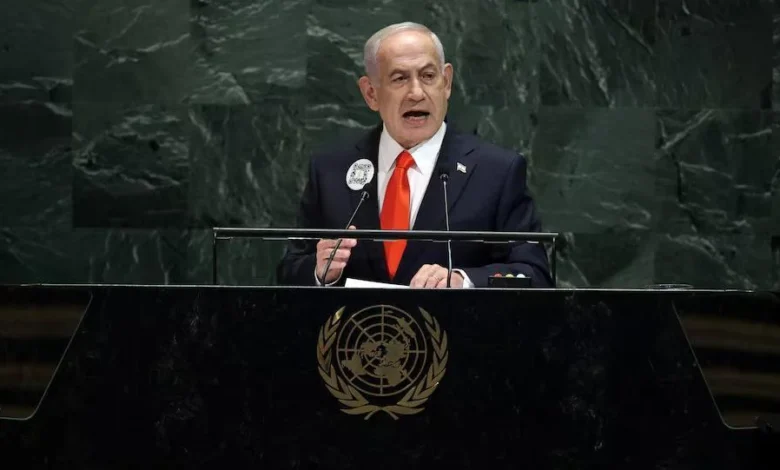
Israeli Prime Minister Benjamin Netanyahu has formally declared that the total dissolution of the Hezbollah militant organization remains the non-negotiable priority for the State of Israel as it enters its first direct diplomatic engagement with the Lebanese government in over three decades. Speaking during a high-stakes press briefing following the commencement of face-to-face negotiations, Netanyahu emphasized a dual-track strategy for regional stability, asserting that any future peace treaty must be preceded by the complete removal of the Iranian-backed proxy from Lebanon’s political and military landscape. The Prime Minister’s remarks, delivered on Thursday, April 16, 2026, signal a hardening of the Israeli position even as international pressure mounts for a cessation of hostilities in a conflict that has increasingly evolved into a broader regional war.
In his address, Netanyahu outlined what he described as the "existential imperatives" for Israel’s northern security. He stated that in negotiations with Lebanon, there are two primary objectives: first, the dissolution of Hezbollah, and second, a sustainable peace that is achieved through strength. This "peace through strength" doctrine suggests that Israel is unwilling to rely solely on diplomatic assurances or international peacekeeping forces, such as the United Nations Interim Force in Lebanon (UNIFIL), which Israeli officials have long criticized as ineffective in preventing Hezbollah’s rearmament. Netanyahu’s stance indicates that the Israeli Defense Forces (IDF) may continue operations until a verifiable mechanism for Hezbollah’s dismantling is established, regardless of the progress made at the negotiating table.
A Historic Diplomatic Opening in Washington
The negotiations, hosted in Washington D.C., represent the first time that official representatives from Israel and Lebanon have met for direct, face-to-face talks since 1993. United States Secretary of State Marco Rubio, who has been a central figure in brokering this dialogue, characterized the meeting as a "historic opportunity" for the Middle East. The presence of the respective ambassadors to the United States in a shared diplomatic setting marks a significant departure from the "shuttle diplomacy" and indirect communication that have defined the relationship for the past thirty years.
Secretary Rubio expressed optimism that the current framework could serve as the foundation for an actual and lasting peace. However, the American involvement is driven by a complex set of strategic necessities. The Biden-Rubio administration has been increasingly vocal in urging Israel to conclude its military operations in southern Lebanon. The primary motivation for this push is the "Iranian Front." Since February 28, 2026, when a full-scale conflict erupted between a U.S.-Israeli coalition and the Islamic Republic of Iran, Washington has sought to streamline its military engagements. The U.S. State Department argues that by neutralizing the threat in Lebanon through a diplomatic settlement, Israel can redirect its military resources and strategic focus toward the ongoing campaign against Tehran.
The Humanitarian Crisis and the Lebanese Position
While the diplomatic maneuvering continues in Washington, the situation on the ground in Lebanon has reached a breaking point. Lebanese President Joseph Aoun, speaking on Tuesday, April 14, 2026, voiced the desperation of his nation, expressing a fervent hope that these talks would mark the beginning of the end of the suffering of the Lebanese people. The human cost of the conflict has been staggering. Since the escalation began, thousands of Lebanese civilians have been killed, and tens of thousands have sustained life-altering injuries.
The displacement crisis has reached unprecedented levels, with over one million people—nearly a fifth of the country’s population—forced to flee their homes in the south and the Bekaa Valley. The Lebanese economy, already fragile after years of financial collapse, has been decimated by the destruction of infrastructure and the blockade of trade routes. Within Beirut, a fierce debate has emerged regarding Lebanon’s participation in a proposed two-week ceasefire agreement involving the United States, Israel, and Iran. While many see the ceasefire as a necessary reprieve to allow for humanitarian aid, others fear that Lebanon is being used as a pawn in a larger geopolitical game between Washington and Tehran.
Chronology of Escalation: 2023–2026
The path to the current crisis began in the aftermath of the October 7, 2023, attacks, which triggered a series of border skirmishes between the IDF and Hezbollah. For over two years, the conflict remained largely contained to a "war of attrition" along the Blue Line. However, the timeline of escalation shifted dramatically in late 2025 and early 2026:
- October 2025: Israel launches "Operation Northern Shield II," targeting Hezbollah’s tunnel infrastructure and long-range missile sites.
- January 2026: Hezbollah responds with a massive drone and rocket barrage targeting Haifa and Tel Aviv, leading to a full-scale Israeli ground incursion into southern Lebanon.
- February 28, 2026: Following a series of cyberattacks and maritime provocations, a direct military conflict breaks out between Israel, the United States, and Iran. This marks the beginning of what analysts call the "First Regional War."
- March 2026: International calls for a ceasefire intensify as the conflict threatens global oil supplies and regional stability.
- April 10, 2026: Under U.S. pressure, Israel and Lebanon agree to send high-level envoys to Washington for direct talks.
- April 16, 2026: Netanyahu issues his ultimatum regarding the dissolution of Hezbollah.
Hezbollah’s Defiance and the Internal Lebanese Schism
Hezbollah, which operates as both a political party in the Lebanese parliament and a heavily armed paramilitary force, has remained steadfast in its rejection of the Washington talks. The group’s leadership has dismissed the negotiations as a "surrender to Zionist-American dictates" and has vowed to continue its "resistance" until Israeli forces withdraw from all occupied territories, including the disputed Shebaa Farms.
Reports from the front lines indicate that Hezbollah has actually increased the frequency of its attacks during the diplomatic sessions in Washington. This "fire-and-talk" tactic is likely intended to demonstrate that the group cannot be sidelined and that the Lebanese government in Beirut does not have the authority to negotiate away its military capabilities. This creates a significant hurdle for President Joseph Aoun; even if he reaches an agreement with Israel, the Lebanese state currently lacks the military power to forcibly disarm Hezbollah without risking a bloody civil war.
Strategic Implications and Fact-Based Analysis
The demand for the "dissolution of Hezbollah" is a high-bar condition that carries several profound implications for the region. From a military perspective, Hezbollah is far more integrated into the fabric of Lebanese society than previous adversaries. Unlike a conventional army, its dissolution would require not just a ceasefire, but a fundamental restructuring of the Lebanese state.
1. The "Iranian Front" Pivot: The U.S. insistence on ending the Lebanon conflict is a clear indication that the Pentagon views Iran as the primary threat. By closing the "Northern Front," the U.S. hopes to limit the number of variables in the conflict with Tehran. However, if Hezbollah is not truly dissolved, any peace treaty would be a temporary lull, allowing the group to rebuild for a future conflict.
2. The Lebanese State Authority: For the first time in decades, there is significant international pressure to empower the Lebanese Armed Forces (LAF) as the sole legitimate military body in the country. Netanyahu’s demands provide a pretext for the international community to fund and arm the LAF to a degree that would allow it to challenge Hezbollah’s hegemony.
3. Regional Power Shifts: If the talks succeed and Hezbollah is marginalized, the influence of the "Axis of Resistance" (comprising Iran, Syria, and their proxies) would be severely curtailed. This would represent a major victory for the Abraham Accords framework and the alignment of Israel with moderate Arab states who also view Hezbollah as a destabilizing force.
4. The Risk of Failure: If Israel refuses to lower its demands and Hezbollah continues its escalations, the talks in Washington may collapse. A failure of diplomacy would likely lead to a further expansion of the conflict, potentially drawing in Syrian forces or increasing the direct involvement of Russian assets stationed in the Levant.
Official Responses and International Reaction
The international community has reacted to Netanyahu’s statements with a mixture of hope and caution. The European Union’s foreign policy chief issued a statement urging both parties to show "maximum restraint" and to prioritize the protection of civilians. Meanwhile, Riyadh has signaled a cautious endorsement of the talks, provided they lead to the "restoration of Lebanese sovereignty."
In Israel, Netanyahu’s "peace through strength" rhetoric has received support from his right-wing coalition partners, who argue that anything less than the total destruction of Hezbollah would be a betrayal of the residents of northern Israel who have been displaced for years. Conversely, the Israeli opposition has questioned whether the total dissolution of Hezbollah is a realistic short-term goal or if it is a rhetorical device intended to prolong the military operation.
As the delegates in Washington enter their second week of discussions, the eyes of the world remain fixed on the diplomatic process. The outcome will determine not only the fate of Lebanon but also the trajectory of the wider war involving Iran. Whether the "historic opportunity" described by Marco Rubio can overcome the "existential imperatives" outlined by Benjamin Netanyahu remains the central question of this 2026 regional crisis. For the millions of civilians caught in the crossfire, the hope is that diplomacy can finally achieve what decades of warfare have failed to secure: a durable and lasting peace.