Socio Today
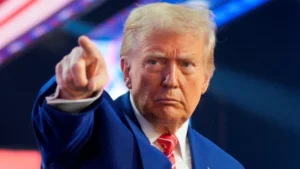
United States President Donald Trump has officially confirmed that his administration will review a fresh peace proposal submitted by the Iranian government, though he voiced significant doubt regarding the likelihood of the deal being accepted. The statement, delivered via his Truth Social platform and reinforced during a press engagement in West Palm Beach, Florida, comes at a precarious moment in Middle Eastern geopolitics. As the two nations navigate a fragile period following a direct military confrontation earlier this year, the prospect of a diplomatic breakthrough appears overshadowed by a legacy of mistrust and a renewed threat of military action.
The proposal, which reportedly contains 14 distinct points, was transmitted to Washington through Pakistani intermediaries. According to reports from Iranian state-affiliated media outlets Tasnim and Fars, the document outlines a comprehensive framework aimed at de-escalating the multi-front conflict and establishing a new maritime security protocol for the Strait of Hormuz. Despite the structured nature of the submission, Trump’s initial reaction suggests that the United States is seeking far more substantial concessions than what Tehran is currently offering.
The Skeptical Stance of the Trump Administration
President Trump’s public dismissal of the proposal’s viability was rooted in a historical critique of Iran’s foreign policy. Writing on Truth Social, Trump stated that he would "shortly review the plan just sent to us by Iran," but added a sharp caveat: "I cannot imagine it will be acceptable." He further elaborated that, in his view, the Islamic Republic had yet to "pay a high enough price for what they have done to humanity and the world over the last 47 years."
This reference to a 47-year timeline reaches back to the 1979 Islamic Revolution, a pivotal event that fundamentally altered US-Iran relations. By framing the current negotiations within this long-term historical context, the Trump administration is signaling that any potential agreement must address more than just recent hostilities; it must account for decades of regional proxy wars, allegations of state-sponsored terrorism, and the ongoing development of ballistic missile technology.
In Florida, when questioned by reporters about the possibility of returning to military engagement, Trump did not rule out the option. He noted that if Iranian leadership "behaves badly" or "does something bad," a military response remains a distinct possibility. This "maximum pressure" rhetoric mirrors the strategy employed during his previous term, characterized by heavy economic sanctions and a willingness to utilize kinetic force, such as the 2020 strike on General Qasem Soleimani.
A Timeline of Escalation and Failed Diplomacy
The current crisis is not an isolated event but the latest chapter in a series of escalations that began in late February. The conflict saw a significant spike in intensity when Israel became directly involved, leading to a cycle of retaliatory strikes that threatened to ignite a broader regional war. A temporary lull in direct combat began on April 8, following a round of intense negotiations hosted by Pakistan. However, those talks ultimately collapsed without a formal signature, leaving both nations in a state of "neither war nor peace."
The failure of the April negotiations set the stage for the current 14-point proposal. Tehran’s decision to involve Pakistan as a mediator is a strategic move, leveraging Islamabad’s unique position as a nation that maintains diplomatic ties with both the West and the Islamic Republic. However, the internal rhetoric coming out of Iran suggests that the military establishment remains deeply cynical about American intentions.
Senior Iranian military official Mohammad Jafar Asadi recently expressed his belief that the chances of a renewed conflict are high. Quoted by the Fars news agency, Asadi argued that history proves the United States is "not committed to any promises or agreements." This sentiment reflects a pervasive view in Tehran that Washington’s ultimate goal is not a stable peace but a total capitulation of the Iranian government.
The 14-Point Proposal and the Strait of Hormuz
While the full text of the 14-point proposal has not been made public, leakages to regional media suggest it focuses heavily on maritime security and the cessation of hostilities across multiple theaters, including Yemen, Syria, and Lebanon. Central to the proposal is a "new framework" for the management of the Strait of Hormuz.
The Strait of Hormuz is perhaps the most critical maritime chokepoint in the global economy. Located between Oman and Iran, it connects the Persian Gulf with the Gulf of Oman and the Arabian Sea. Approximately 20 percent of the world’s total petroleum liquids—nearly 21 million barrels per day—pass through this narrow waterway. For Iran, the Strait is its most potent geopolitical lever. For the United States and its allies, ensuring the freedom of navigation through the Strait is a non-negotiable national security priority.
The Iranian proposal allegedly suggests a co-management system that would reduce the presence of foreign naval vessels in exchange for Iranian guarantees of safe passage. However, Washington has historically viewed such offers as a "trojan horse" intended to push US influence out of the Persian Gulf, leaving regional allies like Saudi Arabia and the UAE vulnerable.
Economic Devastation and the Global Energy Market
The geopolitical standoff has already exacted a heavy toll on the global economy. Since the outbreak of hostilities in February, global oil prices have surged by approximately 50 percent. This spike is attributed to the "war premium" as traders fear a total blockage of the Strait of Hormuz or the destruction of Iranian oil infrastructure.
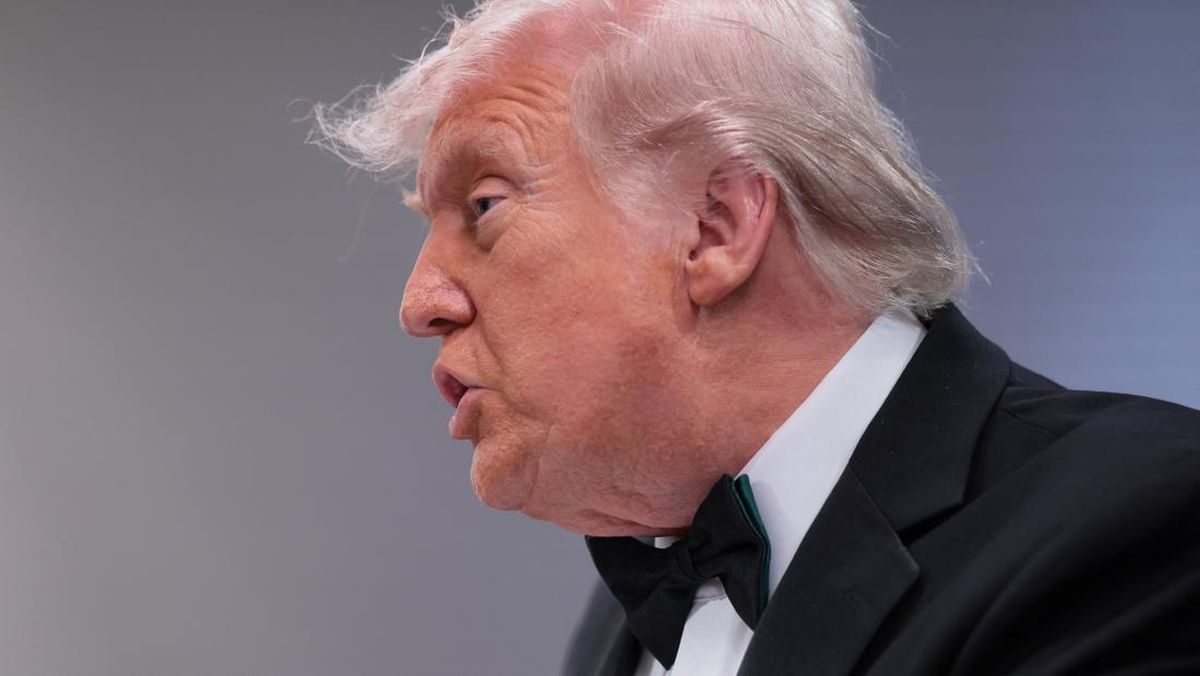
For Iran, the economic situation is even more dire. The combination of US-led port blockades and internal mismanagement has sent inflation soaring past the 50 percent mark. The Iranian rial has plummeted in value, making basic goods unaffordable for a large segment of the population. "Everyone is trying to survive, but they are starting to collapse," a Teheran resident told AFP, highlighting the human cost of the diplomatic stalemate.
The Trump administration’s strategy appears to rely on these economic pressures to force Iran into a "better deal." By restricting Iran’s ability to export its primary resource—crude oil—the US aims to drain the Iranian treasury, thereby limiting its ability to fund regional proxies like Hezbollah in Lebanon or the Houthis in Yemen.
The Nuclear Dimension and the Role of Steve Witkoff
Amidst the discussions of peace proposals and maritime security, the shadow of Iran’s nuclear program looms large. US media outlet Axios recently reported that Steve Witkoff, a key envoy for the Trump administration, has been tasked with bringing the nuclear issue back to the center of the negotiating table.
The Trump administration’s stance is that any lasting peace must involve a permanent and verifiable end to Iran’s uranium enrichment capabilities. This is a point of significant contention, as Iran maintains that its nuclear program is strictly for civilian energy and medical purposes. The Iranian Mission to the United Nations recently issued a statement accusing the United States of "hypocrisy." They argued that Washington continues to maintain and modernize a massive nuclear arsenal while simultaneously denying other nations the right to peaceful nuclear technology.
This "nuclear deadlock" remains the primary obstacle to any long-term resolution. The previous agreement, the 2015 Joint Comprehensive Plan of Action (JCPOA), was abandoned by Trump in 2018, and since then, Iran has significantly increased its stockpile of enriched uranium, moving closer to "breakout capacity."
Regional Volatility: The Lebanon Factor
The tension between the US and Iran is further complicated by the situation in Lebanon. Despite a separate ceasefire agreement between Israel and Hezbollah, the Israeli military has continued to launch targeted strikes against Hezbollah assets in southern Lebanon. Because Hezbollah is Iran’s most powerful regional proxy, these strikes are viewed by Tehran as a direct provocation.
The instability in Lebanon serves as a reminder that the US-Iran conflict is not merely bilateral. It is a regional struggle for influence that involves numerous actors with competing interests. Any peace proposal that fails to address the security concerns of Israel or the operational status of Hezbollah is unlikely to gain traction in Washington.
As it stands, the "ball is in the United States’ court," according to Iranian Deputy Foreign Minister Kazem Gharibabadi. He emphasized that Tehran is prepared for both diplomacy and confrontation, stating that the choice between a path of cooperation or a path of "confrontational approach" now rests with the Trump administration.
Analysis: The Path Forward
The current situation is defined by a deep-seated "trust deficit." For a peace proposal to succeed, both parties would need to move beyond the rhetoric of the last 47 years and find common ground on three specific areas: maritime security, regional proxy activity, and nuclear non-proliferation.
Analysts suggest that Trump’s public skepticism may be a tactical move to lower expectations and increase his leverage before formal talks begin. By dismissing the current 14-point plan, he signals to Tehran that they must offer more significant concessions—potentially involving the permanent dismantling of specific nuclear facilities or the withdrawal of support for regional militias.
However, the risk of miscalculation remains high. With oil prices destabilizing global markets and the Iranian economy on the brink of collapse, the window for a purely diplomatic solution may be closing. If the 14-point proposal is rejected without a counter-offer, the "jeda" or pause in conflict that has existed since April 8 may give way to a new and more destructive round of military engagement.
For now, the international community watches the Truth Social feed and the diplomatic cables from Islamabad with bated breath. The decision made in the coming days by the White House will determine whether the Middle East moves toward a tenuous peace or descends further into a conflict with global economic consequences.