Socio Today
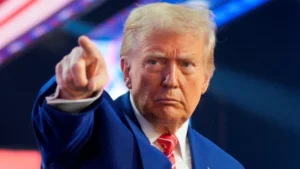
Havana and Jakarta — Cuban President Miguel Diaz-Canel Bermudez has issued a stark warning regarding the escalating geopolitical tensions between Havana and Washington, characterizing the current level of United States military and economic pressure as an unprecedented threat to Cuban sovereignty. In a series of official statements released via his social media accounts and echoed by state media, Diaz-Canel expressed profound concern over what he described as a "dangerous and historic" surge in American aggression, particularly under the administration of President Donald Trump.
The Cuban leader’s remarks come at a time of significant upheaval in the Caribbean, as the United States intensifies its long-standing policy of isolation against the island nation. According to Diaz-Canel, the current posture of the U.S. government transcends traditional diplomatic friction, moving into the realm of direct military intimidation. He asserted that the Cuban people remain resolute in their determination to defend their independence, regardless of the scale of the perceived threat.
"The President of the United States is increasing his threat of military aggression against Cuba to a dangerous and unprecedented level," Diaz-Canel wrote, addressing both the domestic audience and the international community. He called upon global leaders and the American public to scrutinize these "criminal steps," which he argued are driven by a small, influential group seeking "vengeance and domination" rather than legitimate national security interests.
The Mechanics of Economic Strangulation: Executive Orders and Tariffs
The recent spike in tensions is rooted in a series of aggressive policy maneuvers initiated by the White House in early 2026. On January 29, President Donald Trump signed a pivotal executive order that imposed heavy import tariffs on any country supplying oil to Cuba. This move was specifically designed to disrupt Cuba’s energy security, targeting its primary suppliers, which historically have included Venezuela and, more recently, other international partners.
By declaring a "state of national emergency" concerning the Cuban threat to U.S. national security, the Trump administration bypassed traditional legislative hurdles to implement these measures. The White House justified the tariffs and the emergency declaration by claiming that the Cuban government serves as a destabilizing force in the Western Hemisphere and continues to support "authoritarian regimes" in the region.
Furthermore, a subsequent executive order targeted the global financial system. This order mandates that foreign financial institutions must cease all transactions involving Cuban individuals or companies or face secondary sanctions from the United States. This "maximum pressure" tactic is reminiscent of strategies used against Iran, effectively locking Cuba out of the international banking system and making it nearly impossible for the island to conduct routine trade or receive foreign investment.
Diaz-Canel responded to these financial restrictions by labeling them a reflection of the "moral poverty" of the U.S. government. He argued that the tightening of the decades-old embargo—known in Cuba as el bloqueo—is an act of "intimidating arrogance" by the world’s largest military power against a much smaller neighbor.
A Chronology of Escalation: 2024–2026
To understand the gravity of the current situation, it is essential to trace the timeline of U.S.-Cuba relations leading up to the May 2026 crisis.
- Late 2024: Following the U.S. presidential election, the incoming administration signaled a return to the "Maximum Pressure" campaign that characterized the first Trump term (2017–2021). This involved a reversal of the limited relaxations seen during the 2021–2024 period.
- Early 2025: The U.S. State Department re-certified Cuba as a State Sponsor of Terrorism, a designation that triggers a cascade of automatic sanctions and restricts international aid.
- August 2025: The U.S. Southern Command (SOUTHCOM) increased its naval presence in the Caribbean, citing the need to interdict "illicit flows" and monitor foreign influence from Russia and China on the island.
- January 29, 2026: President Trump signed the executive order on oil tariffs and declared a national emergency. This was the catalyst for the current acute energy crisis in Cuba.
- March 2026: Reports emerged of U.S. naval vessels shadowed Cuban-bound tankers, leading to accusations of "maritime piracy" from Havana and its allies.
- May 3, 2026: President Diaz-Canel issued his formal condemnation, warning of a potential military confrontation and calling for international intervention.
The Humanitarian and Economic Toll on the Cuban People
The impact of these policies on the ground in Cuba has been severe. The energy embargo has led to widespread blackouts, some lasting more than 12 hours a day in provinces outside of Havana. These power failures have crippled the local industry, disrupted water supply systems, and caused significant spoilage in the country’s already fragile food supply chain.
The Cuban government maintains that the U.S. is utilizing "energy as a weapon" to suffocate the national economy and incite social unrest. Inflation has reached triple digits, and the scarcity of basic medicines and fuel has led to a burgeoning humanitarian crisis.
"The intention is clear," said a spokesperson for the Cuban Ministry of Foreign Affairs. "They wish to make life so unbearable for the Cuban people that the social fabric tears. It is a calculated attempt at regime change through collective punishment, which is a violation of international law."
Despite these challenges, the Cuban leadership has doubled down on its socialist ideology. State media has been flooded with images of "Territorial Troop Militias" conducting drills, a clear signal to Washington that any military intervention would be met with asymmetric resistance.
The Global Dimension: The Iran Connection and "Maritime Piracy"
The tensions are not confined to the Florida Straits. The situation has drawn in other international actors who find themselves in the crosshairs of U.S. foreign policy. Recently, the Trump administration drew criticism from Tehran following reports that the U.S. Navy had seized vessels suspected of carrying Iranian oil to Cuba.
President Trump reportedly praised the military’s actions, describing the seizures as a victory for American law enforcement on the high seas. However, Esmail Baghaei, a spokesperson for the Iranian Ministry of Foreign Affairs, condemned the actions as "maritime piracy." Iran argued that the U.S. was essentially admitting to "criminal blockades" and violating the principle of freedom of navigation.
This alignment of interests between Cuba, Iran, and other sanctioned nations suggests the formation of a "bloc of the sanctioned," which seeks to create alternative financial and logistical networks to bypass the U.S. dollar and American-controlled shipping lanes.

Analysis: The Strategic Implications of "Maximum Pressure 2.0"
Geopolitical analysts suggest that the Trump administration’s current strategy is an intensified version of the Monroe Doctrine—a 19th-century policy asserting U.S. dominance over the Western Hemisphere. By targeting Cuba’s energy and financial lifelines, Washington aims to remove what it perceives as a "malign influence" and a bridgehead for adversaries like Russia and China.
However, there are significant risks associated with this approach:
- Regional Instability: A total collapse of the Cuban economy could trigger a mass migration crisis, dwarfing the 1980 Mariel boatlift or the 1994 balsero crisis. This would place immense pressure on U.S. border security and the domestic resources of neighboring Caribbean and Latin American nations.
- Erosion of International Norms: The use of secondary sanctions and the declaration of national emergencies for trade disputes are seen by many in the international community as an overreach of executive power. This could further alienate traditional U.S. allies in Europe and Asia who maintain trade ties with Cuba.
- Hardening of the Cuban State: History has shown that external pressure often allows the Cuban government to galvanize nationalist sentiment. Instead of prompting reform, the "siege mentality" may strengthen the military’s grip on the economy and political life.
Official Responses and International Outlook
The United Nations General Assembly has consistently voted, almost unanimously, for the lifting of the U.S. embargo on Cuba for over three decades. In response to Diaz-Canel’s recent statements, several members of the European Union and the CARICOM (Caribbean Community) have expressed concern over the "extra-territorial" nature of the new U.S. sanctions.
A spokesperson for the EU’s foreign policy wing stated, "While we have concerns regarding civil liberties in Cuba, we believe that constructive engagement, rather than isolation and threats of military force, is the only path toward long-term stability in the region."
In Washington, the White House remains undeterred. Press Secretary statements have emphasized that the "days of appeasement are over" and that the United States will use every tool at its disposal to "restore democracy" to the island.
As of May 2026, the situation remains in a state of high alert. With Diaz-Canel calling for the "American people" to join the international community in opposing these measures, the stage is set for a protracted diplomatic and potentially physical standoff. The world now watches to see if the rhetoric of "military aggression" will materialize into a direct conflict or if the economic weight of the new sanctions will force a change in the political landscape of Havana.
For now, the Cuban people remain caught in the middle of a high-stakes geopolitical game, facing a future defined by scarcity, uncertainty, and the looming shadow of the world’s most powerful military just 90 miles from their shores.