Socio Today
The geopolitical standoff in the Middle East has entered a significantly more volatile phase as the Islamic Revolutionary Guard Corps (IRGC) formally announced the establishment of a sweeping new maritime exclusion zone extending far beyond the critical choke point of the Strait of Hormuz and deep into the Arabian Sea. This unilateral declaration represents a drastic tightening of control over vital global energy transit corridors, compounding fears of prolonged supply chain disruptions, soaring crude oil prices, and direct military escalation involving regional and international naval forces.
According to reports from international news agencies and state media broadcasts, the newly designated restricted waters encompass expansive maritime sectors stretching from the Gulf of Oman into the northwestern reaches of the Arabian Sea. This move directly impacts commercial shipping lanes that serve as the economic lifeline for petroleum exports originating from the Persian Gulf, forcing international shipping conglomerates to reassess navigational safety protocols, maritime insurance frameworks, and long-haul transit routes.
The Genesis of the Maritime Blockade and the Conflict Chronology
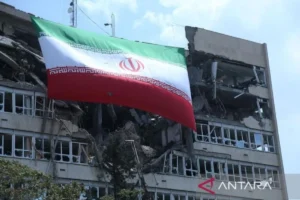
To fully comprehend the gravity of the IRGC’s latest directive, it is essential to examine the chronological progression of hostilities that precipitated the current crisis. The militarization of the Strait of Hormuz did not occur in a vacuum; rather, it is the direct consequence of open hostilities that erupted between Tehran and Washington on February 28, 2026.
Since the outbreak of the conflict, the armed forces of the Islamic Republic of Iran have systematically restricted commercial and military traffic through the narrow waterway, which historically handles roughly one-fifth of the world’s petroleum consumption. In retaliation for the closure of the strait and persistent security threats, the United States Navy, operating alongside regional allies, implemented a stringent counter-blockade targeting Iranian ports, effectively severing the nation’s maritime export capabilities and placing immense pressure on its domestic economy.
Throughout the spring and early summer, tensions steadily mounted as diplomatic channels faltered. While low-level talks had been initiated between Iranian officials and neighboring Oman—traditionally a key diplomatic intermediary—regarding the potential establishment of temporary, highly regulated humanitarian and commercial shipping corridors, these negotiations ultimately failed to yield a sustainable resolution. Instead of easing restrictions, Tehran has chosen to expand its maritime perimeter, signaling to the international community that its strategic posture remains uncompromising.
Strategic Details of the New Exclusion Zone
Elaborating on the scope of the decree during an interview broadcast on state television, IRGC spokesman Hossein Mohebi outlined the parameters of the expanded enforcement area. Mohebi confirmed that the exclusion zone covers substantial portions of the Gulf of Oman and stretches into the Arabian Sea along established maritime corridors feeding directly into the Strait of Hormuz.
While precise geographical coordinates are scheduled to be formally distributed to international maritime authorities at a later date, the enforcement mechanism is already operational. The IRGC has instituted a strict prior-permission protocol, mandating that all commercial vessels register and coordinate their voyages with Iranian authorities well in advance of entering the designated zones.
The consequences for non-compliance are severe. Mohebi explicitly stated that any vessel attempting to navigate the waters without prior coordination will face punitive sanctions imposed directly by Iranian naval forces.
"If a vessel attempts to enter that region without coordination, that vessel will be subject to our sanctions," Mohebi stated during the broadcast. "Meaning, for example, if that ship subsequently wishes to come and use the Strait of Hormuz, or wishes to receive services somewhere—such as insurance or other related services—we will not provide those services."
This policy effectively weaponizes maritime support services, insurance underwriting, and navigational authorization, creating an insurmountable bureaucratic and security barrier for shipping operators who rely on uninterrupted access to Gulf ports. Tehran has forcefully reiterated that the era of unhindered, autonomous navigation through the Strait of Hormuz—a principle upheld by international maritime law for decades—has been indefinitely suspended for the duration of the conflict.
Enforcement Actions and Covert Transit Attempts
The practical implications of the IRGC’s directives have translated into immediate kinetic actions at sea. On Tuesday, naval units operating under the command of the Revolutionary Guard reported that they had successfully engaged and attacked at least ten commercial vessels that attempted to transit the Strait of Hormuz without receiving prior clearance or coordinating their movements with Iranian authorities.
These enforcement actions underscore the high-stakes cat-and-mouse game currently playing out in the gulf waters. Earlier in the week, on Sunday, senior Iranian security official Mohsen Rezaei shed light on the clandestine efforts undertaken by the United States to bypass the blockade. According to Rezaei, U.S. naval assets have been actively engaged in nightly operations designed to escort and assist five to six commercial vessels at a time in breaching the restricted zone.
These covert transit attempts highlight the acute dilemma facing Western policymakers and shipping executives: while commercial pressures demand the movement of goods and energy supplies, attempting to run the Iranian blockade exposes vessels to direct military attack, seizure, and the catastrophic financial fallout of invalidated maritime insurance policies.
Tehran’s Conditions for De-escalation and Peace
Amid the unfolding maritime crisis, the Iranian leadership has outlined a comprehensive set of non-negotiable demands required to bring an end to the ongoing war with the United States and restore normalcy to regional waterways.
During his Wednesday press briefing, IRGC spokesman Mohebi articulated a multi-point ultimatum directed at Washington and its allies. According to Tehran, hostilities could cease under the fulfillment of the following core conditions:
- The complete cessation of what Iran terms "new threats" and military provocations by the United States against its sovereign territory.
- The immediate withdrawal of Israeli military forces from Lebanon, reflecting Tehran’s continued alignment with its regional "Axis of Resistance" partners.
- The formal termination of all foreign-backed blockades and military operations directed against Yemen.
- The unfreezing of approximately $24 billion in Iranian assets currently held in international accounts under U.S.-led financial sanctions.
- An absolute guarantee that Washington and its Western allies will refrain from any future interference in Iran’s domestic nuclear enrichment programs and ballistic missile development capabilities.
Iranian officials have repeatedly emphasized that these demands represent a cohesive package rather than open-ended negotiating points. Consequently, Tehran maintains that the Strait of Hormuz will remain sealed to uncoordinated traffic until the United States and the international community accede to these strategic prerequisites.
Broader Economic and Geopolitical Implications
The expansion of Iran’s maritime exclusion zones carries profound implications for the global economy, energy security, and international law. By pushing its operational perimeter out into the Arabian Sea, Tehran has effectively expanded the theater of naval conflict far beyond the immediate confines of the Persian Gulf, transforming vast expanses of international waters into high-risk operational zones.
Energy markets have reacted with heightened volatility to the ongoing closure of the Strait of Hormuz. Because the chokepoint is essential for the export of crude oil and liquefied natural gas (LNG) produced by major Gulf nations including Saudi Arabia, the United Arab Emirates, Iraq, Kuwait, and Qatar, any prolonged disruption threatens to trigger a severe global energy shock. While alternative overland pipelines—such as the East-West Pipeline in Saudi Arabia and the Habshan-Fujairah pipeline in the UAE—provide some mitigation capacity, they are mathematically insufficient to replace the massive volume of petroleum traditionally transported by supertankers through the strait.
Furthermore, the imposition of unilateral exclusion zones in international waters poses a direct challenge to the United Nations Convention on the Law of the Sea (UNCLOS), specifically regarding the fundamental right of innocent passage and freedom of navigation. Maritime legal experts note that while coastal states possess sovereign rights over their territorial waters, the unilateral restriction of transit passage across high seas and international straits without international consensus or formal authorization from the UN Security Council establishes a dangerous precedent for global trade security.
As the conflict grinds past its milestones, the international community faces a delicate balancing act. Navies from several European and Asian nations have considered deploying additional escort vessels to protect their respective merchant fleets, yet the risk of an inadvertent military escalation between major powers and the IRGC remains exceptionally high. Until diplomatic breakthroughs can bridge the vast chasm between Washington’s security demands and Tehran’s stringent prerequisites, the vital trade arteries of the Middle East will remain choked, casting a long and precarious shadow over the stability of the global economy.