Socio Today
The geopolitical landscape of the Middle East has entered a period of unprecedented volatility following the death of Iran’s Supreme Leader, Ayatollah Ali Khamenei. In a provocative development that has reverberated across global diplomatic circles, Hamshahri, a media outlet closely affiliated with the Tehran municipal government, published a graphic list naming 13 high-ranking Western and Israeli officials as targets for retaliation. This publication, which visualizes these leaders in orange prison jumpsuits with targeting reticles, marks a significant escalation in the rhetoric emanating from Iranian state-aligned institutions in the wake of the leadership transition to Ayatollah Mojtaba Khamenei.
The Context of the Escalation
The death of Ayatollah Ali Khamenei, who served as the Supreme Leader of Iran since 1989, has created a power vacuum and a national mourning period that has quickly transformed into a rallying cry for vengeance. The Iranian leadership transition to his son, Mojtaba Khamenei, occurred under the shadow of a joint military operation allegedly conducted by the United States and Israel. While the exact details of the operation remain classified, its impact on the regional security architecture is profound.
Following his ascension, Mojtaba Khamenei delivered a formal address, emphasizing that the "blood of the martyr" must be avenged. This rhetoric has emboldened state-aligned media entities to push boundaries, resulting in the dissemination of the "target list." The list includes high-profile figures from the United States, Israel, the United Kingdom, France, Germany, and Italy, alleging their complicity in the strike that led to the Supreme Leader’s death.
The Targeted Officials: A Global Roster
The individuals named in the Hamshahri infographic represent the upper echelons of Western and Israeli political and military leadership. The list includes:
- Donald Trump, President of the United States.
- Benjamin Netanyahu, Prime Minister of Israel.
- Israel Katz, Minister of Defense of Israel.
- Pete Hegseth, Secretary of Defense of the United States.
- Marco Rubio, Secretary of State of the United States.
- Emmanuel Macron, President of France.
- Keir Starmer, Prime Minister of the United Kingdom.
- Friedrich Merz, Chancellor of Germany.
- Giorgia Meloni, Prime Minister of Italy.
- Mike Huckabee, United States Ambassador to Israel.
- Brad Cooper, Commander of the United States Central Command (CENTCOM).
- Gideon Sa’ar, Minister of Foreign Affairs of Israel.
- Friedrich Merz (noted twice in the initial publication, reflecting potential clerical error or emphasis).
The inclusion of these figures suggests that Iran is framing the operation against Ali Khamenei not as a localized conflict, but as a coordinated multi-national campaign against the Islamic Republic.
Analysis of the "Target List" and State Policy
International observers and regional security analysts have been quick to dissect the implications of this publication. It is crucial to note that while Hamshahri maintains close ties to the Tehran municipal government, it does not function as the official mouthpiece for the Iranian Foreign Ministry or the Supreme Leader’s office.
Most analysts interpret the graphic as a form of "asymmetric psychological warfare." By identifying specific Western leaders, the media outlet is attempting to force a posture of deterrence, warning that the cost of future operations against Iranian leadership will involve direct consequences for the architects of those policies. However, the absence of an official state decree confirming these individuals as state-sanctioned targets suggests that the Iranian government is keeping its options open, using media channels to maintain a high level of tension without necessarily committing to an official policy of assassination or state-sponsored terrorism.
Chronology of Tensions
The current situation is the culmination of years of escalating friction in the Persian Gulf and the broader Middle East:
- Pre-2026: Long-standing sanctions and covert cyber-warfare operations between Iran and the U.S.-Israeli coalition.
- Early 2026: Increased naval presence in the Strait of Hormuz, leading to heightened tensions regarding shipping safety and oil transit.
- The Strike: A joint U.S.-Israel operation leads to the death of Ayatollah Ali Khamenei.
- Leadership Transition: Mojtaba Khamenei assumes the role of Supreme Leader, signaling a hardline approach to regional security.
- Media Escalation: Hamshahri releases the "13 Targets" infographic, shifting the focus from military defense to ideological and personal retribution.
Official Reactions and Global Security Implications
The reaction from the targeted nations has been one of heightened vigilance. While many governments are choosing not to dignify the list with an official response, security agencies in the U.S., Israel, and Europe have reportedly tightened protection details for the individuals mentioned.
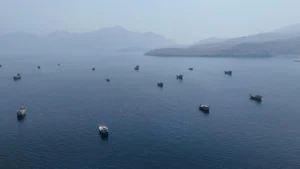
The security of the Strait of Hormuz, a critical chokepoint for global energy markets, remains a focal point of this instability. Reports indicate that India has restricted its citizens from working on vessels passing through the region, fearing that commercial ships could become collateral damage in an escalating conflict. Furthermore, the Iranian Parliament has openly suggested that the security of the region is inextricably linked to the status of these maritime corridors, effectively holding global energy supplies as a geopolitical bargaining chip.
Military and Diplomatic Consequences
The inclusion of high-ranking military officials like CENTCOM’s Brad Cooper and civilian leaders like Defense Secretary Pete Hegseth indicates that Iran is broadening the definition of its "enemies." Historically, Iranian retaliation has focused on regional proxies and military infrastructure. The shift toward naming political leaders suggests a move toward a "symmetrical" retaliation strategy—a high-stakes gamble that could trigger a full-scale regional war if any of these individuals were to be harmed.
From a diplomatic perspective, the publication has effectively neutralized, for the time being, any potential for backchannel negotiations. Western diplomats note that as long as state-affiliated media continues to threaten the lives of their leaders, the likelihood of a de-escalation framework being established is virtually zero.
The Role of Propaganda in Modern Conflict
The use of digital infographics to name and shame political enemies is a hallmark of modern hybrid warfare. By illustrating these leaders in prison attire, Hamshahri is targeting the domestic audience in Iran, aiming to portray the Supreme Leader’s death as a moment that necessitates a unified national response. It serves as a tool to consolidate support for the new administration under Mojtaba Khamenei, framing his legitimacy through the lens of a "revenge mandate."
However, this strategy carries significant risks. By externalizing the conflict and pinning the responsibility on a global "hit list," the Iranian leadership is isolating itself further from the international community. The potential for secondary sanctions and the hardening of the Western alliance against Iran are likely outcomes, further complicating the country’s economic recovery and diplomatic standing.
Conclusion
The release of the list of 13 targets is a clear indicator that the death of Ayatollah Ali Khamenei has fundamentally altered the rules of engagement in the Middle East. While the list itself may lack the legal weight of a state-sanctioned executive order, its function as a tool of political intimidation is undeniable. As the world watches the transition of power in Tehran, the international community remains concerned that the rhetoric of "revenge" may eventually transition into kinetic action.
The stability of the global energy market, the safety of international diplomatic figures, and the potential for a wider, more devastating regional war all hinge on how the Iranian leadership chooses to interpret its own propaganda. For now, the world remains in a state of watchful waiting, as the 13 named officials continue their duties under an unprecedented cloud of security concerns, and the region stands at a dangerous crossroads between brinkmanship and open conflict. The lack of an official Iranian denial or confirmation regarding the list leaves the door open for continued instability, ensuring that the legacy of the late Supreme Leader will be defined by this period of profound uncertainty for the foreseeable future.