Socio Today
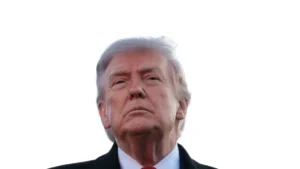
In a move that marks a significant shift in the trans-Pacific economic relationship, United States President Donald Trump announced on Monday, January 26, 2026, a sharp increase in tariffs on key South Korean goods. The administration will raise duties from 15 percent to 25 percent on South Korean automotive, timber, and pharmaceutical products, alongside a broader application of reciprocal tariffs. President Trump cited the failure of the South Korean National Assembly to ratify a bilateral trade agreement as the primary driver behind this abrupt policy escalation, characterizing the legislative delay as a breach of the commitments made between Washington and Seoul.
The announcement, delivered via social media, signals a return to the aggressive protectionist rhetoric that defined the administration’s earlier trade policies. By linking the tariff hike directly to the legislative process in Seoul, the White House has effectively turned the domestic political mechanics of a sovereign ally into a focal point of international trade friction.
Chronology of the 2025-2026 Trade Negotiations
The roots of the current impasse trace back to a series of high-level diplomatic engagements throughout 2025. On July 30, 2025, President Trump and South Korean President Lee Jae-myung announced a framework for a comprehensive trade deal, which was intended to rebalance the trade deficit between the two nations. This framework was further solidified during President Trump’s state visit to Seoul on October 29, 2025, where both leaders reaffirmed the core tenets of the agreement.
The agreement, as finalized in October 2025, established that the United States would maintain a blanket tariff rate of 15 percent on South Korean imports. This was widely viewed at the time as a compromise, as it represented a 10-percentage-point reduction from the punitive 25 percent tariffs that the Trump administration had previously threatened to impose. In exchange for this concession, the South Korean government pledged a massive capital infusion into the United States economy, specifically committing to an investment package valued at $350 billion aimed at bolstering domestic American manufacturing and infrastructure.
However, the ratification process in the South Korean National Assembly encountered significant domestic headwinds. Opposing political factions in Seoul raised concerns regarding the sustainability of the investment pledges and the long-term impact of the 15 percent tariff on South Korea’s export-oriented economy. The failure to secure legislative approval by late January 2026 prompted President Trump’s latest intervention.
Economic Stakes and Trade Volume
South Korea occupies a critical position in the United States’ global trade architecture. Over the past several years, the volume of goods exported from South Korea to the U.S. has consistently exceeded $100 billion annually. The sectors targeted by the latest tariff increase—automotive, timber, and pharmaceuticals—constitute the backbone of this trade flow.
The automotive sector, in particular, is likely to feel the most immediate impact. South Korean automakers have spent decades integrating themselves into the North American supply chain, establishing large-scale manufacturing facilities within the U.S. and relying on a complex network of component imports from their home country. A 25 percent tariff on these inputs risks disrupting production schedules and increasing the price of vehicles for American consumers.
Similarly, the pharmaceutical sector is a vital component of the bilateral trade relationship. With global supply chains still recovering from the volatility of the early 2020s, any disruption to the flow of medical supplies and active pharmaceutical ingredients (APIs) could have implications for the U.S. healthcare system. The timber industry, while smaller in scale compared to automotive manufacturing, faces a similar cost-push inflation risk, which could further exacerbate housing affordability challenges in the United States.
Official Responses and Diplomatic Maneuvering
The reaction from Seoul was one of measured caution. The office of President Lee Jae-myung stated on Monday that the administration had not received formal notification of the tariff changes through standard diplomatic channels prior to the President’s social media announcement. This lack of prior consultation underscores the unpredictable nature of the current diplomatic environment.
South Korea’s Minister of Trade is expected to lead a delegation to Washington in the coming days to seek clarity on the administration’s demands and to negotiate a potential reprieve. The South Korean government is under significant pressure to protect its domestic industries while maintaining the vital security and economic alliance with the United States.
In Washington, the reaction has been bifurcated. Supporters of the administration’s "America First" trade policy argue that the tariff increase is a necessary tool to force compliance from allies who have been slow to honor their commitments. Conversely, industry advocacy groups representing retailers and manufacturers have expressed concern that the sudden shift will introduce unnecessary volatility into the market, potentially stalling business investment and complicating long-term planning for companies that rely on South Korean imports.
Analysis: Broader Implications and Market Impact
The decision to escalate tariffs on a key ally represents a departure from traditional multilateral trade norms, favoring a bilateral, transactional approach to international relations. The primary implication of this move is the elevation of trade policy as a tool of geopolitical leverage. By tying the tariff rate to legislative ratification, the U.S. is signaling that it will not accept domestic political delays as an excuse for the non-implementation of international agreements.
Economists warn that such moves could have a "chilling effect" on global trade. If the 25 percent tariff remains in place, South Korean firms may be forced to pass the increased costs onto consumers or, in more extreme scenarios, shift their production facilities to other regions to circumvent the duties. Furthermore, the $350 billion investment pledge, which was the cornerstone of the October 2025 deal, is now in jeopardy. If the trade environment becomes too hostile, South Korean investors may choose to withhold or redirect that capital, depriving the U.S. of significant foreign direct investment (FDI).
There is also the potential for retaliatory measures. While South Korea has historically preferred diplomatic channels to resolve trade disputes, the scale of this tariff hike may leave the government in Seoul with little choice but to seek recourse through the World Trade Organization (WTO) or implement counter-tariffs on U.S. agricultural or high-tech exports. Such a tit-for-tat cycle would threaten to undo the progress made in stabilizing the bilateral relationship over the last 18 months.
Future Outlook
As the trade delegation from Seoul prepares to depart for Washington, the focus will shift to whether the Trump administration is willing to provide a grace period for the South Korean legislature to complete its ratification process, or if the 25 percent tariff is intended as a permanent baseline.
The standoff serves as a reminder of the fragility of contemporary international economic agreements. As both nations navigate these tensions, the outcome of the upcoming meetings in Washington will likely dictate the tone of U.S.-South Korean relations for the remainder of 2026. For investors and businesses, the immediate future holds significant uncertainty, with the risk of supply chain disruptions and inflationary pressures remaining high until a formal resolution is reached.
The international community will be closely watching this development, as it sets a precedent for how the United States handles trade agreements with other key partners in the Pacific region. Whether through a last-minute diplomatic breakthrough or a protracted trade dispute, the situation underscores the profound impact that domestic legislative timelines can have on the stability of the global economic order. For now, both the automotive and pharmaceutical industries remain in a state of high alert, awaiting further instructions from the trade representatives in Washington and Seoul.