Trump Signals Imminent Diplomatic Breakthrough in Islamabad as US and Iran Prepare for High-Stakes Negotiations

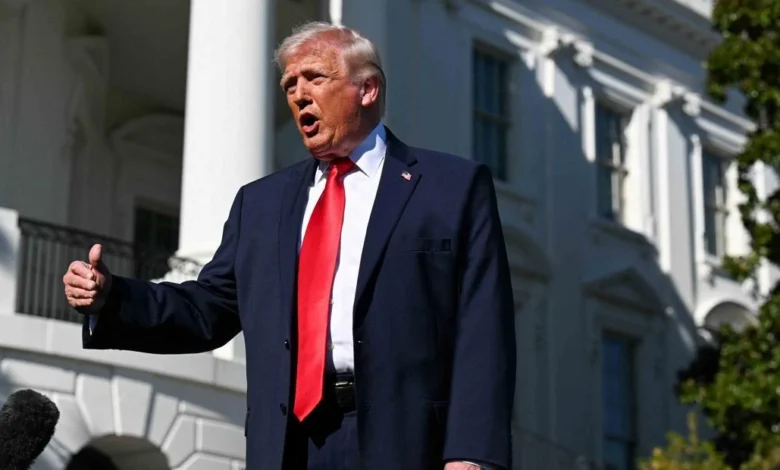
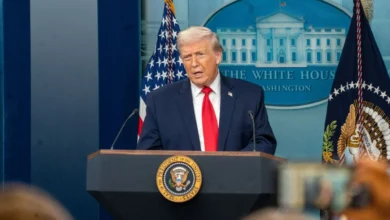
In a significant shift in global diplomacy, President Donald Trump has indicated that the United States and Iran may be on the precipice of a major breakthrough, with Islamabad, Pakistan, emerging as the primary stage for a potential resolution to decades of hostility. Speaking to reporters on Wednesday, April 15, 2026, the President suggested that a decisive turn in negotiations could occur within the next forty-eight hours, signaling a preference for the Pakistani capital over traditional European diplomatic hubs like Geneva. The President’s remarks underscore a transformative moment in Middle Eastern and South Asian geopolitics, as the administration leans heavily on regional partners to facilitate a "new deal" regarding Iran’s nuclear capabilities and regional influence.
The prospect of a renewed dialogue comes at a critical juncture for the Trump administration, which has sought to redefine American foreign policy through direct, high-stakes engagement. During an exchange with a New York Post reporter currently stationed in Islamabad, Trump expressed optimism about the trajectory of the talks, attributing much of the recent progress to the mediation efforts of Pakistan’s military leadership. The President specifically lauded Field Marshal General Asim Munir, describing his role in the process as "fantastic" and "outstanding." This public endorsement of the Pakistani military establishment highlights the strategic importance the U.S. now places on Islamabad as a bridge between Washington and Tehran—a role historically played by European nations or Oman.
The Role of Pakistan and the Islamabad Framework
The selection of Islamabad as the venue for these high-stakes discussions is not merely logistical but deeply symbolic. By moving the dialogue to Pakistan, the administration appears to be pivoting away from the multilateral frameworks that characterized the 2015 Joint Comprehensive Plan of Action (JCPOA). President Trump was vocal in his dismissal of Geneva as a potential site, questioning the relevance of involving nations he perceives as having little stake in the direct security concerns of the parties involved. "Why should we go to a country that has nothing to do with this?" the President remarked, emphasizing his preference for a more localized and direct approach to mediation.
Pakistan’s unique position as a neighbor to Iran and a long-standing, albeit complex, strategic partner to the United States makes it a logical intermediary. General Asim Munir’s involvement suggests that the security dimensions of the deal are being prioritized. For Pakistan, facilitating a peace deal between the U.S. and Iran offers a path toward regional stability and an opportunity to bolster its own standing on the global stage. Observers note that the "Islamabad Framework" likely focuses on bilateral security guarantees and economic incentives rather than the broad, multilateral regulatory oversight seen in previous iterations of nuclear diplomacy.
The Nuclear Stumbling Block: Uranium Enrichment and the 20-Year Limit
Despite the optimistic tone regarding the venue and the mediators, significant policy hurdles remain. At the heart of the current friction is the duration and scope of Iran’s uranium enrichment program. Reports emerged via CNN suggesting that U.S. negotiators had proposed a 20-year moratorium on high-level enrichment as a cornerstone of the new agreement. However, President Trump has publicly expressed his dissatisfaction with this timeframe, signaling a demand for more permanent restrictions.
"I have said that they must not have nuclear weapons," Trump told the New York Post. "So, I don’t like that 20-year [timeframe]." This stance reflects the President’s long-held "Maximum Pressure" philosophy, which posits that any deal must permanently and verifiably prevent Iran from achieving nuclear breakout capacity. The President’s rejection of the 20-year clause suggests that the U.S. may be pushing for "sunset clauses" that are either significantly longer or non-existent, effectively demanding a permanent cessation of sensitive nuclear activities in exchange for the lifting of economic sanctions.
For the Iranian delegation, the 20-year proposal was already viewed as a significant concession. Tehran has consistently maintained that its nuclear program is for peaceful energy and medical purposes, asserting its right to enrichment under the Nuclear Non-Proliferation Treaty (NPT). The tension between Trump’s demand for a permanent ban and Tehran’s insistence on sovereign rights remains the primary obstacle to a signed accord.
Chronology of Recent Diplomatic Efforts
The current momentum toward an Islamabad summit follows a series of secretive and public maneuvers over the preceding months. To understand the gravity of the upcoming 48 hours, it is essential to look at the timeline that brought the two nations to this point:
- Late 2025: Initial back-channel communications were established through the Pakistani Ministry of Foreign Affairs, focusing on maritime security in the Strait of Hormuz and the easing of specific energy sanctions.
- January 2026: Following a period of heightened rhetoric, President Trump signaled a willingness to meet "without preconditions," provided the venue was "neutral and respected."
- March 2026: A series of technical-level meetings took place in Doha and Muscat, where the outlines of a "Sanctions-for-Security" swap were drafted.
- April 11-12, 2026: Vice President JD Vance led a high-level American delegation to Islamabad. These talks were described as "intense and exhaustive." While the Vice President departed without a finalized deal, officials characterized the sessions as foundational for a presidential-level intervention.
- April 14, 2026: Reports surfaced of a direct telephone exchange between intermediate officials, brokered by General Asim Munir, which cleared the way for the President’s latest comments.
The failure of the weekend talks led by Vice President Vance to produce a signed document was initially seen by some analysts as a setback. However, the President’s recent comments suggest that the Vance mission was intended to "clear the brush" for a final, top-level negotiation that could see Trump himself or a designated "marsekal" of his own making a surprise appearance in the region.
Regional Reactions and Geopolitical Implications
The prospect of a US-Iran rapprochement mediated by Pakistan has sent ripples through the international community. In the Middle East, traditional allies of the United States are watching the developments with a mixture of hope and trepidation.
Israel, a staunch critic of any deal that allows Iran to maintain nuclear infrastructure, has remained cautious. Sources within the Israeli government indicate that Prime Minister-level briefings have been frequent, with the U.S. providing assurances that any deal will include "ironclad" protections for regional allies. Conversely, Saudi Arabia and the United Arab Emirates have signaled a pragmatic openness to the talks, viewing a potential de-escalation as a boon for regional trade and the stability of global oil markets.
In Europe, the reaction has been more muted. Officials in Brussels and Paris, who spent years championing the JCPOA and the Geneva process, find themselves sidelined by the Islamabad initiative. There is concern among European diplomats that a bilateral "Trump Deal" might lack the rigorous international monitoring mechanisms of previous treaties, potentially leading to a less stable long-term outcome.
Economic and Strategic Data Points
The stakes for a successful negotiation are underscored by the current economic landscape. Iran’s economy, though resilient, continues to struggle under the weight of comprehensive U.S. sanctions. Data from the International Monetary Fund (IMF) and regional economic monitors suggest that a lifting of oil export restrictions could see Iran’s GDP grow by as much as 7% within the first year of an agreement.
For the United States, a deal would secure a major foreign policy victory and potentially lower global energy costs. The "Pakistan factor" also provides the U.S. with a strategic foothold in a region where Chinese influence has been steadily growing. By empowering Islamabad as a mediator, Washington is simultaneously reinforcing its alliance with a nuclear-armed South Asian power and checking the expansion of the "Belt and Road Initiative" in the Iranian energy sector.
Analysis: The "Marsekal" Strategy
The President’s praise for General Asim Munir as a "marsekal lapangan" (field marshal) who has done a "fantastic job" is a calculated piece of rhetoric. It signals that the Trump administration views the military-to-military channel as the most effective route for diplomacy in the region. This "Marsekal Strategy" bypasses traditional civilian diplomatic hurdles and focuses on the power players who can guarantee security on the ground.
However, the strategy is not without risks. Relying on a military intermediary in a third-party country means the U.S. is deeply invested in the internal stability of Pakistan. Furthermore, the President’s personal involvement and his rejection of the 20-year enrichment cap indicate that he is looking for a "legacy deal"—one that is more transformative than the JCPOA but also more difficult to negotiate.
As the 48-hour window mentioned by the President approaches, the world’s attention is fixed on Islamabad. Whether this leads to a historic handshake or becomes another chapter in the long history of failed negotiations depends on the ability of the two sides to bridge the gap between "temporary limits" and "permanent security."
Conclusion: A Pivot Point for Global Stability
The potential for a summit in Islamabad represents a bold departure from the diplomatic norms of the last decade. By leveraging the influence of General Asim Munir and the strategic geography of Pakistan, the Trump administration is attempting to force a conclusion to the Iranian nuclear question on its own terms.
While the President’s dislike for the 20-year enrichment pause presents a formidable obstacle, his public optimism suggests that a compromise may be in the works—one that could involve unprecedented inspection regimes or regional security pacts that go beyond the scope of previous agreements. As the world waits for the "something" that might happen in the next two days, the only certainty is that the geopolitical map of the Middle East and South Asia is being redrawn in real-time, with Islamabad at its center. The coming hours will determine if this is the beginning of a new era of regional cooperation or a return to the cycle of "maximum pressure" and defiance.