The Legacy of Fatimah Al-Banjari Uncovering the Hidden Female Scholar of Tanah Banjar and the Authorship of Parukunan Jamaluddin

The historical landscape of Tanah Banjar in South Kalimantan has long been recognized as a fertile ground for Islamic intellectualism, producing a lineage of world-renowned ulama who shaped the religious discourse of the Malay Archipelago. However, a closer examination of this rich heritage reveals a significant gender disparity in historical documentation; while the names of male scholars are etched firmly in the annals of history, the contributions of female scholars have often been obscured by the prevailing patriarchal structures of the 18th and 19th centuries. Among these neglected figures is Fatimah Al-Banjari, a brilliant polymath and educator whose intellectual output served as a cornerstone for grassroots Islamic education in the region, yet whose primary work was for centuries attributed to a male relative.
Born in 1775 in Martapura, the royal seat of the Banjar Sultanate, Fatimah Al-Banjari was destined for a life of profound scholarship. She was the daughter of Syekh Abdul Wahab Bugis and Syarifah, the daughter of the legendary Syekh Muhammad Arsyad Al-Banjari, author of the monumental Sabil al-Muhtadin. This lineage placed her at the very epicenter of Southeast Asian Islamic thought. Her upbringing was characterized by an immersive intellectual environment where the nuances of Arabic grammar, Islamic jurisprudence (Fiqh), and theology (Usuluddin) were the standard subjects of daily discourse.
A Chronology of Intellectual Development and the Dalam Pagar Tradition
The trajectory of Fatimah’s education was shaped by both tragedy and exceptional mentorship. Her father, Syekh Abdul Wahab Bugis, was a respected scholar in his own right, but his passing in 1786 left the eleven-year-old Fatimah under the direct guardianship of her grandfather, Syekh Muhammad Arsyad Al-Banjari. Known affectionately as Datu Kelampayan, Arsyad Al-Banjari was the most influential scholar in the history of the Banjar Sultanate, having spent 30 years studying in the holy cities of Mecca and Medina.

Recognizing Fatimah’s precocious intellect, Datu Kelampayan personally oversaw her education. Under his tutelage, she mastered the complexities of the Arabic language and delved deep into Tafsir (exegesis) and Hadith. By her early twenties, Fatimah had achieved a level of scholarship that rivaled the most learned men of her time. This period marked the establishment of "Dalam Pagar," a village founded by Arsyad Al-Banjari as an autonomous center for Islamic learning. Within this intellectual enclave, Fatimah and her mother were entrusted with the vital task of educating the female population, while her brother, Muhammad As’ad, focused on the male students.
The siblings became known as the "Bunga Ilmu" or the "Flowers of Knowledge" of Tanah Banjar. This designation was not merely honorary; it reflected a systematic division of labor in the dissemination of Sharia law. While the male scholars focused on state-level jurisprudence and the training of future Qadis (judges), Fatimah’s role was arguably more influential at the social level, as she translated complex theological concepts into practical, everyday guidance for women and families.
The Mystery of the Parukunan Jamaluddin Authorship
The most enduring contribution of Fatimah Al-Banjari is a concise yet comprehensive manual of Islamic practice known as the Parukunan. Written in the Banjar-Malay language using the Jawi script (Arabic-Malay characters), this text was designed to be accessible to the common people who lacked the specialized training required to read the massive, multi-volume Sabil al-Muhtadin.
For generations, this text has been circulated under the title Parukunan Jamaluddin, attributed to Fatimah’s uncle, Mufti Jamaluddin bin Syekh Muhammad Arsyad Al-Banjari. Mufti Jamaluddin was a high-ranking religious official in the Banjar Sultanate, and his name provided the book with an immediate stamp of official authority. However, modern historical inquiries and genealogical records have begun to challenge this attribution, pointing instead to Fatimah as the true author.

The primary evidence for Fatimah’s authorship comes from the Syajarat al-Arsyadiyyah, a genealogical and biographical record written by Syekh Abd al-Rahman Shiddiq (1857–1939). As the cicit (great-grandson) of Arsyad Al-Banjari and a Mufti of the Indragiri Kingdom in Riau, Abd al-Rahman Shiddiq is considered a source of impeccable integrity. In his writings, he explicitly identifies the Parukunan Melayu as the work of Fatimah.
Saifuddin, a researcher and lecturer at UIN Antasari who authored Ulama Perempuan, Ideologi Patriarki, dan Penulisan Kitab Kuning, argues that the attribution to Mufti Jamaluddin was likely a strategic decision necessitated by the social realities of the 18th century. In a deeply patriarchal society, a religious guidebook authored by a woman might have struggled to gain widespread acceptance or official endorsement from the Sultanate. By attaching the name of the Mufti—the highest religious authority in the land—the work was guaranteed a place in every household and school across the region.
Theological Significance and Gendered Perspectives in Fiqh
What distinguishes the Parukunan from other contemporary texts is its nuanced approach to Islamic jurisprudence, particularly regarding the biological experiences of women. The book covers the essential pillars of faith (Rukun Iman) and Islam (Rukun Islam), as well as practical instructions on ritual purity (Thaharah), prayer (Salat), fasting (Sawm), and funeral rites.
Scholars such as Rasyida Rifa’ati Husna have noted that the Parukunan employs a linguistic sensitivity that was ahead of its time. When discussing the post-menstrual or post-natal ritual bath, the text consistently uses the term "mandi wajib" (obligatory bath) rather than broader terms for "cleansing" or "purification" that might carry a subtext of inherent impurity. This choice of diction suggests a theological worldview where menstruation and childbirth are treated as natural biological conditions rather than states of spiritual "uncleanliness."

This female-centric perspective in Fiqh is a hallmark of Fatimah’s scholarship. While her grandfather’s Sabil al-Muhtadin provided the legal framework, Fatimah’s Parukunan provided the human application, ensuring that women could navigate their religious obligations with dignity and clarity.
Supporting Data and the Erasure of Female Intellectual Lineages
The difficulty in tracing Fatimah’s legacy is compounded by the lack of documentation regarding her descendants. Ustaz Adi Hatim, the head of Ma’had Aly at the Darussalam Islamic College (STAI) and a seventh-generation descendant of Mufti Jamaluddin, notes that while the male lineages of the Arsyad Al-Banjari family are meticulously recorded, the female branches often fade from the record after three generations.
"The descendants of her brother, Muhammad As’ad, are well-known and widespread," Ustaz Adi Hatim explained. "But Fatimah’s lineage is much harder to track. Some records suggest her descendants moved to West Kalimantan or even Sarawak, Malaysia, but the trail often goes cold."
This phenomenon of "genealogical erasure" is a common byproduct of patriarchal record-keeping, where the preservation of a family’s prestige is tied to the male line. Despite this, the oral tradition within the zuriat (descendants) of Datu Kelampayan has persisted, maintaining the quiet acknowledgment that the Parukunan was indeed the product of Fatimah’s pen.

Broader Implications and Call for Curricular Reform
The story of Fatimah Al-Banjari is more than a historical curiosity; it is a case study in how gender bias can distort the intellectual history of a civilization. Mursalin, a historian from UIN Antasari, emphasizes that understanding Fatimah requires a "critical social history approach" that looks beyond the literal text to the power dynamics of the era.
"Fatimah Al-Banjari was a phenomenon that surpassed her time," Mursalin stated. "In an era where female literacy was limited and public intellectual roles for women were rare, she was teaching, writing, and synthesizing complex law. This is a spirit of emancipation that predates the modern discourse on the subject."
Mursalin and other scholars are now advocating for the inclusion of Fatimah Al-Banjari’s story in the regional educational curriculum of South Kalimantan. They argue that by recognizing her authorship and scholarship, the education system can provide a more balanced view of Banjar history, demonstrating that the "Golden Age" of Islamic scholarship in Kalimantan was a collaborative effort between both men and women.
Conclusion: The Forgotten Pearl of the Equator
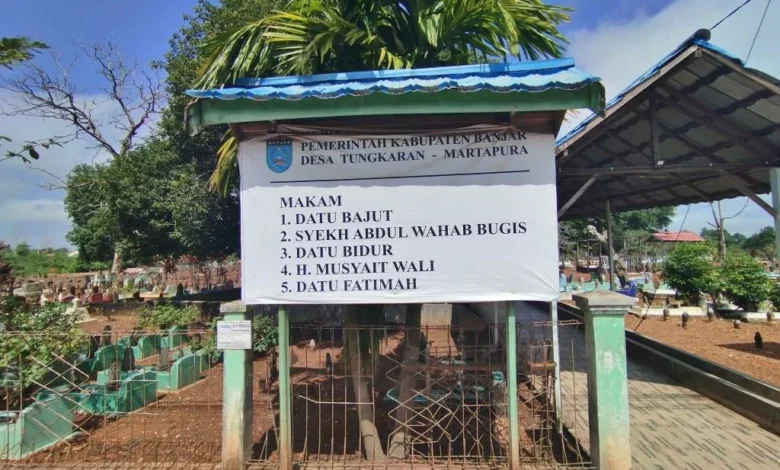
Today, the tomb of Fatimah Al-Banjari sits in the quiet Kampung Tungkaran in Martapura, housed in a modest square building alongside four other pious figures. While it does not draw the massive crowds of pilgrims seen at the grand mausoleum of her grandfather in Kelampayan, it remains a site of quiet contemplation for those who know her story.

The legacy of Fatimah Al-Banjari serves as a vital reminder that the history of religion and knowledge is often broader and more inclusive than the official records suggest. Whether her choice to use her uncle’s name was an act of humility, a strategic necessity, or a reflection of the "adab" (etiquette) of the time, the impact of her work remains undeniable. The Parukunan Jamaluddin—or more accurately, the Parukunan Fatimah—continues to be printed and studied across Indonesia and Malaysia, serving as a silent testament to the "Mutiara Khatulistiwa" (Pearl of the Equator) whose intellectual light refused to be extinguished by the shadows of patriarchy. As modern scholarship continues to peel back the layers of history, Fatimah Al-Banjari stands reclaimed as a pioneer of female education and a vital architect of the Nusantara’s Islamic identity.