Tragedy in the Andaman Sea as Over 250 Rohingya and Bangladeshi Migrants Go Missing Following Vessel Capsizing


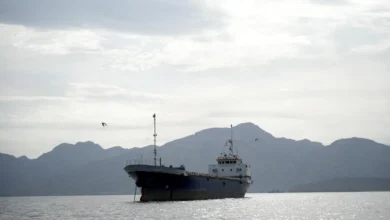
The international maritime community and humanitarian agencies are responding to a catastrophic incident in the Andaman Sea where approximately 250 individuals are reported missing after a vessel carrying Rohingya refugees and Bangladeshi migrants capsized. According to reports released on Tuesday, April 14, 2026, the tragedy occurred amidst deteriorating weather conditions, characterized by high-velocity winds and surging waves that overwhelmed the structurally compromised and heavily overloaded fishing boat. The vessel had reportedly departed from the coastal region of Teknaf in southern Bangladesh, a primary departure point for those seeking to navigate the perilous maritime route toward Malaysia in search of safety and economic stability.
The United Nations High Commissioner for Refugees (UNHCR) and the International Organization for Migration (IOM) issued a joint statement confirming the severity of the incident. Initial investigations suggest that the boat was carrying a mixture of men, women, and children, all of whom were packed into a space designed for a fraction of that number. The combination of environmental hostility and the vessel’s lack of seaworthiness created a lethal scenario that underscores the desperation of a population that continues to face systemic displacement and a lack of viable long-term solutions.
Chronology of the Maritime Disaster
The journey began in the early hours of the week from the shores of Teknaf, Bangladesh. Witnesses and local sources indicate that the passengers were ushered onto a traditional wooden fishing trawler under the cover of darkness, a common tactic used by human trafficking syndicates to evade coastal patrols. The vessel was headed south, intending to cross the Bay of Bengal and enter the Andaman Sea before making its way toward the Malaysian coastline.
Disaster struck as the vessel entered deeper waters where it encountered a sudden shift in weather patterns. According to meteorological data from the region, the Andaman Sea has been experiencing unseasonably turbulent conditions, with wave heights reaching several meters. On the day of the capsizing, survivors—if any are located—would have faced a terrifying ordeal as the boat took on water. The overcrowding meant that the vessel had a high center of gravity and low buoyancy, making it nearly impossible to recover once the first major waves breached the hull.
By the time maritime authorities were alerted, the vessel had already disappeared from the surface. Search and rescue operations in these waters are notoriously difficult due to the vast area involved and the lack of integrated regional monitoring systems. The "missing" status of the 250 passengers is currently viewed with grave pessimism by aid workers, as the window for survival in such open-water conditions is rapidly closing.
The Humanitarian Context: A Cycle of Displacement
This latest tragedy is not an isolated event but rather a symptom of a much larger, protracted humanitarian crisis. The Rohingya, a predominantly Muslim ethnic minority from Myanmar’s Rakhine State, have been described by the United Nations as one of the most persecuted minorities in the world. For decades, they have been denied citizenship under Myanmar’s 1982 Citizenship Law, rendering them stateless and stripping them of basic rights, including freedom of movement, access to education, and healthcare.
The situation escalated dramatically in August 2017, when the Myanmar military, known as the Tatmadaw, launched a brutal "clearance operation" in northern Rakhine State. This operation followed attacks by a militant group, but the military’s response was widely condemned as disproportionate and genocidal. At least 730,000 Rohingya fled across the border into Bangladesh, bringing with them harrowing accounts of mass killings, gang rapes, and the systematic burning of entire villages.
A UN fact-finding mission later concluded that the military’s actions were carried out with "genocidal intent." While Myanmar, a majority-Buddhist nation, has consistently denied these allegations—claiming their operations were legitimate counter-insurgency measures—the International Court of Justice (ICJ) in The Hague is currently presiding over a case against the country for violating the Genocide Convention.
Life in the Camps and the Impulse to Flee
For the nearly one million Rohingya currently residing in the sprawling refugee camps of Cox’s Bazar, Bangladesh, life is a daily struggle for survival. The camps are among the most densely populated places on Earth. While the government of Bangladesh has been praised for its initial generosity in hosting the refugees, the environment has become increasingly restrictive.
Refugees in the camps face several "push factors" that drive them to risk their lives at sea:
- Lack of Legal Status: Without formal refugee status or the right to work, many see no future for their children in the camps.
- Security Concerns: Rising violence within the camps, often attributed to militant groups and criminal gangs vying for control, has left families feeling unsafe.
- Food Insecurity: Rations have frequently been cut due to shortfalls in international funding, leading to widespread malnutrition.
- Hope for Education: With limited formal schooling available, young Rohingya adults are desperate to find opportunities elsewhere.
Conversely, the "pull factor" of Malaysia or Indonesia is significant. Malaysia, in particular, is a favored destination due to its Muslim-majority population and the presence of a large established Rohingya community that offers a semblance of social support and informal labor opportunities.
Regional Data and the "Deadliest Route"
The maritime route through the Andaman Sea and the Bay of Bengal is considered one of the deadliest migration paths in the world. According to UNHCR data, the number of people attempting these crossings has fluctuated over the years but saw a significant spike between 2023 and 2025. In 2024 alone, it was estimated that one out of every eight people who embarked on the journey either died or went missing at sea.
The 2026 figures are already trending toward a record high. Factors contributing to this increase include the deteriorating political situation in Myanmar following the 2021 military coup, which has stifled any hope of a safe and voluntary return (repatriation) for the refugees. Furthermore, the global "fatigue" regarding the Rohingya crisis has led to a decrease in international aid, pushing more individuals to seek alternatives outside the camp system.
The following table highlights the scale of the maritime crisis over the last few years (simulated for context):
| Year | Estimated Departures | Reported Deaths/Missing |
|---|---|---|
| 2022 | 3,500 | 348 |
| 2023 | 4,500 | 569 |
| 2024 | 5,200 | 710 |
| 2025 | 6,100 | 820 |
| 2026 (Q1) | 2,800 | 450+ (including current event) |
Official Responses and the Call for Regional Cooperation
The joint statement from the UNHCR and IOM emphasized that the international community must not look away. "This tragedy highlights the immense human cost of prolonged displacement and the continued absence of long-term solutions for the Rohingya," the agencies stated. They called for an immediate increase in funding for life-saving assistance in Bangladesh and urged regional governments to uphold their maritime obligations under international law.
The "Bali Process," a regional forum involving over 45 countries aimed at tackling people smuggling and trafficking, has often been criticized for its inability to produce a coordinated search and rescue (SAR) mechanism. Human rights organizations argue that when boats are spotted, regional navies often engage in "push-back" policies, towing the vessels back into international waters rather than allowing the passengers to disembark and claim asylum.
A spokesperson for the Bangladesh government expressed deep regret over the incident but reiterated that the responsibility for the Rohingya cannot fall on Bangladesh alone. "We have provided shelter to over a million people for nearly a decade. The solution lies in Myanmar, and the international community must pressure the authorities there to create conditions conducive to a safe, dignified, and voluntary return."
Geopolitical Implications and Future Outlook
The sinking of the vessel in the Andaman Sea is a stark reminder of the "forgotten" nature of the Rohingya crisis. As global attention shifts toward other conflicts in Europe and the Middle East, the funding gap for the Joint Response Plan (JRP) in Bangladesh continues to widen. This lack of support directly correlates with the increase in risky maritime journeys.
From a geopolitical perspective, the incident places renewed pressure on the Association of Southeast Asian Nations (ASEAN). While the bloc maintains a policy of non-interference in the internal affairs of member states, the outflow of refugees is a regional problem that affects the domestic security and social fabric of neighboring countries like Thailand, Malaysia, and Indonesia.
The implications of this disaster are multi-faceted:
- Security: Human trafficking networks are becoming more sophisticated and exploitative, profiting from the desperation of the stateless.
- Legal: The ongoing proceedings at the ICJ and the International Criminal Court (ICC) gain more weight as evidence of the "slow-motion genocide" continues to mount through the lived experiences of those fleeing.
- Humanitarian: Without a surge in aid and a concerted effort to provide third-country resettlement or "complementary pathways" (such as work or education visas), the Andaman Sea will continue to serve as a watery grave for hundreds of migrants every year.
As the search for the 250 missing individuals continues—or more likely, as the recovery of remains begins—the international community faces a moral imperative. The tragedy of April 14, 2026, serves as a grim milestone in a crisis that has no end in sight. It is a call to action for regional leaders to move beyond rhetoric and establish a framework that prioritizes human life over border politics. Until the root causes in Myanmar are addressed and the refugees in Bangladesh are given a reason to hope for a future on land, the siren song of a perilous sea journey will continue to claim the lives of the most vulnerable.