Digital Forensics Expert Rismon Sianipar Denies Involvement in AI Video Controversy, Jusuf Kalla Files Police Report

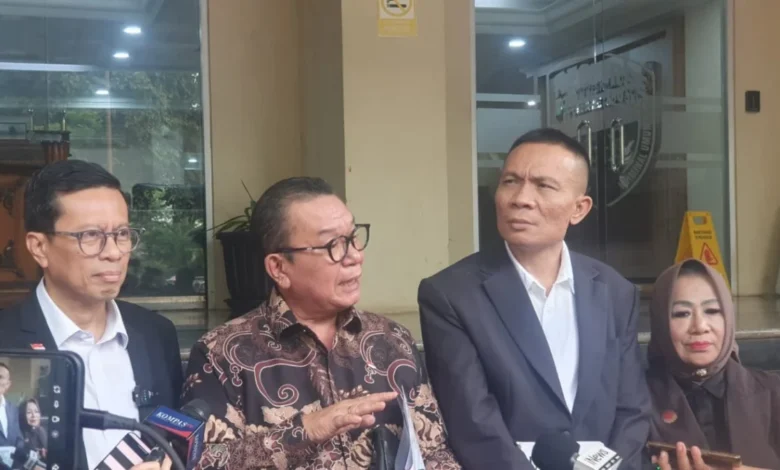
The ongoing controversy surrounding an alleged artificial intelligence (AI)-generated video, which purportedly features prominent figures including the 10th and 12th Vice President of Indonesia, Jusuf Kalla, continues to escalate, drawing in digital forensics expert Rismon Hasiholan Sianipar. The video, widely circulated across various platforms, has become the subject of a police report filed by Kalla, raising critical questions about digital authenticity, reputation, and the burgeoning challenge of deepfake technology in public discourse. Rismon, a figure whose expertise typically lies in verifying digital content, finds himself at the heart of this polemic, staunchly denying any involvement in the video’s creation or its contentious content.
The Genesis of the Controversy: An AI-Generated Accusation
The saga began with the emergence of a video that quickly gained traction online. While its exact origin and initial dissemination pathway remain under investigation, its content allegedly makes statements attributed to Rismon Sianipar, discussing sensitive political issues. Crucially, these purported statements involve Jusuf Kalla and, reportedly, touch upon a contentious academic document related to President Joko Widodo (Jokowi), specifically concerning the authenticity of his university diploma. Such an accusation, if genuinely made by a reputable digital forensics expert, would carry significant weight, capable of stirring considerable public and political unrest, particularly given Indonesia’s often-charged political climate.
Jusuf Kalla, an elder statesman with a long and distinguished career in Indonesian politics, including two terms as Vice President under different administrations (Megawati Sukarnoputri and Joko Widodo), is a figure whose name carries immense gravitas. Any attempt to associate him with allegations of impropriety or to involve him in politically charged disinformation campaigns is bound to attract widespread attention and immediate rebuttal. His decision to file a formal complaint with the police underscores the seriousness with which he views the matter and his commitment to protecting his reputation against what he perceives as a malicious attack.
Rismon Sianipar’s Vehement Denial and Legal Stance
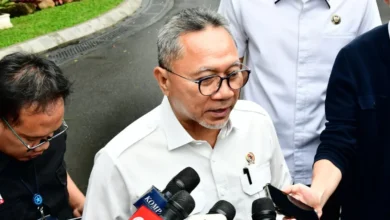
Rismon Hasiholan Sianipar, a respected name in digital forensics, has vociferously denied any connection to the controversial video. When questioned about the report filed against him by Jusuf Kalla, Rismon articulated a firm position, emphasizing the foundational principles of his profession. "Because I have ensured that originality is the primary factor in digital forensics, I am not responsible for clarifying the content (of the video)," Rismon stated, as quoted on Thursday, April 16, 2026 (assuming the quoted date is a future projection or a typo and the event is recent). This statement, while seemingly paradoxical given his profession, underscores his argument that the video itself, if manipulated, falls outside the scope of his legitimate work, which focuses on verifying authentic digital artifacts.
He further clarified his non-involvement, stating unequivocally, "What is clear is that I am not connected in any way; I did not make, produce, let alone say what is inside it. Therefore, the person who produced it should be immediately apprehended." This strong denial not only distances him from the video’s content but also positions him as a potential victim of the same digital manipulation he is an expert in analyzing. Rismon also denied ever communicating with Jusuf Kalla, particularly on such sensitive subjects as the alleged Jokowi diploma controversy. "Who am I to communicate with Pak JK? Pak JK is a father of the nation; I am just a common person. In all my discussions, I have never mentioned a single political elite, an elite of this nation," he asserted, highlighting the perceived social and political distance between himself and such high-ranking figures.
The Legal Defense: Rismon as a Victim
Rismon’s legal counsel, Jahmada Girsang, echoed and reinforced his client’s position, arguing that Rismon himself is a victim of the alleged AI manipulation. Girsang highlighted the damage to Rismon’s professional standing and public image. "Because my client’s name has been mentioned, perhaps millions of times in the media, stating that he said that. Honestly, there is nothing of the sort. So, currently, my client is in a disadvantaged position," Jahmada explained. This perspective shifts the narrative from Rismon being a perpetrator to being an unwitting tool or target in a sophisticated disinformation campaign.
If the video is indeed an AI-generated deepfake, then both Rismon and other parties mentioned within it, including Jusuf Kalla, could be considered victims of digital impersonation and defamation. This scenario presents a complex legal challenge, as identifying the true perpetrators of such advanced digital manipulation often requires significant forensic resources and international cooperation, given the often anonymous and cross-border nature of internet activity.
Jusuf Kalla’s Decisive Action: Reporting to Bareskrim Polri
The seriousness of the allegations prompted swift action from Jusuf Kalla. On Wednesday, [Date of filing, assuming recent], he personally visited the National Police Criminal Investigation Agency (Bareskrim Polri) in Jakarta to file a report concerning alleged defamation and the dissemination of hoax news. Arriving at approximately 11:00 AM WIB, Kalla, dressed in a light blue shirt, was accompanied by his legal counsel, Abdul Haji Talaohu. When approached by the media, he succinctly stated his purpose: "I want to report."
This direct approach by a former Vice President underscores the gravity of the situation and the potential implications of such deepfake videos. Kalla’s legal team is expected to pursue the case vigorously, seeking to unmask those responsible for creating and circulating the video, as well as to clear Kalla’s name from any false accusations. The police investigation will likely involve digital forensics, tracing the video’s origins, and analyzing its content for signs of AI manipulation.
The Broader Context: The Proliferation of AI Deepfakes and Disinformation
This incident involving Jusuf Kalla and Rismon Sianipar is not an isolated event but rather a stark illustration of a growing global phenomenon: the rapid proliferation of AI-generated deepfakes and disinformation. Advances in generative AI technology have made it increasingly easy and affordable to create highly convincing fake videos, audio recordings, and images that can mimic real individuals with alarming accuracy. These deepfakes pose significant threats to individuals, public trust, democratic processes, and national security.
- Technical Sophistication: Modern deepfake technology leverages neural networks, particularly Generative Adversarial Networks (GANs), to create synthetic media. These algorithms can learn the facial expressions, vocal patterns, and mannerisms of a target individual from existing media and then superimpose them onto new content. The resulting output can be incredibly difficult to distinguish from genuine media, even for trained eyes.
- Ease of Access: Tools for creating deepfakes, once confined to specialized researchers, are becoming more accessible to the general public, often available through user-friendly software or online platforms. This democratization of the technology lowers the barrier to entry for malicious actors.
- Motivations: Deepfakes are used for various nefarious purposes, including:
- Political Manipulation: Spreading propaganda, discrediting political opponents, or inciting social unrest during elections or times of political tension.
- Reputational Damage: Defaming individuals, blackmailing, or creating false scandals.
- Financial Fraud: Impersonating executives for voice-based scams or creating fake endorsement videos.
- Erosion of Trust: Undermining public confidence in traditional media, official statements, and verifiable facts, leading to a "truth decay" where anything can be dismissed as fake.
Legal Framework and Challenges in Indonesia
Indonesia possesses legal instruments to address defamation and the spread of hoaxes, primarily through the Law on Information and Electronic Transactions (UU ITE). Article 27(3) of the UU ITE prohibits the dissemination of electronic information and/or documents that have the content of defamation, while Article 28(1) prohibits the dissemination of false and misleading news that causes consumer losses in electronic transactions. Furthermore, Article 28(2) prohibits the intentional and without rights dissemination of information intended to cause hatred or enmity among individuals and/or certain groups of people based on ethnicity, religion, race, and intergroup relations (SARA).
However, prosecuting deepfake cases under existing laws presents unique challenges:
- Attribution: Tracing the actual creator of a deepfake, especially when multiple layers of dissemination and anonymizing technologies are used, can be incredibly difficult.
- Intent: Proving malicious intent, as required by many defamation laws, can be complex when the content is algorithmically generated and disseminated by multiple parties.
- Definition of "False": While deepfakes are inherently false representations, legal definitions often struggle to keep pace with the technological sophistication of these fabrications.
- Jurisdiction: Deepfakes can originate anywhere in the world and be disseminated globally, complicating legal enforcement across international borders.
The Jusuf Kalla case could serve as a critical test for Indonesia’s legal system in navigating the complexities of AI-generated disinformation. It may prompt a review of existing laws or the development of specific regulations tailored to address deepfakes, similar to legislative efforts seen in other countries.
Implications for Public Trust and Political Discourse
The incident surrounding the alleged AI video carries profound implications for public trust and the integrity of political discourse in Indonesia.
- Erosion of Trust in Information: When even a digital forensics expert’s likeness can be manipulated to spread false narratives, public confidence in the authenticity of online content, including news and official statements, can severely erode. This can lead to increased skepticism and a difficulty in discerning truth from falsehood.
- Impact on Reputations: High-profile individuals like Jusuf Kalla are particularly vulnerable to deepfake attacks, which can swiftly damage carefully built reputations and careers. The effort required to debunk a deepfake often far exceeds the ease with which it can be created and spread.
- Political Manipulation: In a nation like Indonesia, with vibrant but often polarized political debates, deepfakes can be weaponized to influence public opinion, sway elections, or destabilize political processes. The timing and content of such videos can be strategically deployed for maximum impact.
- Call for Digital Literacy: The incident highlights the urgent need for enhanced digital literacy among the general populace, enabling individuals to critically evaluate online content and recognize potential signs of manipulation.
- Demand for Accountability: There will be increased pressure on technology companies and social media platforms to implement more robust detection mechanisms and take swifter action against the dissemination of deepfakes.
The Path Forward: Investigation and Prevention
The Bareskrim Polri investigation will be a crucial step in unraveling the truth behind the alleged AI video. Digital forensics experts will likely be tasked with analyzing the video for tell-tale signs of AI manipulation, such as inconsistencies in facial movements, unnatural blinking patterns, or audio anomalies. The challenge, however, lies not only in confirming that it is a deepfake but also in tracing its origin and identifying the individuals or groups responsible.
Beyond the immediate investigation, this case serves as a critical warning. It underscores the urgent need for a multi-faceted approach to combat deepfakes, including:
- Technological Solutions: Continued research and development of AI detection tools that can identify synthetic media more effectively.
- Legal Reforms: Adapting existing laws or creating new legislation specifically designed to address the creation and malicious dissemination of deepfakes, with clear penalties.
- Platform Accountability: Encouraging social media companies to adopt stricter content moderation policies, invest in deepfake detection technology, and provide transparent reporting mechanisms.
- Public Education: Implementing widespread digital literacy programs to educate citizens on how to identify deepfakes and critically assess online information.
- International Cooperation: Fostering collaboration among nations to track and prosecute perpetrators of cross-border deepfake campaigns.
The polemic surrounding the alleged AI video involving Jusuf Kalla and Rismon Sianipar is a landmark case in Indonesia, forcing a national conversation about the perilous intersection of advanced technology, political discourse, and individual reputation. Its resolution will not only determine the fate of those involved but also set important precedents for how Indonesia, and potentially other nations, will grapple with the escalating threat of AI-generated disinformation in the years to come. The integrity of public information and the sanctity of personal reputation hang in the balance, making this an investigation of paramount importance.