Socio Today
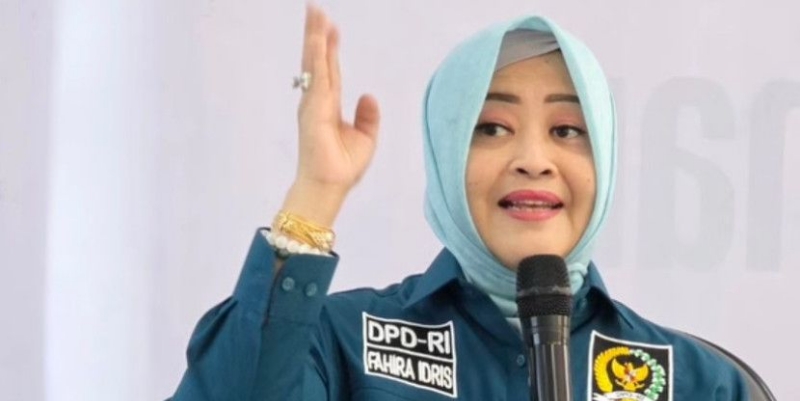
Jakarta Senator Fahira Idris has issued a powerful call for a comprehensive and systemic transformation of Indonesia’s education sector, emphasizing the urgent need to address deep-seated inequalities in access and quality, while simultaneously bolstering teacher competence and accelerating inclusive digitalization. Her remarks, delivered in commemoration of National Education Day (Hardiknas) 2026, underscored the critical role of education as the bedrock of national progress and the primary driver for achieving the ambitious vision of Indonesia Emas 2045. The senator highlighted that while significant strides have been made in expanding educational access across the archipelago, fundamental challenges persist, ranging from stark regional disparities and suboptimal learning outcomes to the uneven distribution and variable competency of teaching staff.
Reflecting on National Education Day: A Call for Collective Action
Hardiknas, observed annually on May 2nd, commemorates the birth of Ki Hajar Dewantara, a national hero and pioneer of modern Indonesian education. This day traditionally serves as a moment of collective reflection on the state of education in the nation, celebrating achievements while confronting ongoing challenges. Fahira Idris articulated that the 2026 commemoration should not merely be a symbolic observance but a potent catalyst for re-evaluating the current educational landscape. "Hardiknas is a momentum to reaffirm that education is the primary foundation for national progress. However, this foundation still faces immense challenges, particularly regarding the equitable quality and access to education," Fahira Idris stated in a written release on Sunday, May 3, 2026. Her comments resonated with a broad sentiment among educators, policymakers, and civil society organizations that despite considerable investment and reform efforts, the promise of equitable, high-quality education remains elusive for many Indonesian children.
Persistent Disparities: The Urban-Rural Divide and 3T Regions
One of the most pressing issues highlighted by Senator Idris is the persistent educational inequality, particularly between urban centers and the disadvantaged, frontier, and outermost (3T) regions. These remote areas often grapple with severe limitations in infrastructure, access to technology, and a chronic shortage of qualified educators. Such barriers, she warned, risk widening the existing gap in human resource quality, thereby perpetuating cycles of poverty and underdevelopment. The challenges in 3T regions are multi-faceted, encompassing not only a lack of physical school buildings but also inadequate sanitation facilities, unreliable electricity, and poor road connectivity, which hinder both student attendance and teacher retention. For instance, data from the Ministry of Education, Culture, Research, and Technology (Kemendikbudristek) frequently illustrates a significant disparity in internet penetration and digital device ownership between urban and 3T schools, directly impacting the feasibility of digital learning initiatives.
Suboptimal Learning Outcomes: A National Imperative
Beyond access, the quality of learning outcomes remains a critical concern. Indonesian students’ performance in international assessments, such as the Programme for International Student Assessment (PISA) conducted by the Organisation for Economic Co-operation and Development (OECD), consistently signals the need for substantial improvement. PISA scores, which evaluate 15-year-olds in reading, mathematics, and science literacy, have shown Indonesia lagging behind many regional and global counterparts. For example, in the most recent PISA cycles, Indonesia’s scores have remained below the OECD average, indicating fundamental weaknesses in critical thinking, problem-solving, and the application of knowledge. These results serve as a strong signal that educational transformation must be more systemic and sustainable, moving beyond mere curriculum changes to encompass pedagogical innovation, teacher development, and robust assessment mechanisms that truly measure deeper learning.
The Pivotal Role of Teachers: The Linchpin of Educational Reform
Fahira Idris unequivocally asserted that strengthening the role of teachers must be a top priority. She emphasized that teachers are not merely instructors but multifaceted facilitators of learning, character builders, and agents of change within the educational system. The effectiveness of any educational policy, regardless of its design, ultimately hinges on the capabilities and dedication of its implementers—the teachers. "Education transformation must begin with teachers. Improving their competence, welfare, and ensuring equitable distribution must be a primary agenda. Without strong teachers, all education policies will struggle to achieve optimal impact," Fahira Idris stressed.
This assertion is supported by numerous global studies that identify teacher quality as the single most important in-school factor influencing student achievement. In Indonesia, challenges include a shortage of qualified teachers in specialized subjects, particularly in STEM fields, in remote areas; a need for continuous professional development that moves beyond one-off training to sustained mentoring and peer learning; and addressing welfare disparities that discourage talented individuals from pursuing teaching careers, especially outside major urban centers. Initiatives aimed at improving teacher certification, providing performance-based incentives, and fostering a culture of continuous learning are crucial for elevating the teaching profession.
Accelerating Inclusive Digitalization: Bridging the Digital Divide
In an increasingly digital world, Fahira Idris also underscored the importance of accelerating inclusive and equitable digitalization in education. She clarified that digitalization is not merely about adopting technology but ensuring that all students, including those in 3T regions, have equal access to quality learning resources. The rapid advancements in educational technology offer unprecedented opportunities to personalize learning, access diverse content, and connect students and teachers across geographical barriers. However, without deliberate efforts to bridge the digital divide, technology can exacerbate existing inequalities.
"Education digitalization must be able to close gaps, not create new ones. Therefore, the development of digital infrastructure, the provision of devices, and the enhancement of digital literacy among teachers and students must proceed hand-in-hand," she stated. This requires significant investment in expanding internet connectivity, particularly in remote areas, providing affordable or subsidized digital devices, and developing relevant digital content that aligns with the national curriculum. Crucially, it also necessitates comprehensive training programs for teachers to effectively integrate technology into their pedagogy and for students to develop critical digital literacy skills, ensuring they can navigate the digital landscape safely and productively.
Equitable Access to Quality Education: A National Policy Focus
The Senator further argued that equitable access to quality education should be the central focus of national education policy. This encompasses not only the physical infrastructure but also access to education at all levels, coupled with strong affirmative action policies for regions with low fiscal capacity and poor educational performance. Innovative approaches, such as integrated schools (combining different educational levels in one complex), distance learning models, and community-based education programs, can offer viable solutions for extending educational reach to hard-to-access areas. These models are particularly vital in vast archipelagic nations like Indonesia, where geographical dispersion makes traditional schooling challenging.
"The state must ensure that not a single child is left behind due to geographical factors, economic status, or limited access. Quality education is the right of all citizens," Fahira Idris affirmed. This principle is enshrined in the Indonesian Constitution, which mandates that every citizen has the right to education. Translating this constitutional mandate into tangible reality requires sustained political will, innovative policy design, and significant financial commitment. This includes targeted funding for infrastructure development, scholarship programs for students from disadvantaged backgrounds, and recruitment drives for teachers willing to serve in challenging environments.
Government Efforts and the Imperative for Consistency and Collaboration
While highlighting the challenges, Fahira Idris also acknowledged and appreciated the government’s ongoing efforts to improve education quality. These initiatives include strengthening learning methodologies, enhancing teacher welfare, and implementing digitalization and school revitalization programs. The "Merdeka Belajar" (Freedom to Learn) policy framework, introduced by the Kemendikbudristek, exemplifies a major reform effort aimed at fostering more flexible and student-centered learning environments. This program includes initiatives such as the Guru Penggerak (Driving Teachers) program, designed to cultivate transformational teacher leaders, and the provision of various digital learning platforms and resources.
However, the senator stressed the paramount importance of policy consistency and robust cross-sectoral collaboration to ensure that these diverse programs translate into meaningful, on-the-ground impact. Education is an intricate ecosystem, and effective reform requires coordinated action from all stakeholders. "Education is a monumental undertaking that requires the collaboration of all parties, ranging from central and local governments, the business sector, to civil society. With concerted efforts and strong commitment, we are optimistic that Indonesian education will advance further and produce an excellent generation towards Indonesia Emas 2045," Fahira Idris concluded.
Broader Implications and the Vision of Indonesia Emas 2045
The call for systemic education transformation carries profound implications for Indonesia’s long-term development aspirations, particularly the vision of "Indonesia Emas 2045" (Golden Indonesia 2045). This national vision aims for Indonesia to become a developed, prosperous, and equitable nation by its centenary of independence. Achieving this goal hinges critically on the quality of its human capital. A well-educated, skilled, and innovative workforce is essential to drive economic growth, foster technological advancement, and enhance global competitiveness.
If the educational disparities persist, a significant portion of the demographic bonus—the period when the working-age population is larger than the dependent population—could be underutilized. Instead of becoming an engine for growth, it could turn into a demographic burden if the workforce lacks the necessary skills for the 21st-century economy. Conversely, a successful education transformation would empower millions of young Indonesians with the critical thinking, creativity, communication, and collaboration skills needed to thrive in an increasingly complex and interconnected world. It would also foster social mobility, reduce inequality, and strengthen national cohesion.
The challenge of education in Indonesia is therefore not merely pedagogical but deeply intertwined with economic development, social justice, and national identity. The consistent implementation of policies that prioritize teacher welfare and professional development, expand inclusive digital access, and ensure equitable quality across all regions is paramount. This requires sustained funding, effective governance, and a shared national commitment that transcends political cycles. The collective effort, as championed by Senator Fahira Idris, is indispensable for equipping the next generation to lead Indonesia towards its golden future.