Socio Today
Jakarta (ANTARA) – Her Majesty Queen Máxima of the Netherlands, in her influential capacity as the United Nations Secretary-General’s Special Advocate (UNSGSA) for Financial Inclusion for Development, has just concluded a comprehensive and strategic working visit to Indonesia, spanning from Monday, November 24, to Thursday, November 27, 2025. This significant engagement marked her fifth visit to the archipelago, underscoring Indonesia’s crucial role in the global agenda for financial health and economic empowerment. Throughout her four-day itinerary, Queen Máxima embarked on a mission to promote financial resilience and well-being, traversing key regions from the industrial heartlands of West Java to the cultural and economic centers of Central Java and the nation’s capital, Jakarta. Her visit encompassed a series of high-level meetings and grassroots engagements, all meticulously designed to advance inclusive finance and bolster the financial health of communities across the diverse nation.
Background: The Mandate of the UNSGSA for Financial Inclusion
Queen Máxima’s involvement in promoting financial inclusion began in 2009 when she was appointed the UN Secretary-General’s Special Advocate. In this non-remunerated role, she works globally to champion universal access to affordable, effective, and safe financial services. Her mandate extends to advising the Secretary-General on financial inclusion and collaborating with governments, financial institutions, development partners, and other stakeholders worldwide to foster progress. The core objective is to ensure that individuals and small businesses, particularly those in low-income segments, can access and use a range of financial products—such as savings, credit, insurance, and payments—to manage their finances, build assets, and mitigate risks. This, in turn, contributes significantly to poverty reduction, gender equality, food security, and overall economic growth, directly supporting the achievement of the United Nations Sustainable Development Goals (SDGs).
Her consistent engagement with Indonesia highlights the country’s strategic importance in the global financial inclusion landscape. Prior to this latest visit, Queen Máxima had visited Indonesia three times as UNSGSA in 2012, 2016, and 2018, each time observing and supporting the nation’s evolving strategies and innovations. In 2020, she also accompanied King Willem-Alexander during a state visit, demonstrating the multifaceted ties between the Netherlands and Indonesia. Born on May 17, 1971, Queen Máxima married King Willem-Alexander in Amsterdam in 2002. Her deep background in international finance, having worked for various multinational financial institutions, provides her with a unique perspective and expertise in her advocacy role.
Indonesia’s Landscape: A Priority for Financial Inclusion
Indonesia, as the world’s fourth most populous nation and a rapidly growing economy, presents both immense opportunities and significant challenges in achieving comprehensive financial inclusion. Despite notable progress over the past decade, a substantial portion of its adult population, particularly in rural areas and among micro, small, and medium-sized enterprises (MSMEs), remains unbanked or underbanked. According to recent data from the Financial Services Authority (OJK), while financial literacy and inclusion rates have steadily increased, there remains a gap, especially in eastern Indonesia and among specific demographics such as women and youth. The government has prioritized financial inclusion through initiatives like the National Strategy for Financial Inclusion (SNKI), aiming to expand access to digital financial services, microfinance, and financial literacy programs. The rise of fintech and digital payment platforms has been a game-changer, but challenges persist in terms of infrastructure, regulatory frameworks, and consumer protection. Queen Máxima’s visit provided a crucial platform to review these efforts, share international best practices, and identify new avenues for collaboration and innovation.
A Strategic Itinerary: Deep Dive into the Visit’s Chronology
The visit was meticulously planned to offer a comprehensive view of Indonesia’s financial inclusion landscape, from grassroots initiatives to high-level policy discussions.
Tuesday, November 25, 2025 – Empowering Local Economies and Communities in Central Java
Queen Máxima commenced her visit in Central Java, a region rich in cultural heritage and a hub for various industries. Her first stop was a garment factory in Sragen Regency. This visit focused on understanding the financial health of factory workers, many of whom are women. Discussions likely revolved around the importance of stable wage payments, access to digital payroll systems, micro-savings schemes, and basic financial literacy to help workers manage their income effectively, plan for the future, and cope with economic shocks. The factory setting offered a practical insight into how financial services can be integrated into daily economic life, enhancing worker welfare and productivity.
Later, in Solo (Surakarta), Queen Máxima immersed herself in the vibrant culture and entrepreneurial spirit of the city. She visited Kampung Batik Laweyan, a renowned batik village. Here, she engaged directly with batik artisans, many of whom are women running small businesses. The discussions centered on their access to formal financial services, such as microcredit for business expansion, digital payment solutions for transactions, and insurance products to protect against unforeseen risks. This interaction highlighted the challenges and opportunities faced by traditional MSMEs in integrating into the formal financial system, emphasizing the need for tailored financial products and effective financial education.
The day concluded with her attendance at a Women’s World Banking event held at the majestic Pura Mangkunegaran in Solo. This significant gathering brought together young people, university students, and entrepreneurs. Queen Máxima engaged in candid conversations about their experiences with various financial products and services. The dialogue explored how these services meet their needs, what barriers they encounter, and what innovations could further enhance their financial health. The event likely underscored the critical role of gender-inclusive finance in empowering women entrepreneurs and the youth, who are often at the forefront of adopting new financial technologies. Representatives from Women’s World Banking likely presented data on the impact of their programs, emphasizing how improved access to finance translates into greater economic independence and community resilience.
Wednesday, November 26, 2025 – Strengthening Partnerships and Innovative Solutions
The second day saw Queen Máxima transition to Jakarta and Bekasi, focusing on institutional partnerships and groundbreaking community initiatives. The morning began in Jakarta with a roundtable discussion at the local United Nations office. Here, she convened with various development organizations actively working in Indonesia. The agenda included a strategic discussion on coordinated efforts, identifying best practices in financial inclusion, and addressing persistent challenges. This session was crucial for aligning strategies and fostering synergistic approaches among international and local development actors.
Following this, she visited the International Finance Corporation (IFC), a member of the World Bank Group. The discussion with IFC representatives focused on the private sector’s pivotal role in financial inclusion. Key topics included the development of innovative lending models, particularly those targeting MSMEs and underserved populations, and investments that contribute to sustainable economic growth and improved financial health. The IFC likely presented its portfolio in Indonesia, highlighting how private capital can be leveraged to expand access to finance and drive market-based solutions.
In the afternoon, Queen Máxima traveled to Bekasi Regency, West Java, to visit the Gran Harmoni Cibitung subsidized housing complex. This complex is notable for providing low-emission housing solutions for low- and middle-income communities. During her visit, she was welcomed into a resident’s home, where she interacted directly with first-time homebuyers. These interactions provided firsthand insights into their financial journeys, challenges in accessing affordable housing finance, and the impact of homeownership on their overall financial stability.
A highlight of her visit to Bekasi was the inspection of an innovative waste bank. This unique initiative offers residents an alternative method to pay their housing installments by utilizing sorted household waste. Queen Máxima observed the process of waste collection, sorting, and conversion into financial value, appreciating this groundbreaking approach that simultaneously addresses environmental sustainability and financial accessibility. This model, supported by local banks like BTN (Bank Tabungan Negara), demonstrates how creative financial solutions can empower communities and promote green living. She also witnessed the process of signing housing purchase agreements for dozens of prospective homeowners, symbolizing the tangible impact of accessible housing finance.
The day concluded back in Jakarta with a visit to Deloitte Indonesia. Here, Queen Máxima engaged with employers to discuss their role in contributing to the financial health of their employees and clients. The conversation likely covered corporate financial wellness programs, employee benefits that enhance financial security, and how businesses can integrate financial health considerations into their client service offerings. This highlighted the private sector’s growing recognition of financial well-being as a critical component of employee satisfaction, productivity, and overall business success.
Thursday, November 27, 2025 – High-Level Dialogue and Future Commitments
The final day of Queen Máxima’s visit was dedicated to high-level discussions aimed at shaping future policy and strengthening national commitments. In the morning, she participated in a crucial financial literacy agenda with key Indonesian financial authorities: the Otoritas Jasa Keuangan (OJK – Financial Services Authority), Bank Indonesia (BI – Central Bank), and the Kementerian Keuangan (Kemenkeu – Ministry of Finance). This session delved into Indonesia’s national strategies for financial literacy, the regulatory frameworks supporting inclusive finance, consumer protection mechanisms, and the ongoing expansion of digital financial services. The discussions emphasized the collaborative efforts required among regulators, policymakers, and financial institutions to create an enabling environment for widespread financial inclusion and resilience. Officials from OJK, BI, and Kemenkeu likely presented their progress reports, highlighting achievements in expanding financial access and literacy, while also outlining future targets and policy adjustments.
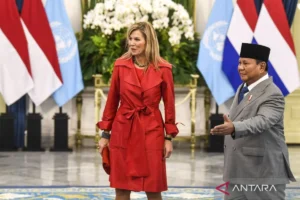
The pinnacle of her visit was an afternoon meeting with President Prabowo Subianto at Istana Merdeka (Merdeka Palace) in Jakarta. During this significant encounter, Queen Máxima presented her key findings and impressions from her extensive tour, including insights gathered from her grassroots interactions and institutional engagements. The meeting, which included a private session and a luncheon, provided an opportunity for her to convey strategic recommendations and reaffirm the international community’s support for Indonesia’s financial inclusion goals. President Subianto likely reiterated Indonesia’s steadfast commitment to enhancing financial access for all its citizens, acknowledging the valuable contributions and insights provided by the UNSGSA. This high-level dialogue underscored the strategic partnership between the United Nations’ financial inclusion agenda and Indonesia’s national development priorities.
Insights and Observations from the Ground
Throughout her visit, Queen Máxima consistently emphasized several key themes that resonate deeply with Indonesia’s development trajectory. The transformative power of digital financial services was a recurring observation, particularly in its potential to bridge geographical divides and reach previously unserved populations. She highlighted the importance of gender-inclusive finance, recognizing that empowering women economically through access to financial tools has a multiplier effect on families and communities. The potential of green finance and innovative models like the waste bank in Bekasi showcased how financial inclusion can be intertwined with environmental sustainability. Furthermore, her engagements underscored the necessity of data-driven policy-making to tailor financial products and services effectively, ensuring they meet the diverse needs of different segments of society. The visit also served to promote multi-stakeholder collaboration, demonstrating that achieving universal financial inclusion requires concerted efforts from governments, regulators, private sector, and civil society organizations.
Statements and Reactions from Key Stakeholders
Following the visit, various stakeholders expressed their views on the significance of Queen Máxima’s engagement. Indonesian government officials from the OJK, BI, and Kemenkeu conveyed their appreciation for the UNSGSA’s continuous support and invaluable insights. They reaffirmed Indonesia’s commitment to achieving its national financial inclusion targets, emphasizing the progress made in expanding financial literacy and access, particularly through digital platforms. Statements from these bodies highlighted that the recommendations from Queen Máxima would be carefully considered to further refine policy and regulatory frameworks.
Representatives from the UN and other international partners lauded Indonesia’s innovative approaches and robust policy framework for financial inclusion, committing to continued collaboration. They emphasized the importance of sharing Indonesia’s successes as a model for other developing nations. Local beneficiaries, such as the batik artisans in Solo and the homeowners in Bekasi, expressed gratitude for the opportunity to share their experiences directly with Queen Máxima. Their narratives underscored both the positive impact of accessible financial services and the ongoing challenges they face, articulating hopes for continued support and the expansion of tailored financial solutions.
Broader Implications and Future Outlook
Queen Máxima’s fifth visit to Indonesia as UNSGSA carries significant broader implications. It solidifies Indonesia’s position as a vital partner and a leading example in the global pursuit of financial inclusion, particularly within the ASEAN region. The visit is expected to catalyze new partnerships, attract further investment in the financial sector, and stimulate enhancements in policy and regulatory frameworks. The focus on innovative solutions, such as the waste bank initiative, can inspire similar models globally, demonstrating how financial services can address multiple development challenges simultaneously.
Ultimately, the visit reinforces the enduring relevance of financial health as a cornerstone for achieving broader socio-economic development and resilience. By ensuring that more individuals and businesses can access and effectively utilize financial services, Indonesia is better equipped to achieve its national development goals and contribute to the global Sustainable Development Goals. The dialogue initiated and sustained by Queen Máxima’s advocacy will undoubtedly continue to shape Indonesia’s path towards a more inclusive and prosperous future, fostering a financial ecosystem where every citizen has the opportunity to thrive.