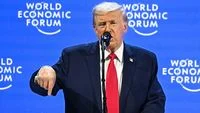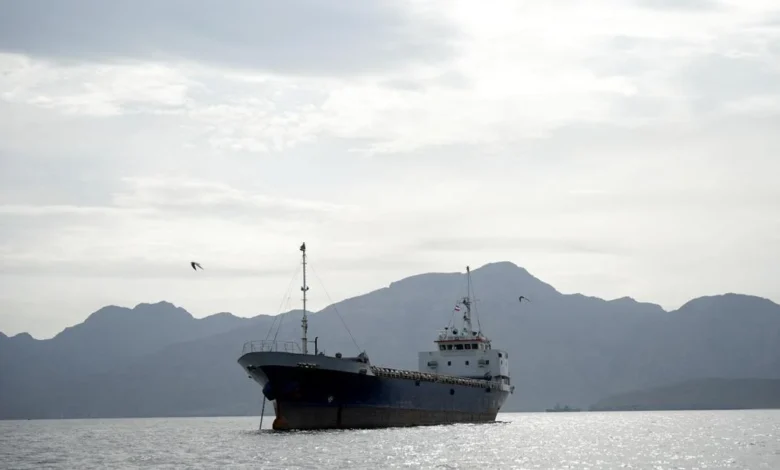
The geopolitical landscape of the Middle East and East Asia shifted toward heightened volatility this week as the government of the People’s Republic of China issued a stern condemnation of the United States’ decision to implement a full maritime blockade around Iranian ports. Beijing characterized the American military maneuver as "dangerous and irresponsible," marking a significant fracture in international relations following the collapse of high-stakes peace negotiations. This diplomatic friction comes on the heels of an ultimatum issued by U.S. President Donald Trump, who recently threatened to authorize the sinking of any vessel attempting to breach the blockade by either entering or departing from Iranian coastal waters.
The blockade, which officially commenced at 14:00 GMT on Monday, April 13, 2026, represents a dramatic escalation in the long-standing standoff between Washington and Tehran. The directive from the Oval Office ordered the U.S. Navy and allied maritime forces to intercept and prevent all shipping traffic from reaching Iranian docks or navigating the strategic coastal zones of the Persian Gulf. This move was triggered by the failure of a weekend peace summit hosted in Pakistan, where diplomats from both nations had hoped to finalize a long-term stability agreement. Despite a previously agreed-upon two-week ceasefire, the breakdown of the Pakistani talks led the U.S. administration to pivot toward a policy of total maritime interdiction.
Chronology of the Maritime Escalation
The timeline of the current crisis began on Sunday, April 12, 2026, when President Trump announced the impending blockade via a televised address, citing the "unwillingness of the Iranian regime to negotiate in good faith" during the Pakistan summit. The announcement sent shockwaves through global energy markets, as the Persian Gulf serves as the primary artery for a significant portion of the world’s crude oil supply.
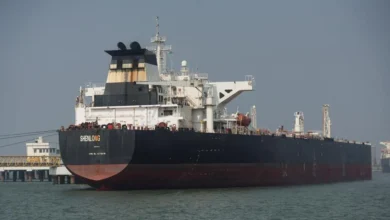
By Monday afternoon, the U.S. Fifth Fleet, stationed in Bahrain, began patrolling the approaches to major Iranian hubs, including Bandar Abbas and the Bushehr coastline. Despite the aggressive posture of the U.S. military, shipping data provided by Reuters and Al Arabiya on Tuesday, April 14, indicated that the blockade is being applied with specific tactical nuances. At least three large oil tankers were observed successfully navigating the Strait of Hormuz during the first 24 hours of the operation. These vessels were permitted to pass through the strategic chokepoint because their manifests confirmed they were not bound for Iranian ports, nor were they carrying Iranian exports. This selective enforcement suggests that while the U.S. aims to paralyze the Iranian economy, it is currently attempting to avoid a total shutdown of the Strait of Hormuz, which would likely trigger a global economic depression.
Beijing’s Response and the Risk of Great Power Conflict
The Chinese Ministry of Foreign Affairs did not mince words in its response to the blockade. In a press briefing held in Beijing, officials argued that the U.S. actions violate international maritime law and the principle of freedom of navigation. China, which remains one of Iran’s largest trading partners and a primary purchaser of its energy exports, viewed the blockade as a direct threat to its own energy security and economic stability.
"The unilateral imposition of a maritime blockade and the threat of lethal force against civilian shipping is a reckless provocation that undermines regional peace," a Chinese government spokesperson stated. Analysts suggest that Beijing’s vocal opposition is not merely rhetorical; it reflects a deep-seated concern that American control over the Persian Gulf could be used as a lever against China in future trade or territorial disputes. The Chinese government has urged the United States to return to the negotiating table and respect the sovereignty of neutral shipping lanes.
Strategic Withdrawals: Russia Scales Back Presence at Bushehr
Adding to the complexity of the situation is the sudden shift in Russian policy regarding its technical cooperation with Iran. On Monday, April 13, Alexei Likhachev, the head of Russia’s state atomic energy corporation, Rosatom, announced that Moscow had withdrawn nearly all of its personnel from the Bushehr Nuclear Power Plant. This facility, which is Iran’s only operational nuclear power station, was built and maintained with extensive Russian assistance.
Likhachev confirmed that a final rotation had been initiated, resulting in the evacuation of 108 staff members. As of Tuesday, only 20 Russian nationals remain at the site—primarily high-level managers and safety engineers responsible for maintaining the integrity of the reactor’s cooling and security systems. While the official reason provided by Moscow focused on "routine rotation" and "safety protocols," geopolitical observers interpret the move as a strategic distancing. By removing its citizens from the vicinity of Iranian ports during a U.S. blockade, Russia may be attempting to avoid being inadvertently drawn into a direct military confrontation should the U.S. fulfill its threat to target vessels or coastal infrastructure.
North Korean Opportunism: Missile Tests in the Sea of Japan
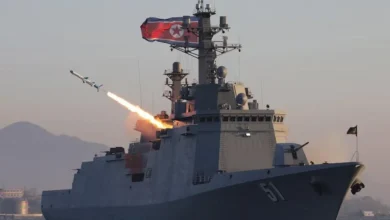
As Western eyes focused on the Persian Gulf, the Korean Peninsula saw its own spike in military activity. Under the direct supervision of Supreme Leader Kim Jong Un, North Korea conducted a series of advanced missile tests on Sunday, April 12. According to reports from the Korean Central News Agency (KCNA), the tests involved strategic cruise missiles and anti-ship missiles launched from a frontline naval vessel.
Technical data released by KCNA, and later corroborated by regional intelligence agencies, highlighted the increasing sophistication of Pyongyang’s arsenal. Two strategic cruise missiles reportedly remained airborne for over two hours, demonstrating a significant range and loitering capability. Additionally, a new anti-ship missile was tested, maintaining flight for approximately 33 minutes before striking its designated target.
Military analysts believe the timing of these tests is no coincidence. By demonstrating its ability to strike naval targets while the U.S. Navy is preoccupied with a blockade in the Middle East, North Korea is signaling its capacity to exploit regional instability. The tests reinforce Kim Jong Un’s commitment to modernizing his navy and providing a credible deterrent against U.S. carrier strike groups in the Indo-Pacific.
Domestic Turbulence: The Trump AI Controversy
While managing a high-stakes international blockade, President Trump faced significant domestic backlash over his social media activity. On Sunday, April 12, the President shared an AI-generated image on Truth Social that depicted him in a manner widely interpreted as messianic. The image featured a figure with Trump’s likeness wearing white robes and a red sash—attire traditionally associated with depictions of Jesus Christ—performing what appeared to be a miraculous healing.
The post immediately ignited a firestorm of criticism, particularly from religious conservatives who have historically formed a core part of the President’s base. Accusations of blasphemy and sacrilege trended across social media platforms, with prominent evangelical leaders expressing discomfort at the appropriation of sacred imagery for political branding. By Monday, April 13, the controversial post had been removed from the President’s account. However, the incident has raised questions about the use of generative AI in political communication and the potential for such technology to alienate key demographic groups during a period of national crisis.
Economic and Security Implications
The convergence of these events—the U.S. blockade, China’s condemnation, Russia’s withdrawal, and North Korea’s missile tests—points toward a period of extreme global instability. The economic implications are already being felt in the commodities markets. While the three tankers that passed through the Strait of Hormuz provided a temporary sigh of relief, the "war risk" insurance premiums for vessels operating in the Gulf have reached historic highs.
If the blockade continues, the global supply of oil could see a reduction of several million barrels per day, leading to price spikes that could destabilize fragile post-pandemic economies. Furthermore, the aggressive rhetoric from Washington and the counter-moves from Beijing and Pyongyang suggest that the "rules-based international order" is being tested to its limits.
The immediate future depends on whether the two-week ceasefire, which technically remains in place despite the blockade, can be salvaged through back-channel diplomacy. However, with the U.S. committed to its maritime interdiction and China signaling its refusal to stand by as its interests are threatened, the risk of a miscalculation at sea remains high. As of April 14, 2026, the world watches the Persian Gulf with bated breath, recognizing that a single spark in these contested waters could ignite a conflict far larger than a regional blockade.