Three Tankers Successfully Navigate Strait of Hormuz on First Day of United States Naval Blockade Against Iran

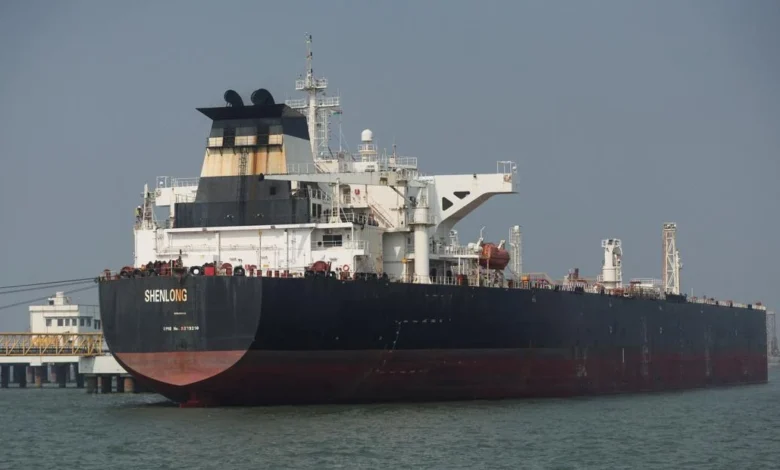
On April 14, 2026, the global energy market watched with bated breath as the first day of a comprehensive United States naval blockade against Iranian ports commenced, resulting in at least three commercial tankers successfully navigating the Strait of Hormuz. The blockade, a significant escalation in the long-standing tensions between Washington and Tehran, was officially enacted following the collapse of high-level diplomatic negotiations held in Pakistan. While the presence of the U.S. Navy in the region suggested a total halt to maritime traffic, shipping data confirms that specific vessels were permitted to transit the narrow waterway, provided their destinations were not within Iranian territory.
The enforcement of this blockade follows an announcement made by U.S. President Donald Trump on Sunday, April 12, 2026. The decision to move toward a "maximum pressure" maritime strategy came after a weekend of failed mediation efforts in Islamabad, where representatives from the U.S. State Department and the Iranian Foreign Ministry were unable to reach a consensus regarding regional security and nuclear enrichment protocols. The failure of these talks has plunged the Middle East into a new era of uncertainty, with the Strait of Hormuz once again becoming the focal point of a global geopolitical struggle.
The Specifics of the First-Day Transit
According to real-time maritime tracking data provided by LSEG and Kpler, the three vessels that successfully traversed the strait on Tuesday were identified as the Peace Gulf, the Murlikishan, and the Rich Starry. These transits are being viewed by maritime analysts as a "test case" for the U.S. Navy’s Rules of Engagement (ROE) under the newly established blockade protocols.
The Peace Gulf, a medium-range tanker flying the flag of Panama, was monitored sailing toward the Port of Hamriyah in the United Arab Emirates (UAE). Data from Kpler indicates that while the Peace Gulf has a history of transporting Iranian naphtha—a vital petrochemical feedstock—its current manifest and destination fell outside the immediate restrictions of the blockade. Under the current U.S. mandate, the blockade specifically targets vessels entering or exiting Iranian ports; vessels transiting the strait to reach other regional hubs like those in the UAE, Oman, or Kuwait are, in theory, granted safe passage.
The second vessel, the Murlikishan, is currently en route to Iraq. It is expected to arrive at an Iraqi terminal to load fuel oil on April 16. The Murlikishan has a complex operational history, having previously been known as the MKA. Maritime intelligence reports suggest the vessel has frequently moved both Russian and Iranian crude in the past. Despite its controversial history and existing U.S. sanctions against the vessel, its current trajectory toward an Iraqi port allowed it to bypass the immediate kinetic intervention of the U.S. naval assets stationed at the mouth of the Persian Gulf.
The third and perhaps most significant transit involved the Rich Starry. This medium-range tanker, owned by the China-based Shanghai Xuanrun Shipping Co Ltd, became the first vessel to exit the Gulf region since the blockade was officially implemented. The Rich Starry was carrying approximately 250,000 barrels of methanol. According to port logs, the cargo was loaded at Hamriyah in the UAE. Notably, both the vessel and its parent company are already under U.S. sanctions for prior dealings with Iranian entities. However, because the current voyage originated from a non-Iranian port, the vessel was permitted to continue its journey toward Asian markets.
Chronology of the Escalation: From Diplomacy to Blockade
The current crisis did not emerge in a vacuum but is the result of a rapid breakdown in diplomatic relations over the first quarter of 2026.
- March 15–30, 2026: Informal "back-channel" talks begin in Muscat, Oman, seeking a renewal of maritime security agreements.
- April 5, 2026: The United States and Iran agree to a high-level summit in Islamabad, Pakistan, brokered by the Pakistani government and supported by Beijing.
- April 11, 2026: Reports emerge that the Islamabad talks have reached an impasse. The U.S. delegation reportedly demanded an immediate halt to Iranian drone exports, while Tehran demanded the unfreezing of assets held in European banks.
- April 12, 2026: President Donald Trump issues an executive order declaring a "Total Maritime Exclusion Zone" for all vessels servicing Iranian ports. He cites national security interests and the need to prevent the "proliferation of sanctioned materials."
- April 13, 2026: The U.S. Fifth Fleet, based in Bahrain, is put on high alert. Additional carrier strike groups are reportedly redirected toward the Gulf of Oman.
- April 14, 2026: The blockade officially begins. The Peace Gulf, Murlikishan, and Rich Starry navigate the Strait of Hormuz under heavy surveillance.
International Reactions and Diplomatic Fallout
The international community has reacted with a mixture of alarm and condemnation. The most vocal critic has been the People’s Republic of China, which relies heavily on the stability of Middle Eastern energy exports.
On Tuesday, the Chinese Ministry of Foreign Affairs issued a stern rebuke of the U.S. naval strategy. In an official statement, Beijing characterized the blockade as "dangerous and irresponsible." The ministry warned that such unilateral actions violate the principles of "freedom of navigation" and risk igniting a broader regional conflict. "The international community must uphold the order of international shipping and ensure the safety of global supply chains," the statement read. Interestingly, while the Chinese government condemned the blockade, it notably refrained from mentioning the specific transit of the Rich Starry, a vessel owned by a Chinese company and manned by a Chinese crew.
In Tehran, the Iranian government has denounced the blockade as an "act of war." While there have been no immediate reports of kinetic retaliation from the Islamic Revolutionary Guard Corps (IRGC), military analysts suggest that Iran may utilize "gray zone" tactics, such as the use of sea mines or swarm-drone attacks, should the blockade persist.
The European Union has called for restraint, with the High Representative for Foreign Affairs urging both Washington and Tehran to return to the negotiating table. However, with the U.S. firmly committed to its maritime exclusion zone, the effectiveness of European mediation remains in doubt.
Strategic Importance of the Strait of Hormuz
The Strait of Hormuz is arguably the most important oil chokepoint in the world. Measuring only 21 miles wide at its narrowest point, the shipping lanes are even tighter, consisting of two-mile-wide channels for inbound and outbound traffic, separated by a two-mile buffer zone.
Statistically, nearly 20% of the world’s total oil consumption passes through this waterway daily. This includes the majority of crude exports from Saudi Arabia, the UAE, Kuwait, and Iraq. Any disruption to this flow—whether through a blockade or active conflict—has an immediate and profound impact on global energy prices.
By implementing a blockade specifically targeting Iranian ports, the U.S. is attempting a surgical economic strike. The goal is to decouple Iranian exports from the rest of the Gulf’s traffic. However, the first day of the blockade demonstrates the immense difficulty of this task. As seen with the Peace Gulf and Rich Starry, the "shadow fleet" of tankers often blurs the lines between sanctioned and non-sanctioned cargo through ship-to-ship transfers and the use of regional hubs like Hamriyah.
Economic and Market Implications
The first 24 hours of the blockade have already sent ripples through the global economy. Brent Crude futures spiked by 4.5% in early trading on Monday following President Trump’s announcement, though prices stabilized slightly on Tuesday as news broke that non-Iranian traffic was still moving through the strait.
Shipping insurance premiums for vessels operating in the Persian Gulf have skyrocketed. Lloyd’s of London and other major insurers have reportedly designated the entire Gulf region as a "High-Risk Area," leading to "war risk" surcharges that could add hundreds of thousands of dollars to the cost of a single voyage. These costs are expected to be passed down to consumers, potentially fueling inflation in energy-dependent economies in Europe and Asia.
Furthermore, the blockade presents a logistical nightmare for global supply chains. If the U.S. Navy begins boarding and inspecting vessels suspected of carrying Iranian cargo, the resulting delays could lead to a backlog of tankers, further straining an already volatile market.
Expert Analysis and Future Outlook
Military and geopolitical analysts are divided on the long-term viability of the U.S. blockade. Some argue that the successful passage of the three tankers on Tuesday proves the U.S. is acting with necessary caution to avoid a direct confrontation with other regional powers or China. By allowing non-Iranian traffic to proceed, Washington is attempting to maintain a legal veneer of "targeted enforcement."
However, others warn that this "partial" blockade may be unsustainable. "The line between Iranian oil and regional oil is incredibly thin," says Marcus Thorne, a senior maritime analyst at the Global Security Institute. "If the U.S. allows tankers like the Peace Gulf to pass because they are heading to the UAE, but those tankers are carrying Iranian feedstock for UAE-based refineries, the blockade is effectively toothless. Conversely, if the U.S. starts seizing these ships, they risk a direct naval confrontation with China or Panama."
As the second day of the blockade approaches, the focus remains on the "Murlikishan" and its scheduled arrival in Iraq. The international community is also watching for any signs of Iranian naval mobilization. For now, the Strait of Hormuz remains a tense corridor where the world’s superpower is attempting to rewrite the rules of maritime trade, one tanker at a time. The success of the first three transits suggests a cautious start, but the potential for escalation remains at an all-time high.