Donald Trump Escalates Rhetorical Conflict with Pope Leo XIV Over Iran Policy and Nuclear Disarmament

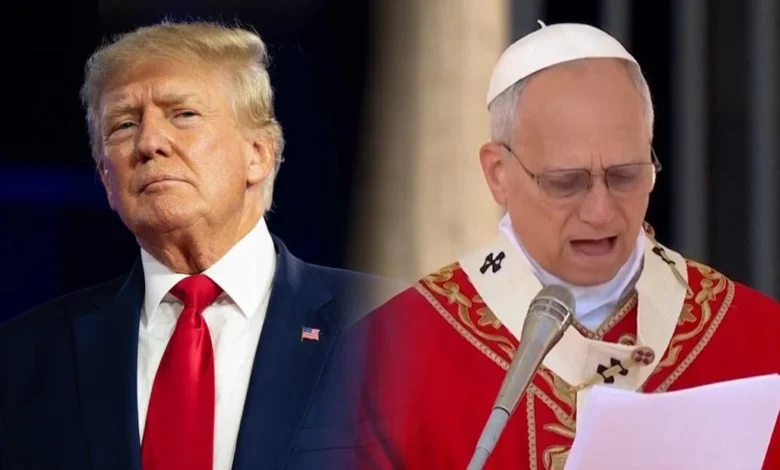
The diplomatic relationship between the White House and the Holy See has reached a historic low as President Donald Trump intensified his public criticism of Pope Leo XIV, the first American-born pontiff in the history of the Catholic Church. The escalating war of words, centered on the Vatican’s opposition to United States military posture toward Iran, has sparked a global debate regarding the intersection of religious authority and national sovereignty. On Wednesday, April 15, 2026, President Trump utilized his Truth Social platform and press briefings to lambaste the Pope’s foreign policy stance, labeling the religious leader as "weak" and "out of touch" with the realities of global security.
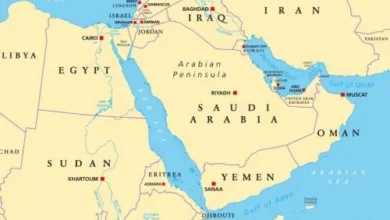
The friction between the two leaders stems from Pope Leo XIV’s vocal condemnation of potential military escalations between the U.S.-Israel coalition and the Islamic Republic of Iran. While the Vatican has historically advocated for diplomatic solutions, the specific nature of this conflict is heightened by the Pope’s American heritage, a factor that President Trump has repeatedly cited as a political maneuver by the College of Cardinals to influence his administration.
The Rhetorical Escalation: Trump’s Critique of the Papacy
The latest round of criticism began on Monday, April 13, when President Trump addressed reporters regarding the Vatican’s stance on nuclear proliferation and regional stability. Speaking to CNN, the President expressed his disdain for the Pope’s recent encyclicals and public addresses which have urged for de-escalation in the Middle East. Trump stated unequivocally that he is "not a fan" of the current pontiff, suggesting that the Pope’s refusal to support "maximum pressure" campaigns against Tehran is a threat to global safety.
"We do not like a Pope who says it is okay to have nuclear weapons," Trump told reporters, mischaracterizing the Vatican’s stance on disarmament to highlight what he perceives as a lack of resolve. "He is someone who doesn’t think we should play hardball with a country that wants nuclear weapons so they can blow up the world. I am not a fan of Pope Leo."
By Wednesday, the President’s rhetoric had shifted to social media, where he published a series of lengthy critiques. In these posts, Trump characterized Pope Leo XIV as "weak on crime" and "bad for foreign policy." He specifically took issue with the Pope’s criticism of U.S. interests in South America, noting that he did not want a religious leader who viewed American intervention in Venezuela as "terrible." Trump further alleged that the selection of an American Pope was a strategic move by the Catholic Church intended specifically to "deal with" his presidency, claiming that Leo XIV was only elevated to the papacy for his nationality rather than his spiritual merit.
Pope Leo XIV: A Mission of Peace from Algiers
While the White House issued its rebukes, Pope Leo XIV was engaged in his first apostolic journey to Africa, specifically visiting Algiers. This trip, aimed at fostering interfaith dialogue and promoting peace in the Mediterranean and North African regions, provided the backdrop for the Pope’s response to the American President.
Speaking to the press corps aboard the papal plane, Pope Leo XIV maintained a composed and strictly non-political demeanor. He emphasized that his role is not that of a traditional politician or a head of state in the secular sense, but rather a shepherd of the universal church guided by the Gospel. "I am not a politician," the Pope stated, according to reports from AFP. "I have no intention of arguing with him. The message remains the same: to promote peace."
The Pope’s comments underscored a fundamental theological divide. He cited the Beatitudes, specifically the mandate that "blessed are the peacemakers," to justify his opposition to war. He asserted that the Church has a "moral obligation" to speak out against violence and reconciliation, regardless of the political climate in Washington. Crucially, the Pope addressed the President’s intimidation tactics directly, stating, "I am not afraid—not of the Trump administration, nor of speaking out about the Gospel message."
The Iranian Response: An Unlikely Alliance
The dispute has created unusual geopolitical alignments, most notably with the Iranian leadership coming to the defense of the Catholic Pontiff. President Masoud Pezeshkian of Iran issued a formal statement condemning President Trump’s "disrespect" toward the Pope. Pezeshkian’s defense of Leo XIV is particularly notable given the theological differences between Shiite Islam and Roman Catholicism, yet the Iranian leader framed the issue as one of universal respect for "holy figures" and "prophets of peace."
Pezeshkian’s statement also referenced a controversial, now-deleted social media post by Trump that allegedly featured an AI-generated image of the President alongside Jesus Christ. The Iranian President described such actions as a "desecration" that was "unacceptable to anyone who seeks freedom."
In Tehran, the Speaker of the Iranian Parliament, Mohammad Bagher Ghalibaf, echoed these sentiments. On the social media platform X, Ghalibaf praised the Pope’s "fearless" stance against what he termed "war crimes" committed by Israel and the United States. He noted that the Pope’s refusal to remain silent in the face of civilian casualties has "inspired millions" across the globe. This alignment between Tehran and the Vatican serves to further isolate the Trump administration’s hardline rhetoric on the international stage.
Supporting Data and the "42,000" Claim
A central point of contention in the latest exchange is President Trump’s claim regarding internal unrest in Iran. On Wednesday, Trump challenged the Pope to acknowledge reports that the Iranian government had "killed at least 42,000 unarmed, innocent protesters in the last two months."
While human rights organizations have long documented the suppression of dissent within Iran, the specific figure of 42,000 deaths in a sixty-day window has not been independently verified by the United Nations or major international NGOs like Amnesty International. Analysts suggest that by using such a high figure, the Trump administration is attempting to frame the Iranian government as an existential moral threat that necessitates military intervention—a narrative that the Vatican’s "peace at all costs" approach directly undermines.
Trump’s insistence that "you cannot have an Iran with nuclear weapons" remains the cornerstone of his argument. He views the Pope’s calls for diplomacy as a tacit endorsement of Iranian nuclear ambitions, despite the Vatican’s long-standing official policy advocating for the total global elimination of nuclear stockpiles.
Timeline of the Conflict
The friction between Donald Trump and Pope Leo XIV did not emerge in a vacuum. The following chronology outlines the deepening rift:
- October 2025: Cardinal Joseph Miller of Chicago is elected Pope, taking the name Leo XIV. He is the first American to hold the office.
- January 2026: Pope Leo XIV issues his first major address on global security, calling for a "new architecture of peace" in the Middle East and specifically criticizing unilateral sanctions that harm civilian populations.
- February 2026: Tensions escalate between the U.S. and Iran following a series of maritime incidents in the Strait of Hormuz. The Vatican offers to mediate talks, an offer the Trump administration publicly declines.
- March 2026: The Pope condemns "saber-rattling" and "threats of annihilation" directed at the Iranian people. Trump responds on Truth Social, calling the Pope "grossly misinformed."
- April 13, 2026: Trump tells CNN he is "not a fan" of the Pope. The Pope responds from Algiers, stating he is "not afraid" of the administration.
- April 15, 2026: Trump doubles down on his criticism, citing the 42,000 deaths in Iran and accusing the Pope of being "weak on crime" and "bad for foreign policy."
Analysis of Implications
The ongoing conflict between the U.S. President and the Pope carries significant implications for both domestic politics and international relations. Domestically, Trump’s attacks on the Pope risk alienating a crucial demographic: Catholic voters. While Trump has historically enjoyed strong support among conservative Christians, including many traditionalist Catholics, a direct assault on the person of the Holy Father—especially an American one—could fracture his base.
Internationally, the dispute highlights a growing divide between the "America First" nationalist policy and the "Universalist" humanitarian approach of the Holy See. By attacking the Pope, Trump is not only targeting a religious leader but also the head of a sovereign state (Vatican City) that maintains one of the world’s oldest and most extensive diplomatic networks.
Furthermore, the Iranian government’s defense of the Pope suggests a strategic shift in Tehran’s propaganda, as they seek to frame themselves as defenders of global moral order against American "aggression." As the situation develops, the world remains watchful of whether this rhetorical war will lead to a formal diplomatic break or if the "messenger of peace" can eventually find a path to dialogue with the leader of the Western world. For now, the impasse remains, with both leaders entrenched in their respective visions for the future of global security.