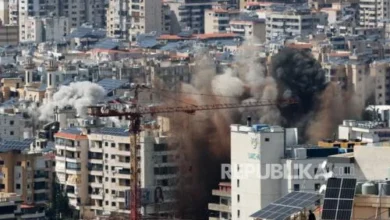
Sudan Civil War Reaches Tragic Three-Year Milestone as Drone Strikes Claim Nearly 700 Civilian Lives in Early 2026

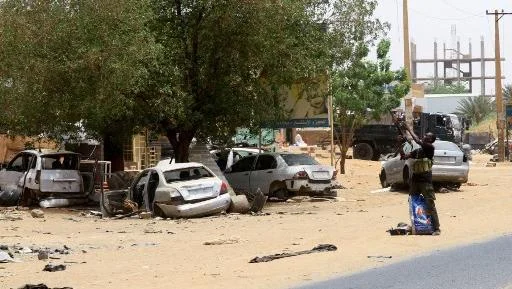
The United Nations has released a harrowing report detailing the escalating toll of the Sudanese civil war, revealing that nearly 700 civilians were killed in a relentless wave of drone strikes across the country during the first three months of 2026 alone. As the conflict enters its fourth year, the UN has intensified its condemnation of the hostilities between the Sudanese Armed Forces (SAF) and the paramilitary Rapid Support Forces (RSF), categorizing the situation as the "world’s largest humanitarian crisis." The war, which began in April 2023, has now claimed tens of thousands of lives, displaced over 11 million people, and pushed vast swathes of the nation into the brink of catastrophic famine.
According to Tom Fletcher, the United Nations Under-Secretary-General for Humanitarian Affairs and Emergency Relief Coordinator, the introduction of sophisticated drone technology into the theater of war has fundamentally altered the risks faced by non-combatants. Speaking in a statement released via AFP on April 14, 2026, Fletcher noted that the first quarter of the year saw approximately 700 civilian fatalities directly attributed to unmanned aerial vehicle (UAV) attacks. These strikes have become a daily occurrence, shattering the remnants of normalcy in urban centers and rural villages alike.
The Evolution of the Conflict and the Rise of Drone Warfare
The civil war in Sudan originated from a violent power struggle between General Abdel Fattah al-Burhan, head of the SAF, and Mohamed Hamdan "Hemedti" Dagalo, the leader of the RSF. What began as a dispute over the integration of the RSF into the national military has devolved into a multi-front war characterized by ethnic cleansing, the destruction of critical infrastructure, and a complete breakdown of the rule of law.
As the war progressed into late 2025 and early 2026, both factions significantly increased their reliance on drone technology. Military analysts observe that the use of low-cost, high-impact suicide drones and surveillance-integrated strike platforms has allowed both sides to project power into areas previously considered unreachable. However, the lack of precision and the targeting of densely populated civilian areas have resulted in a staggering number of collateral deaths.
The regions of Kordofan and Darfur have emerged as the primary battlegrounds for these aerial campaigns. In Southern Kordofan, drone strikes have disrupted agricultural cycles and local markets, while in the western Darfur region—already scarred by decades of genocidal violence—the RSF-controlled areas have been subjected to frequent aerial bombardments. The UN report highlights that these strikes often hit residential neighborhoods, schools, and makeshift medical clinics, leaving the population in a state of perpetual terror.
A Nation in Displacement: The Human Cost
The displacement crisis in Sudan has reached unprecedented proportions. Fletcher’s report emphasizes that millions have been forcibly removed from their homes, with entire communities being systematically emptied. The internal displacement of 11 million people is compounded by the millions more who have crossed international borders into neighboring Chad, South Sudan, Egypt, and Ethiopia.
"Millions have been driven from their homes across Sudan and beyond its borders, with entire communities hollowed out and families displaced repeatedly," Fletcher stated. He warned that the sheer scale of the exodus poses a significant risk of wider regional instability, as neighboring countries struggle to accommodate the influx of refugees while facing their own economic and political challenges.
The demographic impact is particularly severe. It is estimated that nearly 34 million people—approximately two-thirds of Sudan’s total population—are now in desperate need of humanitarian assistance. This includes a massive segment of the population that has lost access to clean water, electricity, and basic sanitation. The displacement has also created a "lost generation" of Sudanese children, with millions unable to attend school for three consecutive years, leaving them vulnerable to recruitment by armed groups and long-term economic marginalization.
Famine and the Collapse of the Social Fabric
As the "lean season" approaches in mid-2026, the specter of mass starvation looms over the country. The disruption of the planting season due to drone activity and ground combat has decimated Sudan’s domestic food production. Fletcher warned that hunger is rising at an alarming rate, with hundreds of thousands of children suffering from acute malnutrition. Without immediate intervention, international observers fear that the IPC (Integrated Food Security Phase Classification) will soon declare formal famine in multiple regions, including parts of Khartoum and Darfur.
Beyond the physical hunger, the social fabric of Sudan is being torn apart by systematic human rights abuses. The UN report specifically points to the "systemic and brutal" sexual violence faced by women and girls. Conflict-related sexual violence has been used as a weapon of war to humiliate communities and exert control over territory. Furthermore, the targeting of healthcare workers and the looting of humanitarian warehouses have crippled the ability of aid organizations to respond to these atrocities.
The International Response and the Funding Gap
Despite the magnitude of the suffering, the international community’s response has been criticized as inadequate. Denise Brown, the UN Resident and Humanitarian Coordinator in Sudan, reported on April 13, 2026, that the UN’s $2.9 billion humanitarian appeal for the current year remains critically underfunded. As of mid-April, only 16 percent of the required funds have been secured.
This shortfall comes as international aid contributions from member states have trended downward, partly due to "donor fatigue" and the emergence of competing global crises. Fletcher noted that while humanitarian workers successfully reached 17 million people with some form of support last year, the goal of reaching 20 million people in 2026 is currently unattainable without a massive injection of capital.
"The response is severely underfunded," Fletcher remarked. "We need action now—to stop the violence, protect civilians, ensure access to the most threatened communities, and fund the response. This somber and distressing anniversary marks another year when the world has failed the test of Sudan."
Chronology of the Crisis (2023–2026)
To understand the current state of the conflict, it is essential to look at the timeline of the war’s escalation:
- April 2023: Violent clashes erupt in Khartoum between the SAF and RSF, quickly spreading to Darfur and Kordofan.
- Late 2023: Initial peace talks in Jeddah fail to produce a lasting ceasefire; both sides begin mobilizing ethnic militias.
- 2024: The conflict shifts into a war of attrition. The RSF captures key territories in the Gezira State, Sudan’s agricultural heartland, triggering the first major wave of food insecurity.
- 2025: Proliferation of drone technology. Both factions begin utilizing imported UAVs, leading to a spike in civilian casualties and the destruction of telecommunications infrastructure.
- Early 2026: The UN confirms that drone strikes have killed 700 civilians in 90 days. The funding gap for humanitarian aid reaches a critical high, leaving millions without food or medicine.
Strategic Implications and the Path Forward
The continued instability in Sudan has profound implications for the Horn of Africa and the Red Sea corridor. Sudan’s strategic location makes its collapse a matter of global security. The vacuum of power has allowed for the potential rise of extremist elements and has turned the country into a playground for regional proxy interests.
Analysts suggest that the current stalemate is unlikely to be broken through military means alone. The SAF maintains an advantage in air power (including the recent drone surge), while the RSF retains significant ground mobility and control over rural resource-rich areas. The civilian population remains caught in the middle of this equilibrium of violence.
The UN’s latest report serves as a plea for a renewed diplomatic surge. Without a coordinated international effort to enforce a ceasefire, monitor drone proliferation, and fully fund the humanitarian response, Sudan faces the prospect of total state collapse. The tragedy of the 700 lives lost to drone strikes in early 2026 is viewed by many as a harbinger of a much larger catastrophe if the world continues to look away.
As the third anniversary of the conflict passes, the message from Khartoum and the surrounding provinces is clear: the window for a managed resolution is closing. For the 34 million people in need of aid, the statistics provided by the UN are not just numbers; they represent a daily reality of fear, hunger, and the persistent hum of drones overhead—a sound that has become synonymous with the decline of one of Africa’s most pivotal nations.